
Practical help, when you need it
Driver Help Centre
Choose what’s happened. Find the first checks, the right vehicle guidance and your next step.
Videos for your vehicle
Tell us your car and the issue
Search for video choices here, then choose one to watch on YouTube. Use the model year, which may differ from the registration year.
We check titles for the make, model, issue and any stated year. The repair procedure is not verified. The search sends these vehicle details and issue terms; no contact details are sent.
What’s the problem?
Choose a guide belowAI-generated illustrations show general situations, not exact repair points. Match any mechanical procedure to your vehicle’s owner’s manual.

Guide 01 / Starting & battery
AI illustration · general example
Car won’t start at home: what to do
Start with the normal controls and warning messages. The sound can help describe a fault, but cannot confirm which part has failed.
Check the basics
While safely parked, check the fuel or charge display and the manual’s starting pedal and gear position. If “key not detected” appears, use the manual’s backup key-reading procedure or try your spare key.
Note what happens
Rapid clicking, slow cranking, one click and cranking without starting are different symptoms. Note what you already heard; do not keep trying to reproduce it.
Choose the next step
Ask for a battery assessment if the supply seems weak. Jump starting must follow the exact vehicle procedure. If assistance cannot restore operation, arrange recovery for diagnosis.
Getting the problem resolved
A suitable technician can test the battery and starting system. A jump start may restore starting, but the cause still needs checking.
Guide 02 / Starting & battery
AI illustration · general example
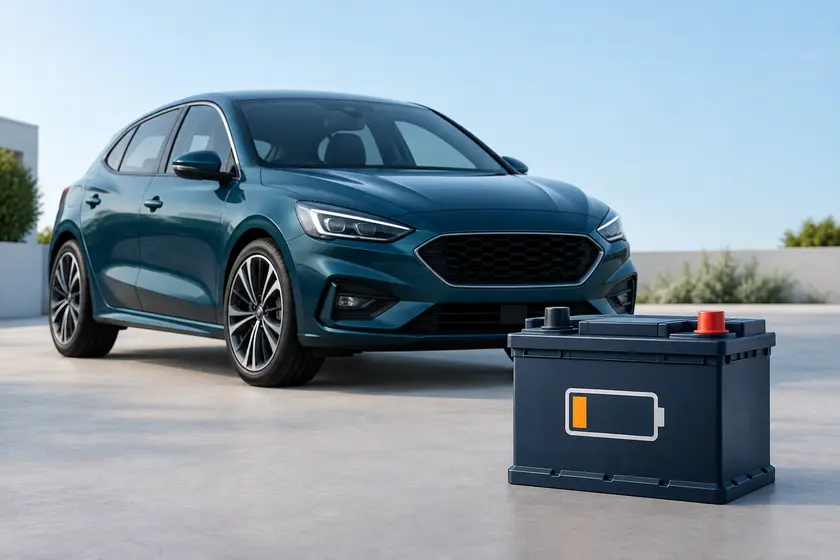
Battery keeps going flat: what to do
A flat battery is a symptom. Repeatedly needing a jump start does not establish whether the battery, charging system or another component is responsible.
Look for a pattern
Note how long the car was parked, recent short journeys and whether lights or plug-in accessories were left on. Little use, short trips and electrical loads can leave a battery undercharged.
Switch off unnecessary loads
Turn off lights and removable accessories using their normal controls. Check that the doors and boot are closed. Do not disconnect battery cables or pull random fuses to look for a drain.
Arrange the right tests
Ask a suitable technician to assess the battery and charging system. A repeated overnight loss may need an electrical-drain investigation. Use only vehicle-compatible charging or jump-start procedures from the manual.
Getting the problem resolved
Testing helps decide whether charging, battery replacement or electrical repair is needed. If the vehicle cannot be made ready safely, arrange recovery.

Guide 03 / Keys & access
AI illustration · general example
Key fob not working: what to do
A weak fob battery is one possible cause. The opening method, battery type and backup key-reading position depend on your exact key and vehicle.
Check which key you have
Note any low-key-battery message and try a spare key if available. Find your exact key design in the owner’s manual; some sealed key tags do not have a user-replaceable battery.
Follow the battery instructions
For a replaceable battery, use the manual’s opening method, specified cell and polarity. Do not force a sealed case. Close it fully and test the buttons. Keep new and used coin cells away from children and pets.
Use the vehicle’s backup method
If still unresponsive, check the manual for its mechanical key and backup key-reader instructions. If the correct replacement does not resolve it, ask a qualified auto locksmith or the manufacturer for help.
Getting the problem resolved
The right battery may restore the fob. A key, receiver or vehicle-power fault needs assessment; let the recovery operator know if the vehicle remains locked or cannot recognise the key.
Guide 04 / Tyres & wheels
AI illustration · general example
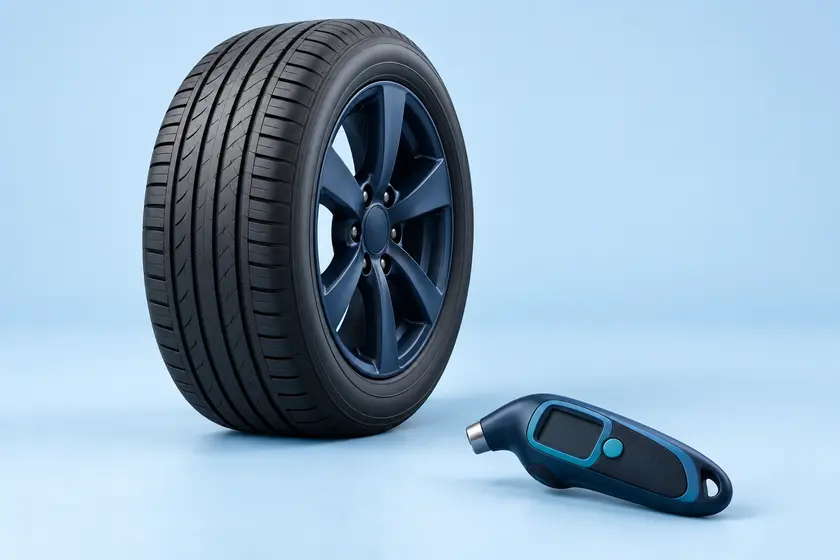
Tyre pressure & damage: what to do
Use the vehicle manufacturer’s pressure for the fitted tyre size and load. There is no single correct pressure for every car.
Find the pressure label
Check the door opening, fuel flap or owner’s manual. Front and rear values may differ, with separate settings for heavier loads. Use these figures, not the maximum pressure printed on a tyre’s sidewall.
Measure with cold tyres
Before driving, remove the valve cap and press a suitable gauge squarely onto the valve. Compare the reading with the cold-pressure specification. Adjust with a suitable pump, recheck and refit the cap. Check all tyres.
Look for visible damage
In a safe parked location, look at the visible tread and sidewalls for cuts, bulges, cracking, embedded objects or uneven wear. Leave embedded objects in place for a tyre professional to assess.
Getting the problem resolved
If undamaged tyres hold the specified pressure, follow the manual for any monitoring-system reset. Damage or continued pressure loss needs tyre assistance; recovery may be needed if the car cannot move safely.
Guide 05 / Engine & fluids
AI illustration · general example
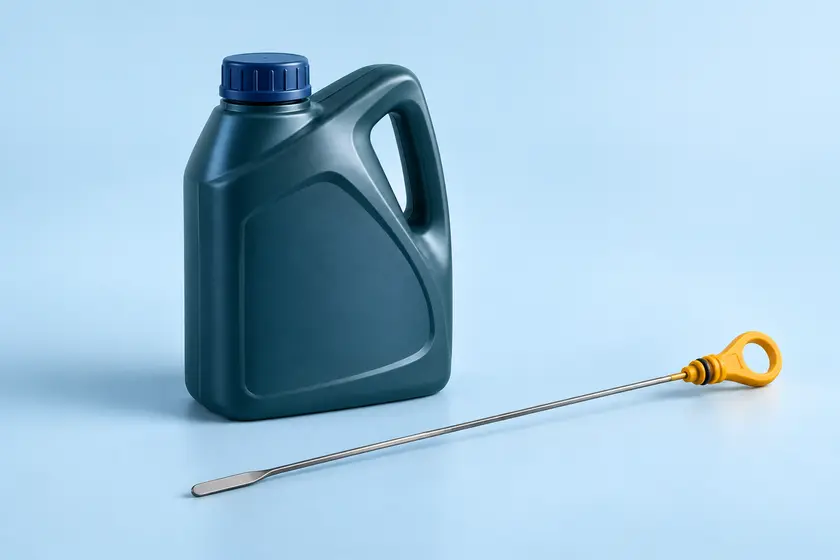
Check engine oil correctly: what to do
This is for vehicles with an engine. Check the owner’s manual for the oil specification, measuring method and required temperature or waiting time.
Prepare for an accurate reading
Park on level ground and secure the vehicle. For a dipstick check, switch off and allow oil to settle for the manual’s stated time. Electronic measurement may have different conditions. Keep clear of hot parts.
Read the level
For a dipstick, remove it, wipe it with a clean cloth, fully reinsert it and remove it again to read between the marked limits. For an electronic system, follow the vehicle’s on-screen and manual instructions.
Top up only when needed
If low, use the exact approved oil and the identified engine-oil filler. Add small amounts, wait and recheck as the manual directs. Never exceed the maximum. Refit the cap and dipstick securely and clear spills.
Getting the problem resolved
A correct level check can identify a top-up need. Repeated oil loss or a pressure warning needs professional diagnosis; request recovery if the engine should not run.

Guide 06 / Engine & temperature
AI illustration · general example
Car overheating: what to do
A temperature warning, gauge in the red or steam can indicate overheating. Continuing to drive may cause serious engine damage.
Stop driving as soon as safely possible
Find a safe stopping place, use hazard lights and switch the engine off. If you are beside traffic, follow the roadside safety guidance before checking anything.
Let the engine cool fully
Keep clear of steam. Never remove a hot radiator or coolant reservoir cap and never pour cold water onto or into a hot engine. Do not rely on a fixed number of minutes to prove it is cool.
Arrange an assessment
Once fully cool and safely parked, the manual may allow a visual coolant-level check through the reservoir. A low level, leak, repeated warning or unknown cause needs professional advice before driving again.
Getting the problem resolved
Cooling-system faults need diagnosis. Tell the operator about the warning, steam or fluid loss so suitable assistance and transport can be arranged.

Guide 07 / Tyres & wheels
AI illustration · general example
Flat tyre, no spare: what to do
Your location, the damage and the equipment supplied with the car determine the available options.
Stop somewhere safe
Stop as soon as it is safe. Do not continue on a visibly flat conventional tyre. On a motorway, use the breakdown safety advice below and leave repairs to assistance.
Check what the car was supplied with
When safe, check the owner’s manual for a spare, sealant kit or confirmed run-flat tyres. Follow the exact kit or tyre instructions; their limits vary.
Arrange suitable tyre help
A temporary kit is only an option within its stated limits. If it cannot be used or hold the specified pressure, request mobile tyre assistance or recovery. Mention any wheel damage.
Getting the problem resolved
A tyre professional decides whether repair or replacement is suitable. Mobile fitting depends on a safe working area, the correct tyre and availability.
Guide 08 / Gearbox & Neutral
AI illustration · general example
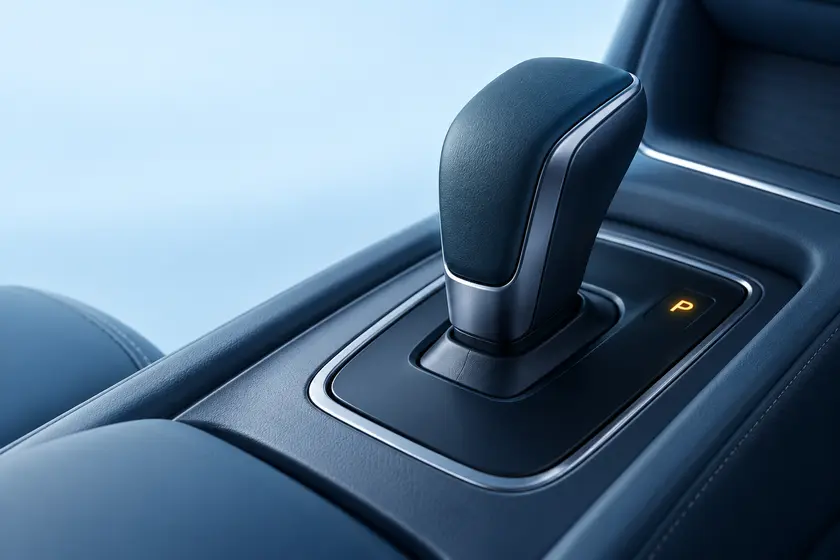
Automatic stuck in Park: what to do
The release method depends on the gearbox and vehicle edition. A similar-looking selector is not enough to identify it.
Keep the vehicle secured
Do not attempt a release beside traffic, on a slope or where the car could roll. Moving a selector out of Park can remove the protection that keeps it stationary.
Identify the exact vehicle
Have the make, model and model year ready. Check the build date, gearbox, market and controls against the owner’s manual.
Use the vehicle helper
Open the guided checks below. Where a supported manual matches, follow its conditions. You can also find manufacturer references and YouTube choices. If no procedure matches, request recovery.
Getting the problem resolved
The correct manufacturer procedure may allow loading. If it cannot be completed safely, tell the recovery operator that the car is stuck in Park so the loading method can be assessed.
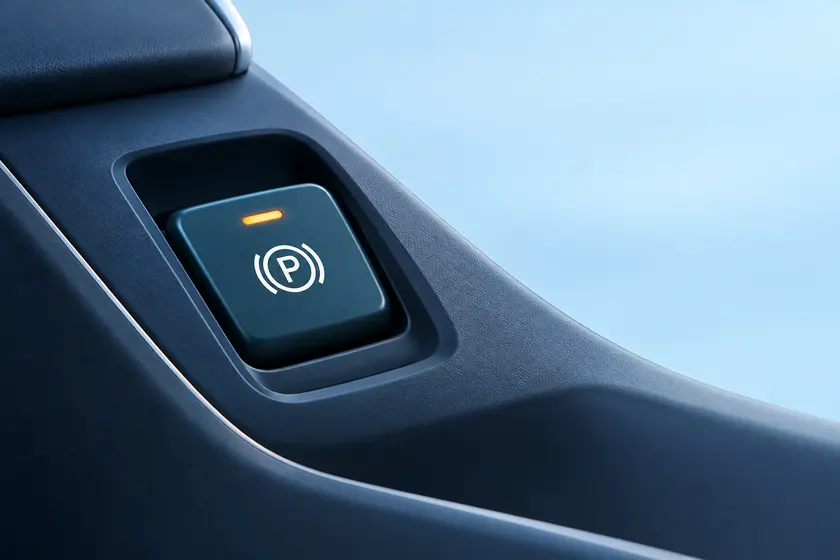
Guide 09 / Electronic parking brake
AI illustration · general example
Parking brake stuck on: what to do
The electronic parking brake and gearbox Park are separate. Releasing one does not necessarily release the other.
Read the dashboard message
While safely stationary, note the exact warning and whether the vehicle starts or becomes ready. Follow your own manual’s normal release conditions.
Consider the power supply
Low battery voltage can prevent parking-brake operation on some vehicles. That is a possible cause, not a diagnosis. Any power support needs the manufacturer’s procedure.
Find the correct references
Use the parking-brake guide to enter make, model and year, search actual YouTube video choices and request diagram searches. A title match does not verify a repair procedure.
Getting the problem resolved
If normal release fails, request an assessment. Tell the operator that the parking brake remains applied and whether Neutral can be selected.

Guide 10 / Safety & recovery
AI illustration · general example
Broken down on the road: what to do
Your first task is protecting everyone from moving traffic. Arrange private recovery once the immediate danger is dealt with.
Get to relative safety if possible
On a motorway, aim for an exit or service area if the vehicle can safely reach one; otherwise move left into an emergency area or hard shoulder if possible. Use hazard lights.
Choose a safe waiting position
Leave by the side away from traffic only if safe. Wait away from the car and traffic, behind a barrier where available and safe. If you cannot reach safety and exit safely, stay belted in and call 999 for the police.
Share the pickup details
Once safe, provide a map location, road and direction, nearby junction and vehicle condition. The recovery quote form can request your current location with permission; manual entry is also available.
Getting the problem resolved
Confirm the price, vehicle loading needs, destination and passenger arrangements. An enquiry alone does not mean a truck has been dispatched.
Tell us what’s happened.
Share the pickup point, make and model, and whether the car can roll. Baloch Recovery Services will check suitable assistance and confirm availability, price and arrival arrangements.
Your enquiry is free and does not book or dispatch a truck. For immediate danger, use the emergency services.
Prepared by Baloch Recovery Services · Sources checked 27 September 2026. Vehicle-specific guides include their own scope and references.
Report a problem with this guide →