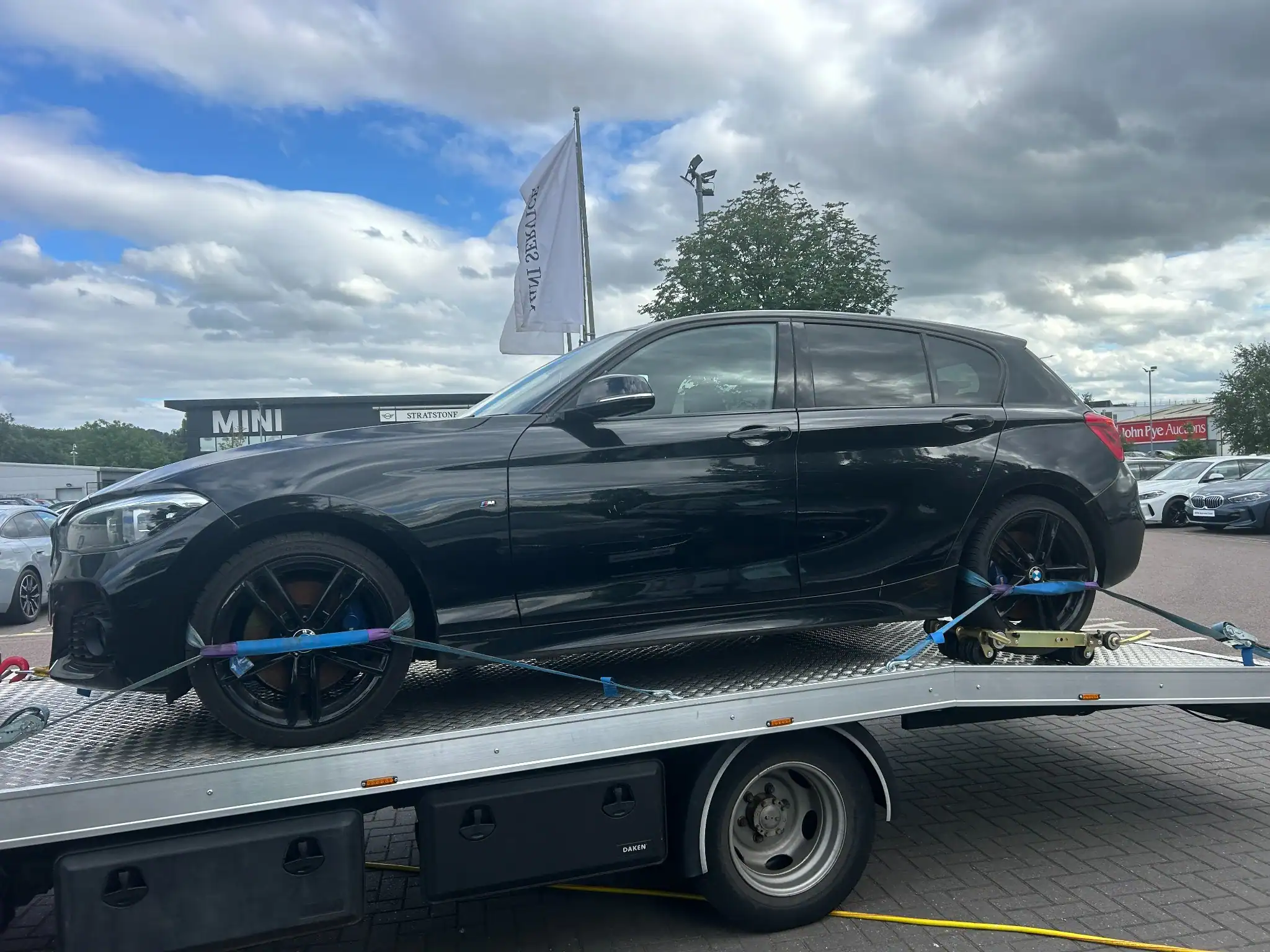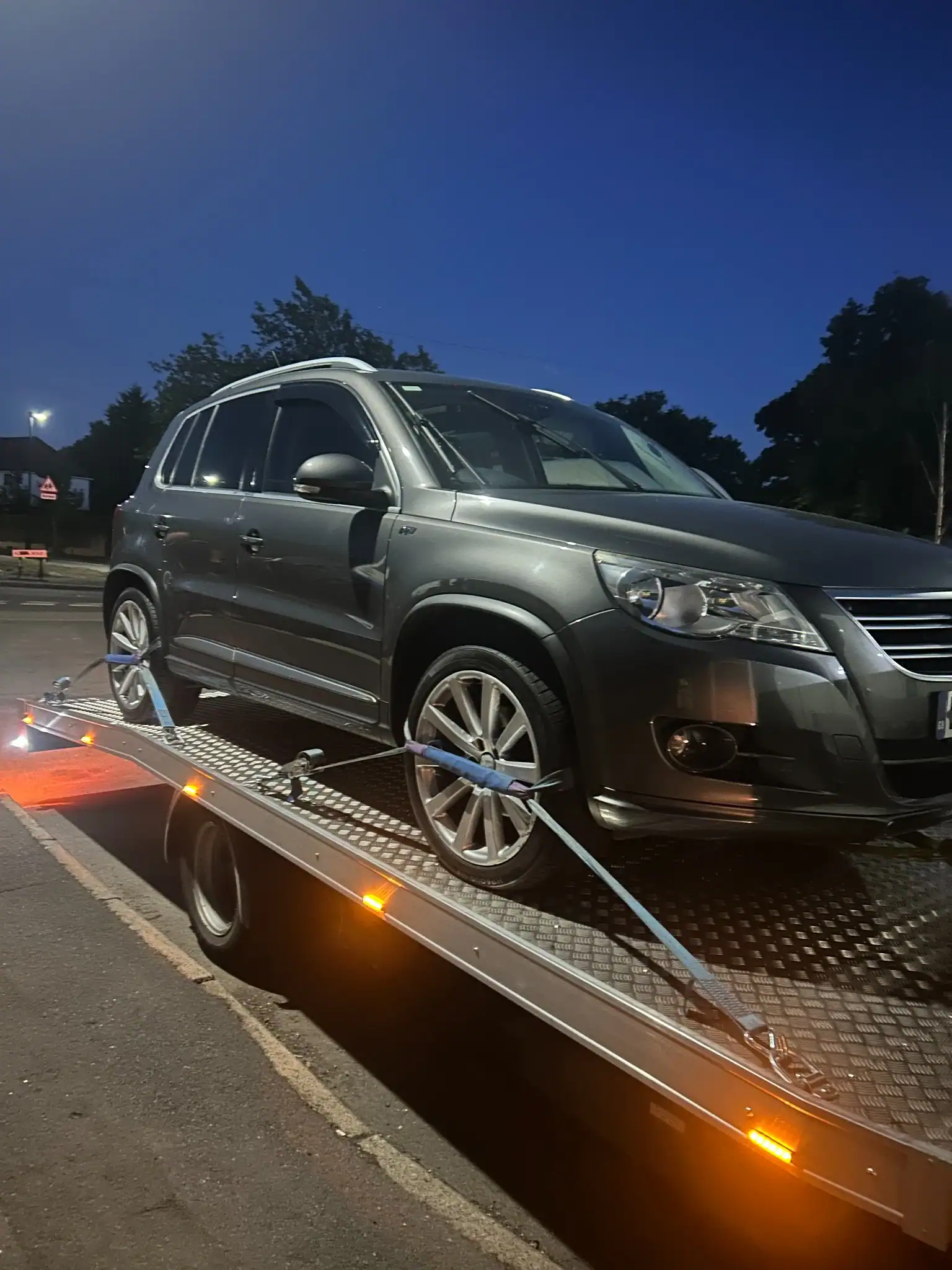

Local van recovery across London
A van that will not start in a residential bay needs a different collection plan from a loaded delivery vehicle stopped on the North Circular. Our local van recovery team serving London starts with the exact position, the van's dimensions and what has failed. We check whether a suitable truck can reach the vehicle, carry its actual weight and unload at the chosen destination before confirming dispatch. A postcode helps, but the entrance and access information often decide the practical loading plan.
Use the quote form for emergency van recovery, planned van transport or a broken down van that needs a garage. Include the make and model, registration, wheelbase, roof height, load and whether the van drives, rolls and steers. Describe the immediate surroundings: a basement, a narrow mews, a customer driveway, an estate loading yard or a street with stopping restrictions. Clear details let local recovery drivers assess the job without relying on assumptions about an empty, freely rolling van.
East London: Stratford, Leyton, Barking and Dagenham
For a collection around Stratford or Leyton, identify the street or site entrance as well as the postcode. A business address can have a public reception on one road and a service yard on another. Tell us whether the van is inside a gated compound or behind a height barrier. Do not arrange to meet on a busy main road simply because a truck cannot enter the original parking area; any repositioning needs assessment and permission.
Barking and Dagenham enquiries can involve trade yards, warehouse accesses and residential roads connected by the A13. Supply the unit or premises name and explain which side of the route you are on. A location pin beside a dual carriageway may point to an adjacent service road. If the vehicle has lost power, leave it secured and describe its position rather than trying to cross traffic to an easier-looking collection point.
North London: Tottenham, Edmonton and Enfield
For Tottenham, Edmonton and Enfield, the A10 and A406 can be useful route references, but they do not replace a precise pickup location. Give the direction of travel, a signed junction or the nearest safe landmark when stopped on a main road. If the van is already in a yard, state the vehicle entrance and any visiting-driver arrangements. Recovery trucks need sufficient room to position, deploy equipment and leave with the van loaded.
At a delivery site, ask a manager to confirm permission for loading and whether a security escort is needed. Explain if the keys are with the driver, a colleague or reception. A truck should not be sent to an unmanned locked gate on the assumption that someone will arrive later. Where the van is blocking another business, advise us of the restriction so collection can be assessed with the site contact.
West London: Park Royal, Acton and Hounslow
Park Royal and Acton have busy commercial streets and working yards where the recovery address may differ from the trading address. Send a photograph of the entrance when it is safe, including a height limit, narrow gate or sharp turn. A medium panel van that fits through the entrance alone may still be inaccessible to a longer recovery truck. Any separate move to an accessible loading position must be agreed before booking.
For Hounslow and routes connected with the A4 or M4, say whether collection is from a public road, a hotel, a workplace or controlled premises. Airport-related and secure-site collections require the actual release and entry arrangements; a booking does not grant access. We do not promise airside collection or unrestricted entry to controlled areas. Planned transport can be arranged only when the pickup and receiving locations accept the proposed operation.
South London: Croydon, Wimbledon and surrounding streets
On the south side of London, include the full pickup and drop-off postcodes rather than only the borough. Croydon and Wimbledon jobs may combine restricted streets, residential parking and a workshop destination on a different route. Tell us whether the van faces downhill or uphill, whether another vehicle is parked behind it and whether the wheels can turn. Those details affect the safest direction for loading.
A recovery enquiry from a shopping centre or retail park should identify the specific parking area, level and exit. Do not assume a recovery truck can enter a multi-storey structure. Ask the site operator about access and the procedure for moving an immobilised vehicle. If the van is underground or below a barrier, we assess a suitable method separately instead of assuming an ordinary flatbed can reach it.
A406, A205, A40, A12, A13 and M25 van breakdowns
London's main roads require an accurate carriageway description. For the A406 North Circular or A205 South Circular, give the road, direction, nearest junction and whether you are in a running lane, lay-by or side road. A nearby retail park name can help the driver orientate but does not establish a safe loading position. Keep people clear of moving traffic and follow instructions from the road operator or emergency services.
For the M25, M1, M4 or M11 approaches, state the motorway, direction, nearest junction and a driver location marker if visible safely. If you are in a live motorway lane or cannot reach safety, call 999 and ask for the police before arranging private recovery. Do not walk along a motorway to read a sign, attempt roadside repairs or place a warning triangle there. Our M25 recovery page explains the collection information needed after immediate danger is addressed.
A van parked at services should be described using the site name and actual area: a fuel forecourt, parking bay or access road. Let staff know about a disabled vehicle where appropriate. The truck's arrival and loading position remain subject to safe access and permission. We confirm the practical collection point rather than treating any pin close to a motorway as a usable place to stop.
Loading restrictions and getting a truck to the van
Red routes, bus lanes, controlled parking and narrow approaches can all affect how a London collection is carried out. Share photographs of signs and road markings if you can obtain them safely. We do not assume a recovery booking gives permission to stop anywhere or that another vehicle can be pushed into a restricted lane. The driver assesses positioning and any site-specific arrangements before equipment is deployed.
For planned work, check access with the owner or manager of private premises. Give permitted collection times, the gate contact and any booking-in procedure. TfL provides official information about red routes. Restrictions and conditions can change, so current signs and any required permissions need checking for the actual collection. A price agreed on incomplete access information may need reassessment before work proceeds.
Small, medium and large van recovery in London
Small vans such as a Berlingo, Caddy or Transit Connect still need their actual loading condition checked. Tell us about fitted shelving, tools, stock or a roof rack. For medium vans such as a Transit Custom, Vivaro or Transporter, include the wheelbase, height and any crew-cab or conversion details. A model name alone does not establish the dimensions or weight that the recovery truck must accommodate.
Large panel vans, Lutons and extra-long-wheelbase vehicles need individual confirmation. Give the plated weight, approximate current load and known dimensions, including a tail lift or external equipment. Large van recovery is available only when lawful carrying capacity and suitable equipment are confirmed. We may need additional photographs or weight information before accepting the booking; the fact that a van is described as 3.5 tonnes does not mean a small recovery truck can carry it.
For fleet van recovery, identify each vehicle separately and explain who authorises the work. Several disabled vans cannot be assumed to fit into one collection. Agree the priority, individual routes and receiving contacts before confirming transport. If business stock must be transferred, arrange your own safe handling plan. Do not unload heavy items or valuable tools beside traffic to make a van appear easier to recover.
Manual vans, automatics and non-running vehicles
For a manual van, confirm whether it selects neutral, rolls freely and releases the handbrake. For an automatic, say if the selector is locked in park or the parking brake will not release. Share the exact model and fault description. Do not force a selector, dismantle a brake or use an unfamiliar override procedure to make loading possible. The driver needs an honest description of the van as it stands.
A non-runner that rolls and steers may be suitable for controlled winch loading after assessment. A van with locked wheels, a seized brake or damaged suspension can need different equipment. Skates are useful only where their capacity, surface and clearance suit the operation. They are not a universal solution for every loaded commercial vehicle. Mention whether the van is on level hardstanding, a slope, gravel or soft ground.
If the van is stuck on a verge, in mud or in an awkward yard position, send a short video and photographs from a safe place. Explain the ground condition, the vehicle's angle and what prevents it moving. A pull-out is assessed separately from straightforward transport. Avoid repeated attempts to drive out; those can deepen ruts, change the vehicle's position and make a recovery more difficult to plan.
Flat batteries, damaged tyres and wheel problems
A van that will not crank after standing may need battery assistance, while one that stopped during a journey can have a different fault. Tell us what happened, what the dashboard shows and whether there are any electrical or fuel concerns. Local technicians can assess whether a suitable battery boost is an option. Recovery to a repairer remains available where roadside assistance is unsuitable and an appropriate truck can be arranged.
For a puncture, identify the affected wheel and whether the rim is damaged. A collapsed suspension corner or wheel trapped against the body requires more information than a flat tyre. Send clear photographs without standing in traffic. Avoid driving a damaged van to a garage simply to shorten the recovery distance. Our London vehicle recovery page covers the wider local service alongside this van-specific assessment.
Garage transport, business moves and auction van collection
Home-to-garage transport should be booked with the receiving workshop's agreement. Confirm that it accepts the van's size and condition, has unloading space and can receive it at the proposed time. Give the workshop entrance and receiving contact. A diagnostic appointment does not automatically provide an overnight storage space or permission to leave a non-running van outside after closing.
Trade van transport can involve a purchased vehicle, a van returning from a repairer or a delivery vehicle being moved back to business premises. Tell us who can release it, where the keys and documents are and who will sign for delivery. Long-distance van transport from London is assessed using the same size, load, access and destination checks. The agreed route and handover matter as much as the distance.
For auction van collection, provide the yard, lot reference, release status and the condition information available. A run-and-drive label does not guarantee that a van rolls, releases its brakes or can be loaded without assistance. Collection slots and yard loading methods must be confirmed for that specific vehicle. Read the auction collection guide before booking; we do not assume forklift loading is suitable for every van or sale.
Condition checks, loading and safe delivery
At collection, the driver checks the van against the supplied description and assesses the available space. Disclose existing body damage, loose parts, low clearance and roof-mounted equipment. Where appropriate, photographs or video record the vehicle's condition before transport. A condition record supports a clear handover, but it does not replace the practical checks needed for payload, access and secure loading.
The loading method depends on the vehicle and equipment. Keep people clear of ramps, a moving winch line and the area behind the truck. The driver controls the loading sequence and decides when anyone may approach. Secure personal belongings and explain any goods that need separate handling. Ask about the insurance applicable to the vehicle and operation; tools, cargo and business interruption should not be assumed to have the same cover.
At delivery, the receiving area must allow controlled unloading and somewhere safe to leave the van. Tell the driver in advance if a garage wants it facing a particular direction or if a non-rolling vehicle must be placed in a designated space. Confirm the agreed handover and keys before the truck leaves. Any change of destination should be agreed before the journey continues.
London van recovery prices and booking
Recovery prices start from £60 for suitable straightforward jobs where available. London van towing is individually quoted because distance, load, access, damage, collection time and equipment can change the work involved. The starting price is not a fixed charge for every commercial vehicle. Send complete details for your own agreed price rather than estimating a loaded-van recovery from a car transport example.
Our quote response target is within five minutes for complete enquiries, with longer waits possible during busy periods. Arrival from around 17 minutes is available only where a suitable local truck is nearby and access allows it. We confirm the actual ETA before dispatch. Cross-London traffic, restricted approaches and the need for specialist loading equipment can extend that estimate.
Once the job is assessed, you receive the agreed service, price, estimated collection time and booking arrangements. A deposit is normally required to confirm the job and assign the truck; the balance follows the agreed collection and delivery terms. An enquiry itself does not dispatch a vehicle. Tell us about changes to the load, location, vehicle condition or receiving garage before accepting the booking.
London van recovery questions
Can you collect a van from a basement car park?
Possibly, following an access assessment. Send the height restriction, parking level, ramp details, turning space and whether the van rolls and steers. The recovery method needs confirming before a truck is assigned. Do not assume an ordinary flatbed can enter a basement or that the van can safely be pulled up its ramp.
Can you recover a loaded delivery van?
Send the vehicle's plated weight, load description and approximate current weight. Availability depends on the van and a truck with suitable lawful capacity. Cargo, tools and hazardous materials need disclosure. If contents must move separately, agree a safe arrangement with your own team before collection rather than unloading at the roadside.
Can you move an automatic van locked in park?
Describe the exact model, brake status, ground surface and access. Skates or another suitable loading method may be possible after assessment. Locked park is not a reason to force the van to move, and not every heavy or damaged van is suitable for the same equipment. The loading plan and price are confirmed first.
Does a local van recovery quote include a passenger seat?
Passenger capacity must be checked with the assigned truck. Tell us the number of people and any child-seat needs before booking; space must not be assumed. Make alternative travel arrangements where suitable seats are unavailable. Vehicle transport and passenger transport are separate practical requirements within the booking discussion.
What should I send for the quickest useful quote?
Provide the pickup and delivery postcodes, exact entrances, vehicle make and model, size, load, transmission, keys, rolling condition, neutral and handbrake status, wheel damage and safe photographs. Use Get a Van Recovery Quote so the details arrive together. We can then check a suitable local truck and explain the price and ETA.