Common Breakdown Situations
What we need to know before recovering a vehicle from the M11
Motorway recovery is easier when the loading condition is known in advance. The following situations explain why our quote form asks more detailed questions than a basic towing enquiry.
Vehicle will not start
If the engine does not start, tell us what happened immediately before the fault. A flat battery, starter issue, warning light, overheating episode or sudden cut-out may lead to different roadside options. If you have already tried a jump start, include that in the notes. If the vehicle cannot be made reliable enough to drive, recovery to a garage or home may be the safer practical option.
For a non-starting automatic vehicle, confirm whether the selector can move into neutral. For any vehicle, confirm whether the steering works normally and whether the handbrake releases. These details matter because the truck operator needs to know whether the vehicle can be winched in a normal way or may require additional preparation.
Car drives but is unsafe to continue
A vehicle can still move and yet be unsuitable for a motorway journey. Examples include severe warning lights, overheating, brake concerns, tyre or wheel damage, loss of power, unusual mechanical noise or a fault that keeps returning. In this case, choose “Yes” for “Does the vehicle drive?” but explain the fault in the issue field. That tells us the vehicle may be able to position itself for loading even though it should not continue the journey.
Never keep driving simply to make a recovery easier if doing so would be unsafe. The loading questions are there to help us plan once the vehicle is in a safe place.
Vehicle will not go into neutral
This is an important loading detail, particularly for automatic, hybrid and electric vehicles. If the vehicle cannot select neutral, do not guess. Choose “No” or “Not sure” in the form and tell us what is displayed on the dashboard. A locked transmission or electronic fault can change how the vehicle needs to be moved, and the appropriate method depends on the individual vehicle and recovery equipment available.
Providing the make and model helps the operator understand the approximate size and drivetrain before arrival. If you know the registration, you can add it in the notes as well.
Handbrake stuck or wheels locked
A handbrake that will not release, damaged wheel, steering lock or accident damage can prevent a vehicle from rolling normally. This is why “Does the handbrake release?” is a separate question. If one wheel is damaged or the vehicle is sitting unusually low, mention that specifically. A clear photo sent after your online enquiry can also help us assess what equipment may be required.
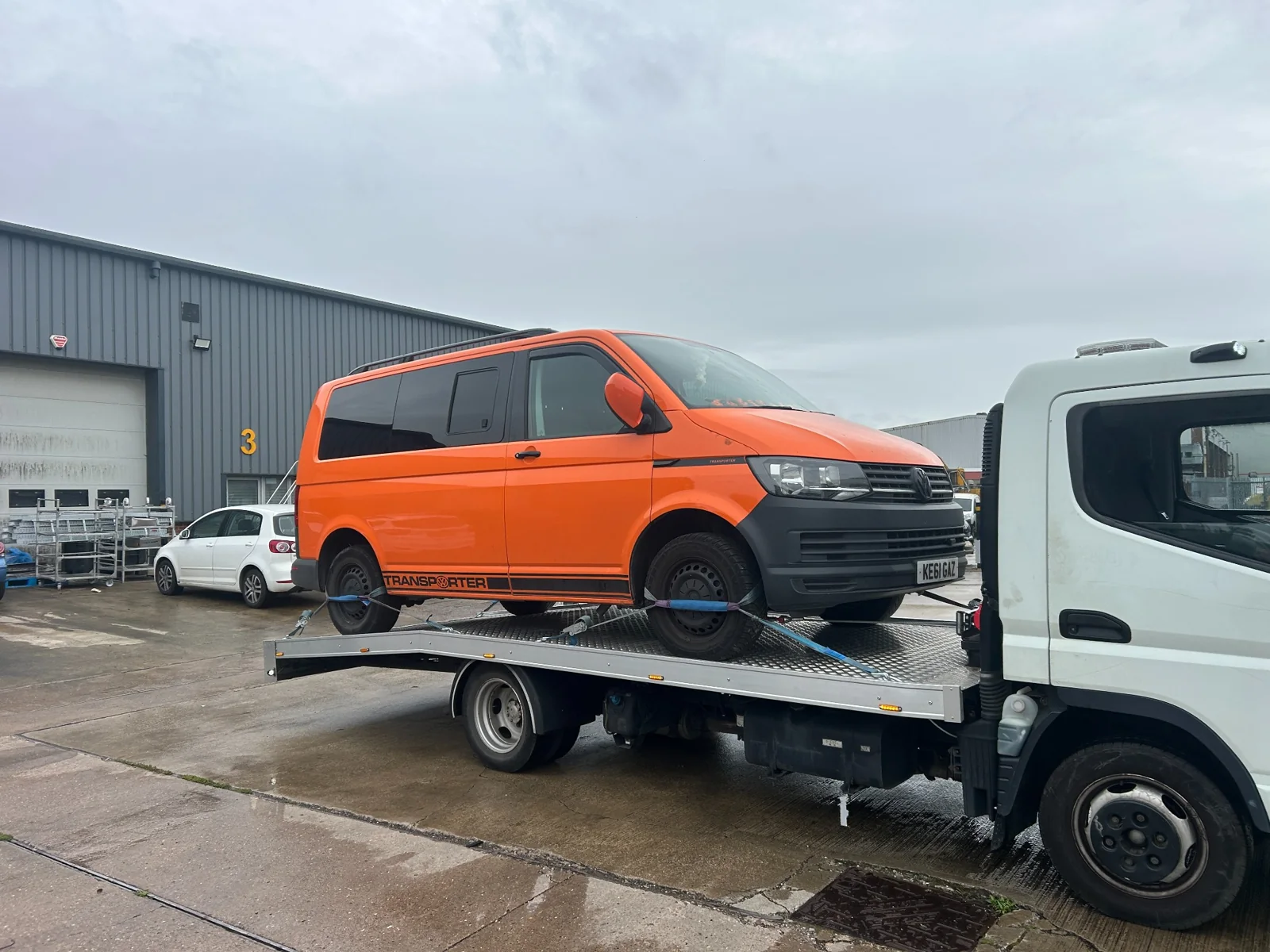
For larger vans, loaded commercial vehicles or unusually heavy vehicles, always mention the load and approximate vehicle type. Recovery capacity has to match the real weight and dimensions, not only the badge on the bonnet.
Flat battery at M11 services
Service areas are common places for battery faults to become obvious because a car that drove normally may fail to restart after being switched off. Where roadside assistance is suitable and available, a jump-start enquiry may be quicker than arranging a full tow. If the battery problem is linked to an alternator or another fault, however, the vehicle may need recovery even after it starts.
Tell us whether the dashboard lights come on, whether the starter turns and whether you have already attempted a jump start. This gives useful context before we quote.
Accident or impact damage
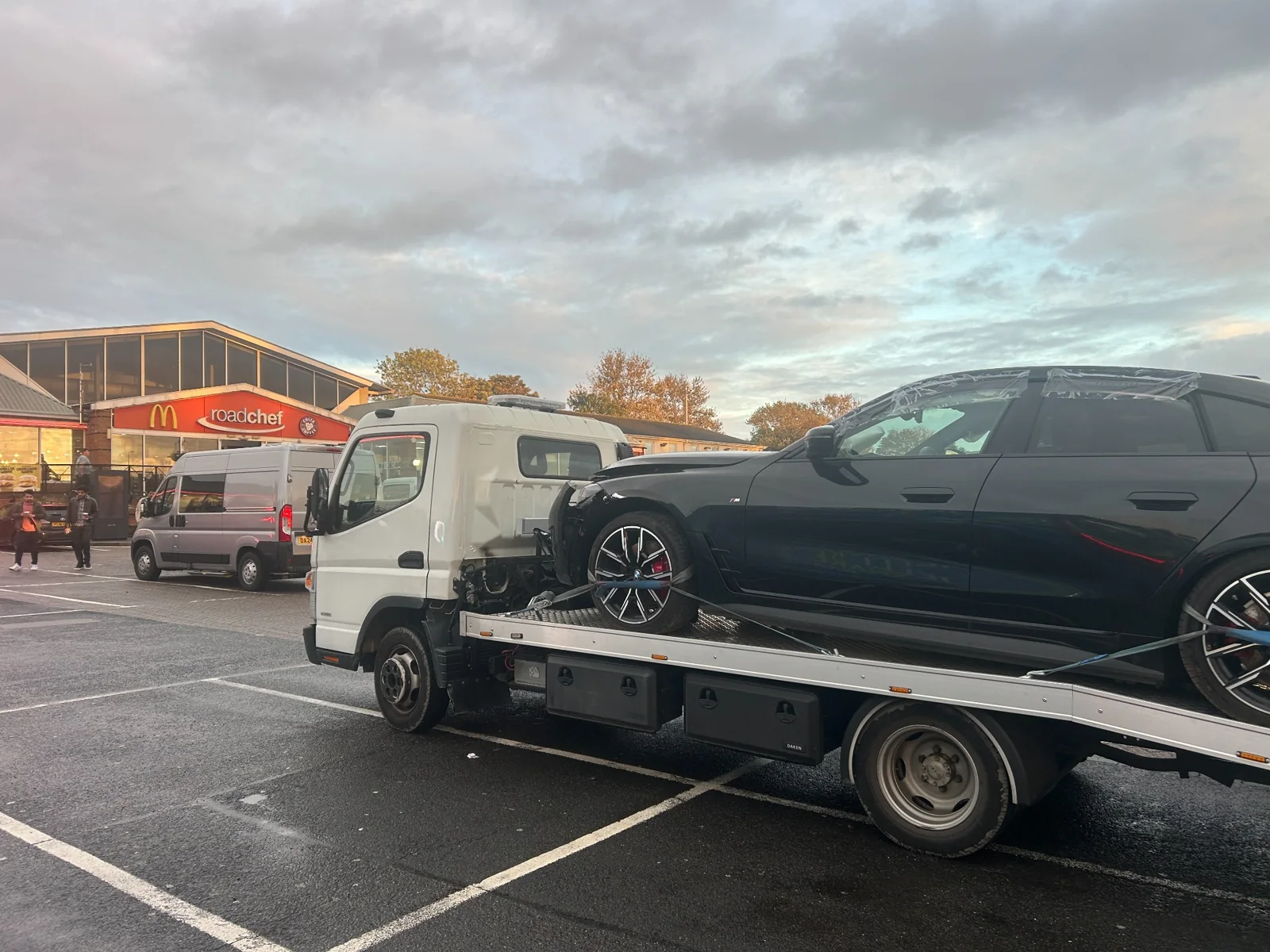
After an accident or impact, the visible body damage is only part of the recovery assessment. A wheel may be pushed out of alignment, suspension can be damaged, steering may be restricted, airbags may have deployed, or the vehicle may leak fluid. Tell us what you can see without placing yourself in danger. If the vehicle is in a dangerous motorway position, emergency and motorway safety procedures take priority over arranging a normal private collection.
Once the location is safe and accessible, we can assess recovery to a repairer, storage location, home or another requested destination.