Recovery coverage built around the M18
The M18 is a short but strategically important Yorkshire motorway. It links the M1 east of Rotherham with the A1(M), the Doncaster approaches, the M180 and the M62 near Goole. A breakdown here can interrupt travel between Sheffield, Doncaster, Scunthorpe, Hull, Leeds and the wider motorway network. It can also leave a driver trying to explain an unfamiliar junction, carriageway or link road while traffic continues moving nearby.
Baloch Recovery Services treats M18 jobs as location-specific recoveries, not just a generic tow. We check your direction of travel, nearest junction, driver-location sign or map pin, the vehicle type, whether it rolls and steers, and your preferred destination. That information helps us choose a suitable flatbed, plan a safe approach and avoid sending equipment that cannot load the vehicle.
Our recovery trucks stand by around the M18 corridor, particularly the Doncaster and Rotherham sides, in safe off-motorway operating locations. They are not parked on a live carriageway or hard shoulder. Coverage is coordinated around demand, traffic and vehicle capacity, so the quote response includes an honest availability check and a realistic estimated arrival time rather than a promise made before the job has been assessed.
Stranded on the M18 or a nearby link road?
Send the exact location and vehicle condition through the one secure form.
Standby recovery where M18 drivers need it
Two local operating areas give us practical access to the motorway’s busiest South Yorkshire sections, subject to truck availability and road conditions.
M18 car recovery Doncaster
Doncaster is central to M18 recovery. Junction 3 serves the A6182 and Great Yorkshire Way, while Junction 4 connects with the A630 for Doncaster and Armthorpe. Junction 5 links with the M180 and Doncaster North Services. We also cover Lakeside, iPort, Rossington, Bessacarr, Balby, Wheatley, Edenthorpe, Hatfield, Stainforth and the industrial areas around the eastern side of the city. A recovery can finish at a Doncaster garage, home address, secure storage yard or another destination anywhere in the UK.
M18 car recovery Rotherham
At the south-western end, the M18 begins at the M1 near Thurcroft and reaches Junction 1 for the A631. This area serves Bramley, Wickersley, Hellaby, Maltby and the wider Rotherham district. We cover motorway exits, nearby roundabouts, business parks, residential streets and accessible parking areas. If the vehicle has already left the motorway but cannot continue, the same quote form can be used for roadside recovery from Rotherham or transport to a local workshop.
North towards Thorne and Goole
Coverage continues beyond Doncaster to Junction 6 for Thorne and the A614, then Junction 7 where the M18 meets the M62 near Rawcliffe and Goole. This northern section is important for drivers moving between South Yorkshire, East Yorkshire and the Humber. We can assess recovery from the motorway corridor and nearby routes around Moorends, Hatfield Woodhouse, Rawcliffe and Goole, including onward transport towards Hull, Leeds, Scunthorpe or back into Doncaster.
Familiar with every M18 junction
Tell us the junction number, road name and direction whenever you can. If you are between junctions, a driver-location sign or map pin is even more useful.
M1 Junction 32 / M18 start
The south-western end joins the M1 east of Rotherham, close to Thurcroft. This is the key connection for traffic travelling between Sheffield, the Midlands and Doncaster. We assess recovery on the approaches, connecting slips and nearby accessible roads. State whether you were travelling towards Doncaster or returning towards the M1 because that changes the approach route for a truck.
Junction 1 — A631 Rotherham
Junction 1 connects the M18 with the A631 for Rotherham, Bramley, Wickersley, Hellaby and Maltby. Common recovery locations include the slip roads, the junction roundabout, nearby business parks and local roads after a driver has managed to leave the motorway. If you are on the A631 rather than the M18, include the nearest landmark or full postcode.
Junction 2 — A1(M) Wadworth
Junction 2 is the major interchange between the M18 and A1(M), near Wadworth and the routes for Tickhill, Bawtry and Rossington. The interchange has several high-speed links, so direction matters. Tell us which motorway you are on, whether you have passed the interchange and what the last sign said. Never walk across a slip road to improve access for a recovery truck.
Junction 3 — A6182 Doncaster
Junction 3 gives access to Doncaster through the A6182 and Great Yorkshire Way. It is useful for Lakeside, iPort, Rossington and the southern side of the city. If your vehicle reaches a safer place off the motorway, send the precise car park, estate entrance or roadside position. For a vehicle inside a restricted site, add gate, height or security instructions before dispatch.
Junction 4 — A630 Doncaster and Armthorpe
Junction 4 connects with the A630 for Doncaster and Armthorpe and is a frequent access point for local garages, homes and commercial areas. Tell us whether you are on the M18, the A630, a slip road or the roundabout approach. If the car has a puncture, suspension damage or a wheel that will not turn, make that clear so loading aids can be considered.
Junction 5 — M180 and Doncaster North
Junction 5 links the M18 with the M180 towards Scunthorpe and Grimsby and sits beside Doncaster North Services. A service area is normally a safer waiting place than a motorway shoulder when the vehicle can reach it. Give the service-area side or the motorway and direction you are using; “Junction 5” alone may not identify the correct carriageway or access point.
Junction 6 — A614 Thorne
Junction 6 serves Thorne and the A614, with access towards Moorends, Hatfield Woodhouse and surrounding villages. Recovery here may involve the M18 itself or local roads where a vehicle has left the motorway. A postcode, live map pin or nearby business name helps distinguish similar rural and industrial approaches, particularly after dark or in poor weather.
Junction 7 — M62, Rawcliffe and Goole
At Junction 7 the M18 meets the M62 near Rawcliffe and Goole. This connection carries traffic towards Hull, Leeds and the wider M62 network. Say whether you are joining or leaving the M62 and which direction you were travelling. We can assess onward recovery into Goole, back towards Doncaster or to a chosen repairer elsewhere in Britain.
Know the junction but not the exact position?
Use the form’s location button to add a map pin, then include the carriageway direction in the notes.
What to do after an M18 breakdown
Recovery arrangements should begin only after you have taken the safest action available.
If the vehicle develops a problem, try to leave the motorway at the next exit or enter a service area. When that is not possible, follow the Highway Code and any instructions from police, traffic officers, signs or motorway control.
- Go left. Move into the left lane and reach an emergency area or hard shoulder if you safely can. Stop as far left as possible, turn on hazard lights and leave room to exit away from traffic.
- Get safe. If it is safe, leave through the side furthest from traffic and move well behind a safety barrier, checking first for drops, debris or other hazards. Keep passengers away from the carriageway.
- If you cannot get left or cannot exit safely, stay in the vehicle with seat belts and hazards on. Call 999 immediately and ask for the police, or use the vehicle’s SOS function where available.
- Do not attempt repairs, place a warning triangle on a motorway, or stand between the vehicle and moving traffic. Never cross a live carriageway or slip road.
- Once safe, submit the recovery details. Mention vulnerable passengers, children, disability, pets or any police or traffic-officer instructions so the situation can be assessed properly.
Read the official Highway Code breakdown and incident guidance. In an emergency or immediate danger, use 999 before contacting a recovery company.
Help for breakdowns, damaged vehicles and planned moves
The correct solution depends on the vehicle, its condition, access and destination. The form collects these details before a truck is assigned.
Emergency breakdown recovery
For a car or van that has stopped and cannot continue safely, we assess a recovery from the M18 corridor to a home, garage, dealership or secure location. Mechanical faults, overheating, warning lights, clutch problems and loss of power all need the same essentials: an exact position, vehicle details and destination.
Accident-damaged vehicle recovery
Collision damage may affect steering, suspension, tyres, cooling systems or bodywork. Tell us whether the police have attended, whether the road is open and whether any wheel is bent, locked or missing. A vehicle in a live lane or controlled incident scene remains under emergency-service and traffic-officer direction.
Flatbed car towing
Flatbed transport keeps the recovered vehicle fully supported during the journey. It is suitable for many modern cars, automatics, four-wheel-drive vehicles and vehicles that should not be towed with wheels on the road. Loading method is checked against ground clearance, wheel condition and access.
Van and light commercial recovery
Many panel vans and light commercial vehicles can be recovered, but length, height, weight and load matter. Include the exact make and model and tell us if the van is carrying tools or goods. A suitable truck must have enough capacity and safe loading space; not every recovery vehicle can carry every van.
Motorcycle recovery
Motorcycles need secure loading points and careful restraint. Add the make, model, approximate size and whether a wheel, chain, steering lock or stand is damaged. The bike can then be matched with an operator able to load and secure it appropriately for the journey.
EV and hybrid recovery
Electric and hybrid vehicles may have model-specific towing and loading rules. State the exact model, battery state if known and any dashboard warning. A discharged high-voltage battery is not treated as an ordinary jump start. Flatbed recovery and the manufacturer’s instructions may be required.
Jump-start assessment
A mobile jump start may be considered when the vehicle is in a safe, accessible place off the live carriageway and the symptoms suggest a flat 12-volt battery. It is not carried out in an unsafe motorway position. If the vehicle still will not start, recovery can be assessed separately.
Non-runner and locked-wheel loading
A vehicle that will not start, select neutral, release its handbrake, roll or steer may need a winch, skates or another loading plan. These details are not minor: they determine whether the assigned truck can complete the job without delay or avoidable damage.
Local or long-distance transport
Your destination does not have to be the nearest town. Subject to an agreed quote and suitable capacity, the vehicle can be transported locally around Doncaster or Rotherham, across Yorkshire, or to another UK destination. Provide the complete drop-off postcode so the full journey can be checked.
Not sure which service to choose?
Select the closest option and describe the problem. The request will be checked before dispatch.
Why vehicle condition changes the recovery plan
A car that starts, drives and brakes for loading is different from a non-runner with a seized handbrake. An automatic that cannot select neutral, a 4x4 with drivetrain damage, a low sports car and a loaded long-wheelbase van may all need different equipment. Sending photos can help after the initial quote request, but the form captures the facts needed to begin.
Tell us whether it rolls and steers
If the vehicle does not drive, check only what can be checked safely. Do not crawl under it or attempt to move it beside live traffic. Tell us whether all wheels are present, whether tyres are inflated, whether steering appears connected and whether the vehicle is facing forwards or backwards in the available space.
Explain the access
Motorway recovery is only one part of the route. The destination may have a narrow gate, height restriction, steep drive, underground car park or busy workshop entrance. A collection point may be inside a depot with sign-in rules. Include restrictions at both ends so the operator can plan where the truck will stop and unload.
Use accurate vehicle details
The registration, make and model help identify approximate size, drivetrain and weight. If it is modified, lowered, carrying a heavy load or has roof equipment, add that information. Honest details lead to a more accurate quote and reduce the chance of a truck arriving without the capacity or loading aids required.
How to arrange M18 vehicle recovery
Get yourself safe
Follow motorway signs, the Highway Code and emergency-service directions. If you are in a live lane or immediate danger, use 999 first.
Send exact details
Give the M18 direction, junction or marker, a map pin, vehicle condition, passenger number and the full destination.
Receive the checked quote
We assess the journey and suitable-truck availability, then reply with a quote, availability or no-availability update within five minutes.
Confirm dispatch
Once the booking requirements are accepted, dispatch is confirmed and a realistic arrival estimate is provided, subject to traffic and safety.
Details that help us locate you quickly
“On the M18” is not enough to identify a vehicle. Include northbound or southbound, the junction you passed most recently, the junction ahead, and the letters and numbers on a driver-location sign if one is visible from a safe position. A mobile map pin is useful, especially around large interchanges. If you have left the motorway, send the name of the service area, road, business park or car park and describe which entrance you used.
Add the warning symptoms and any important change since the breakdown. For example: the engine has overheated, the clutch pedal has dropped, the vehicle lost power, a tyre is damaged, airbags deployed, coolant is leaking, the key is missing, the battery is flat, or the handbrake will not release. Also say whether police or National Highways are managing the scene. Clear information lets us decide whether ordinary flatbed recovery is appropriate or further coordination is required.
Ready to send the location and vehicle details?
Every Get Quote button returns to the same no-obligation form.
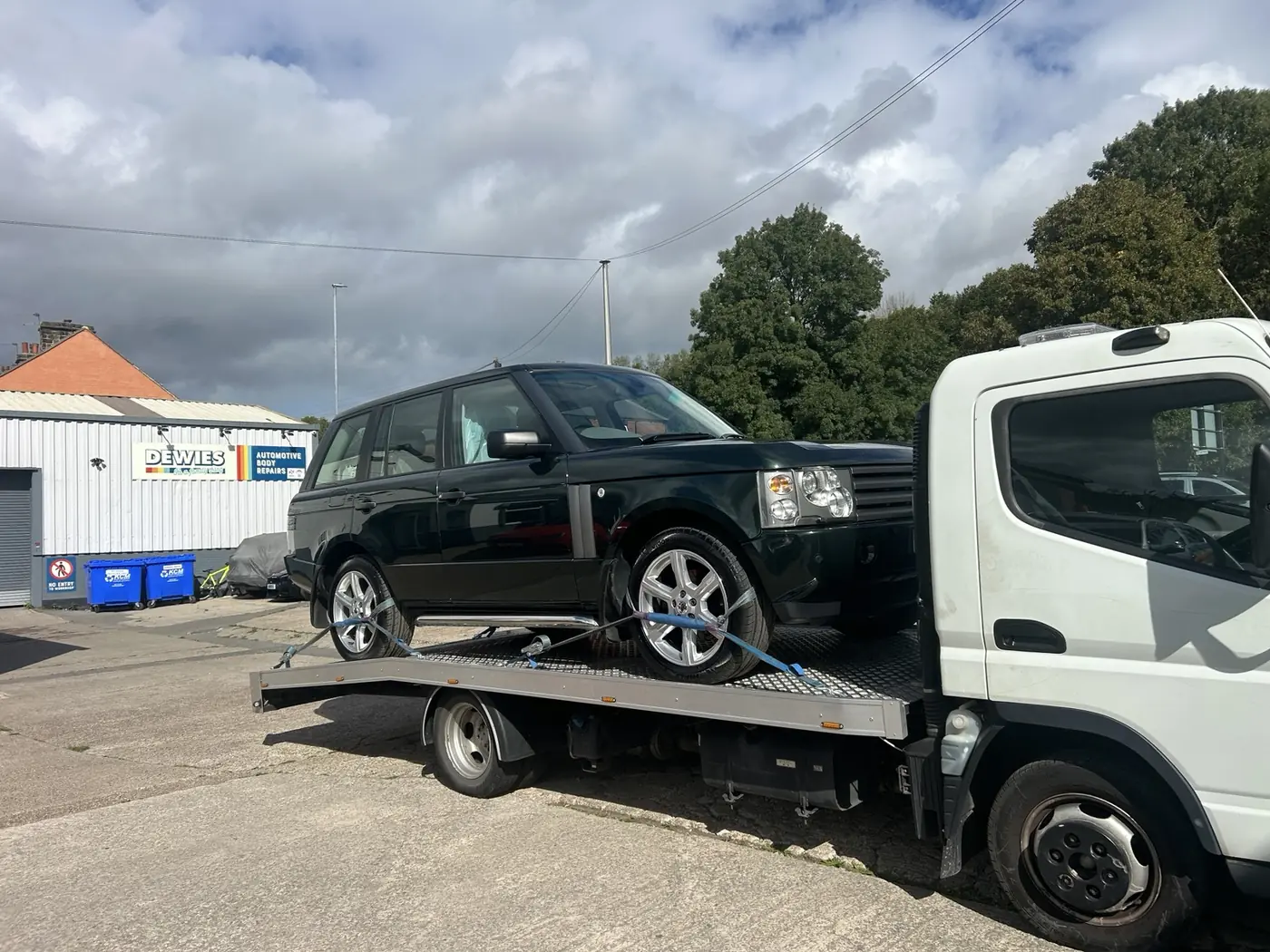
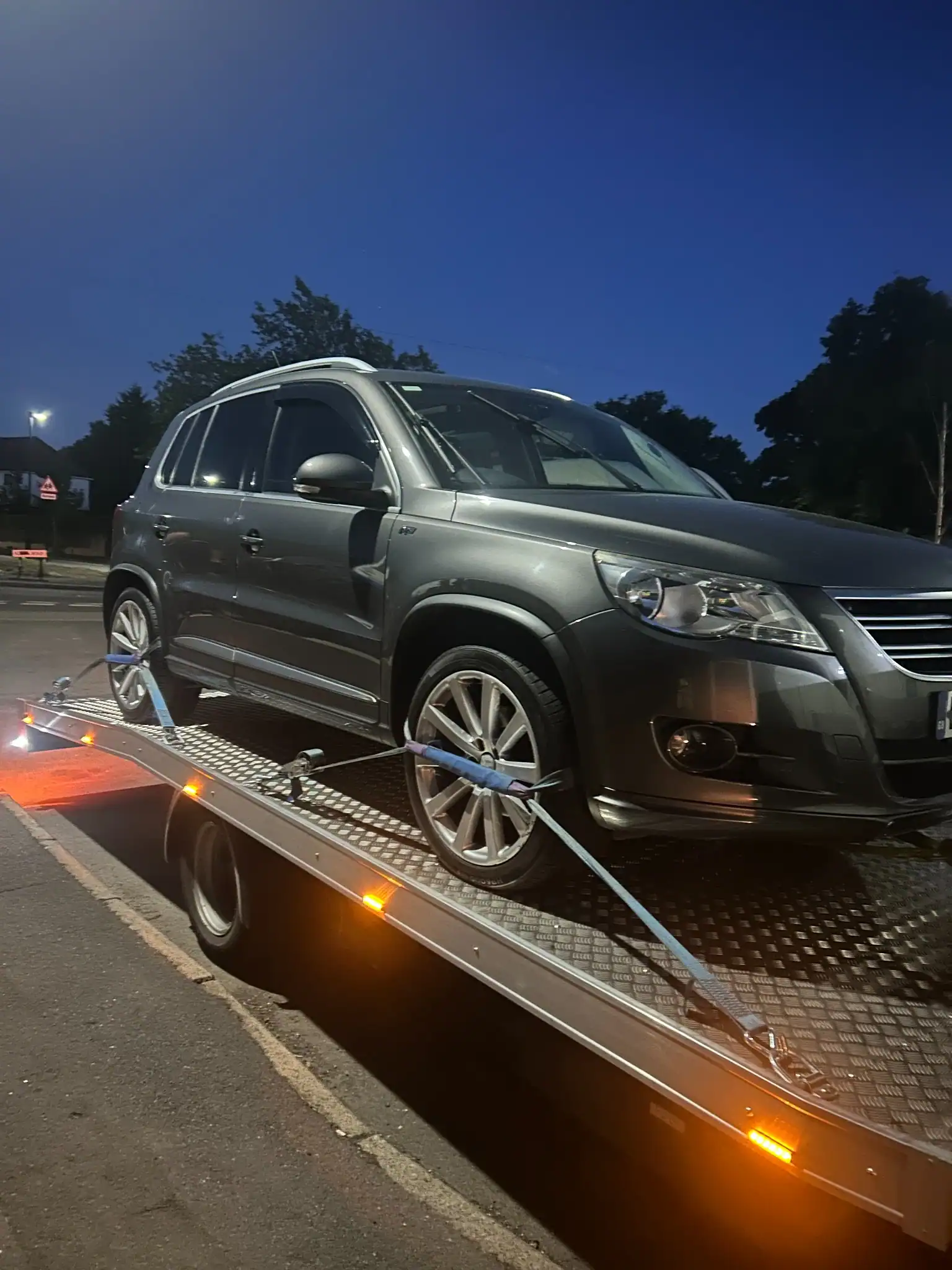
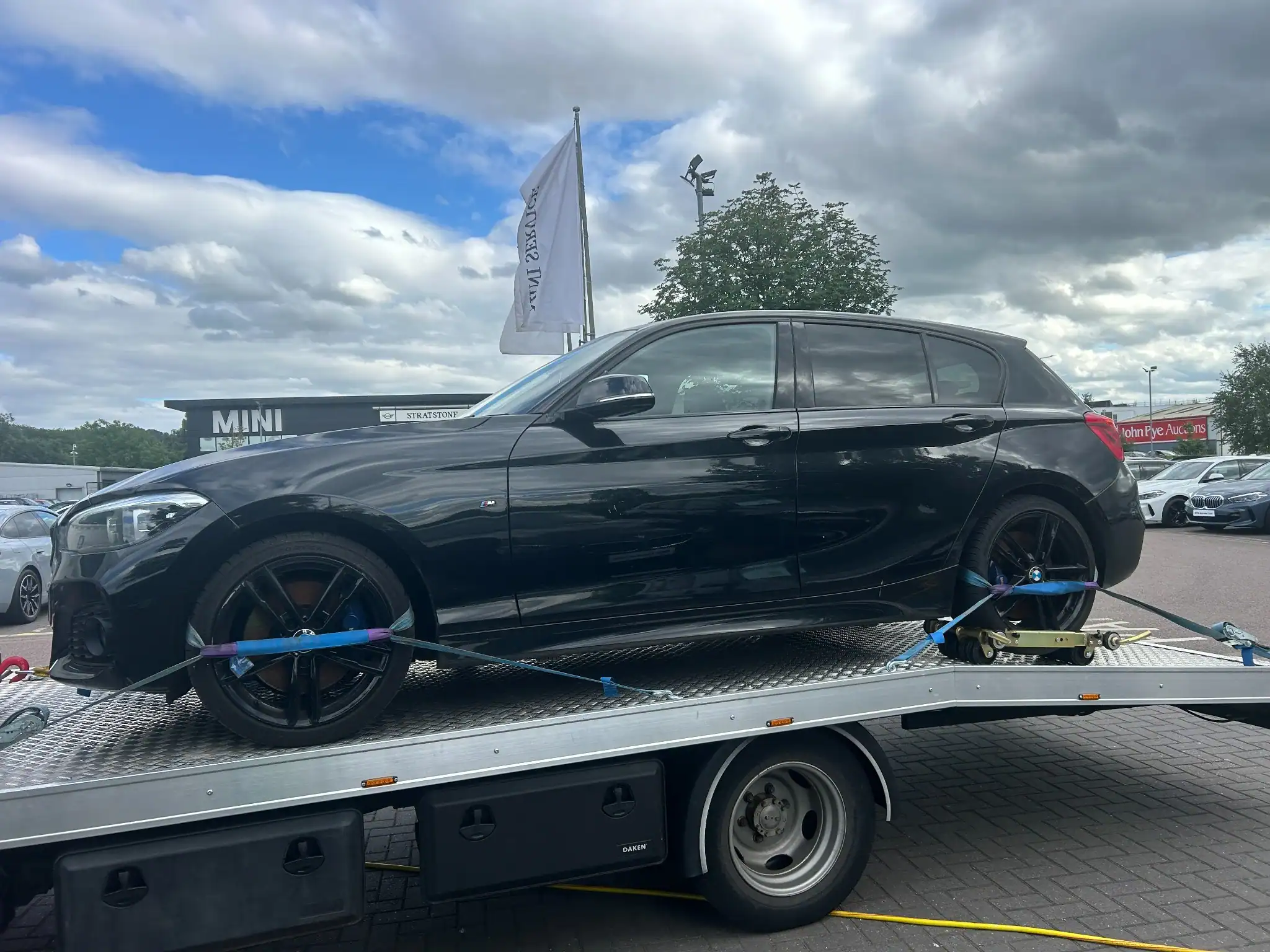
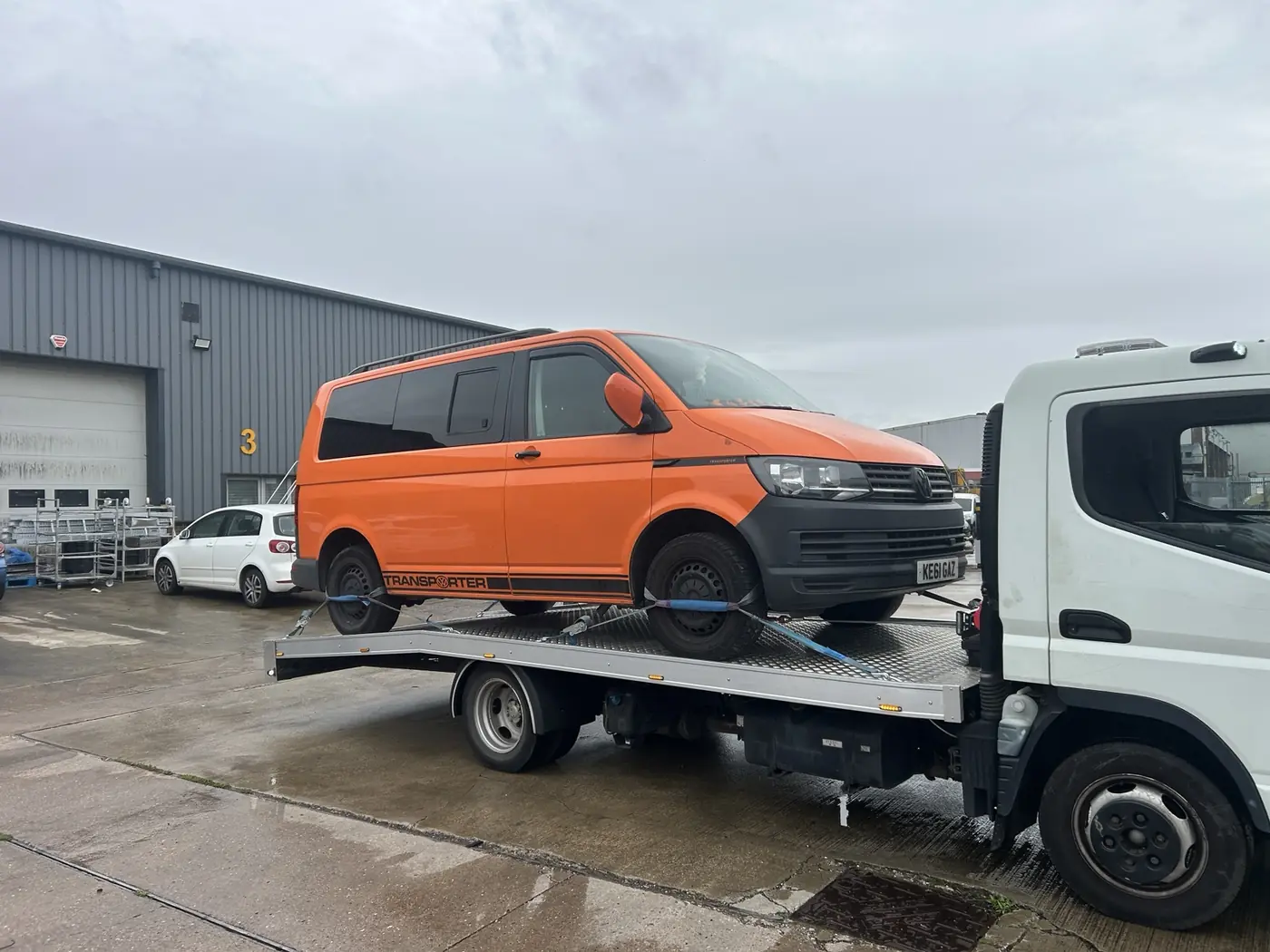
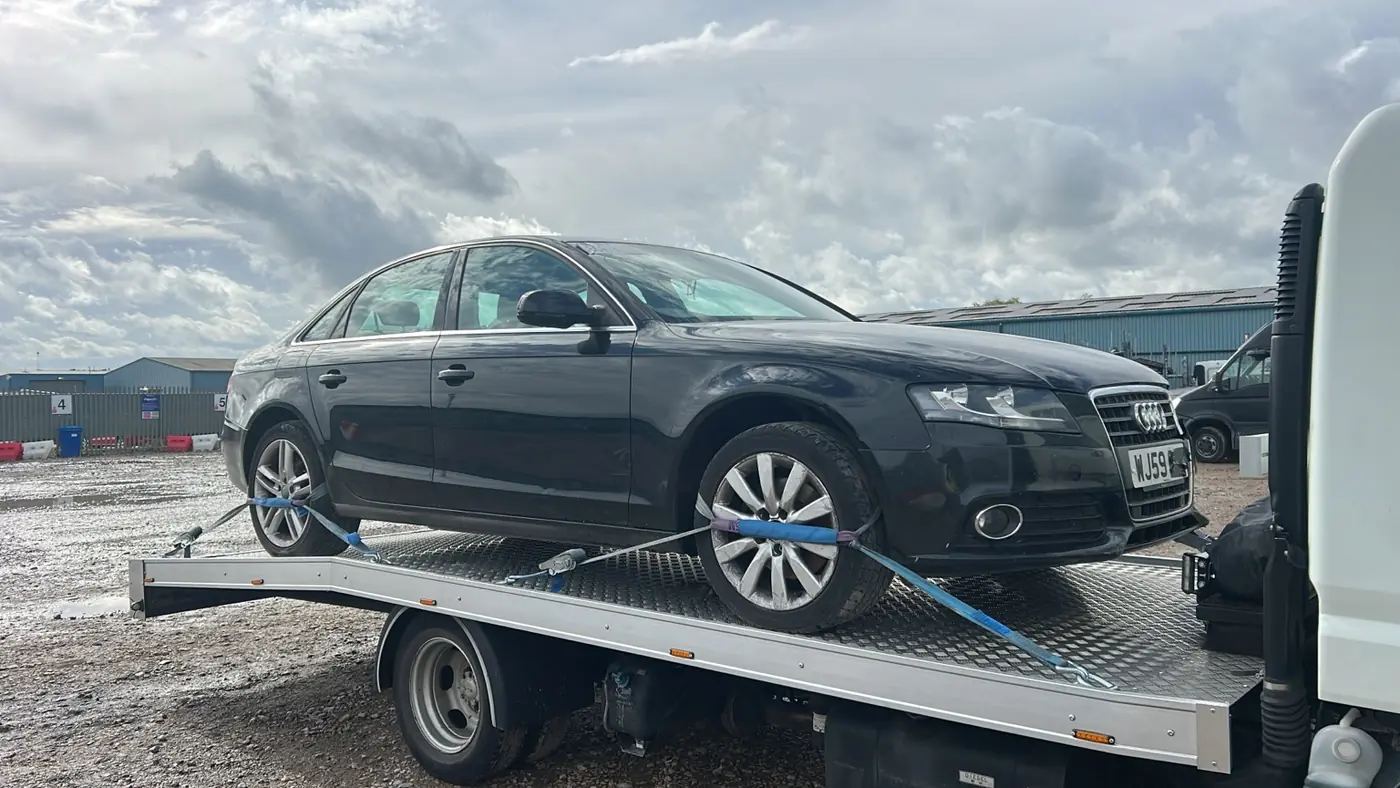
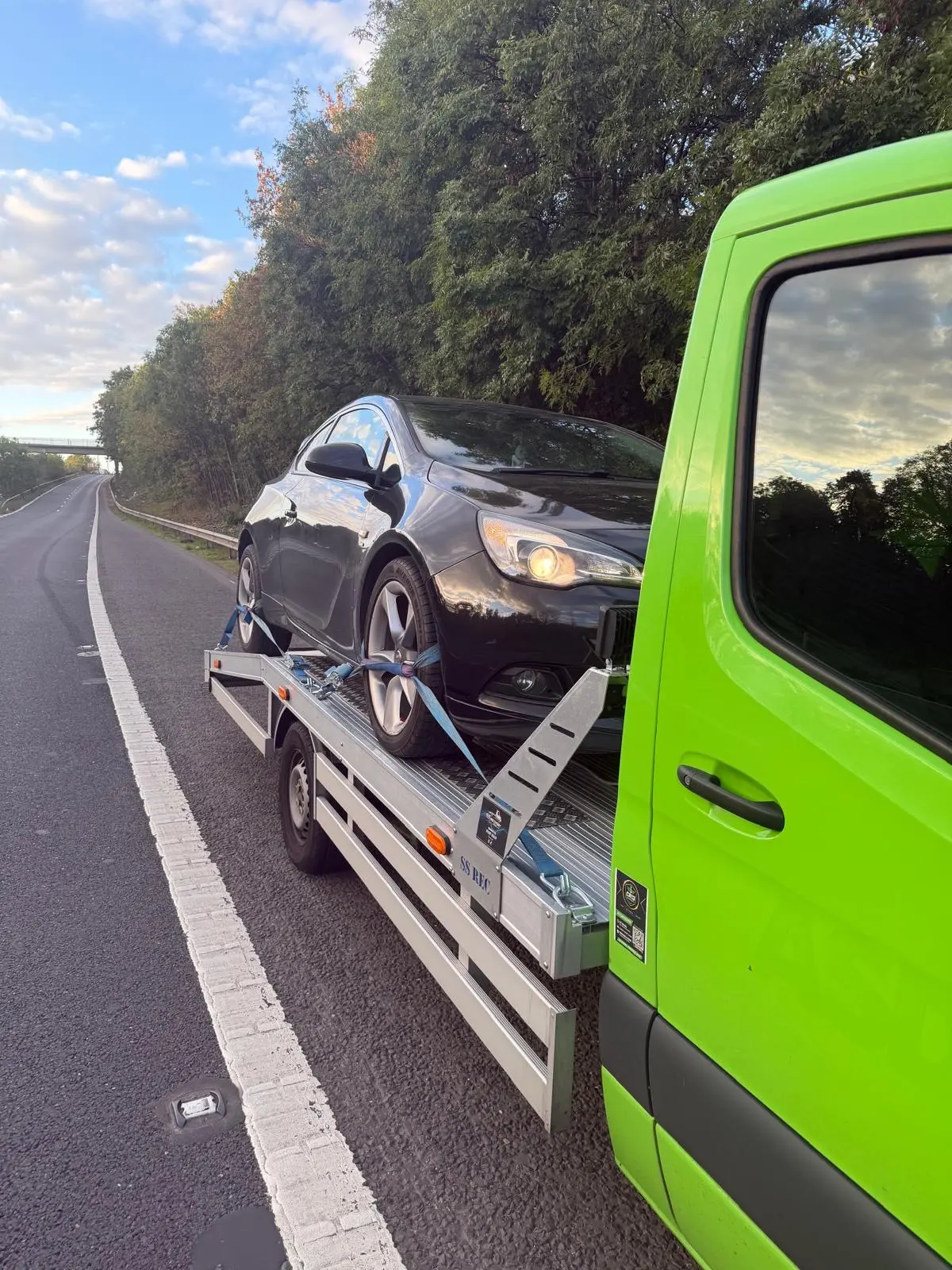
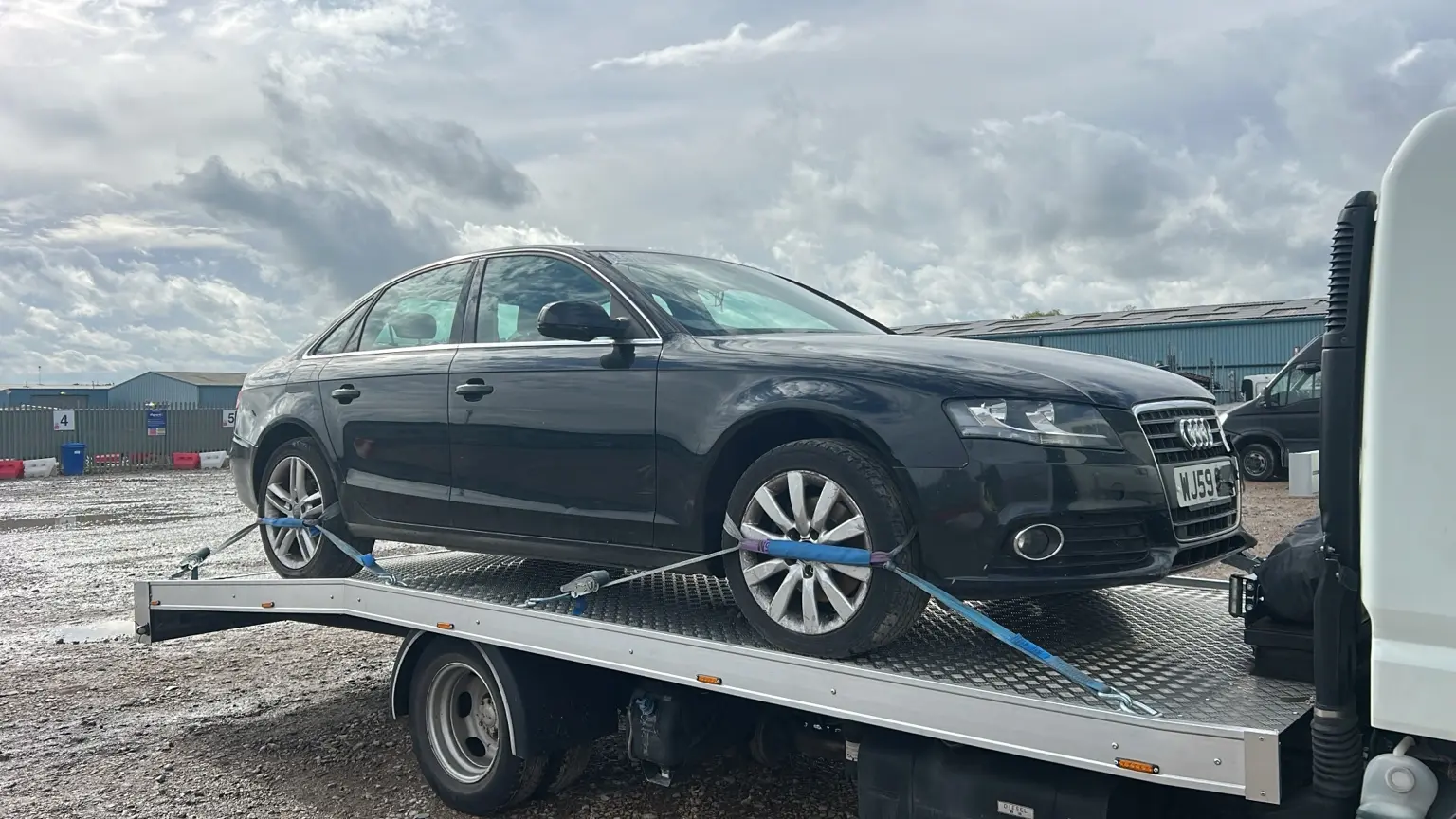
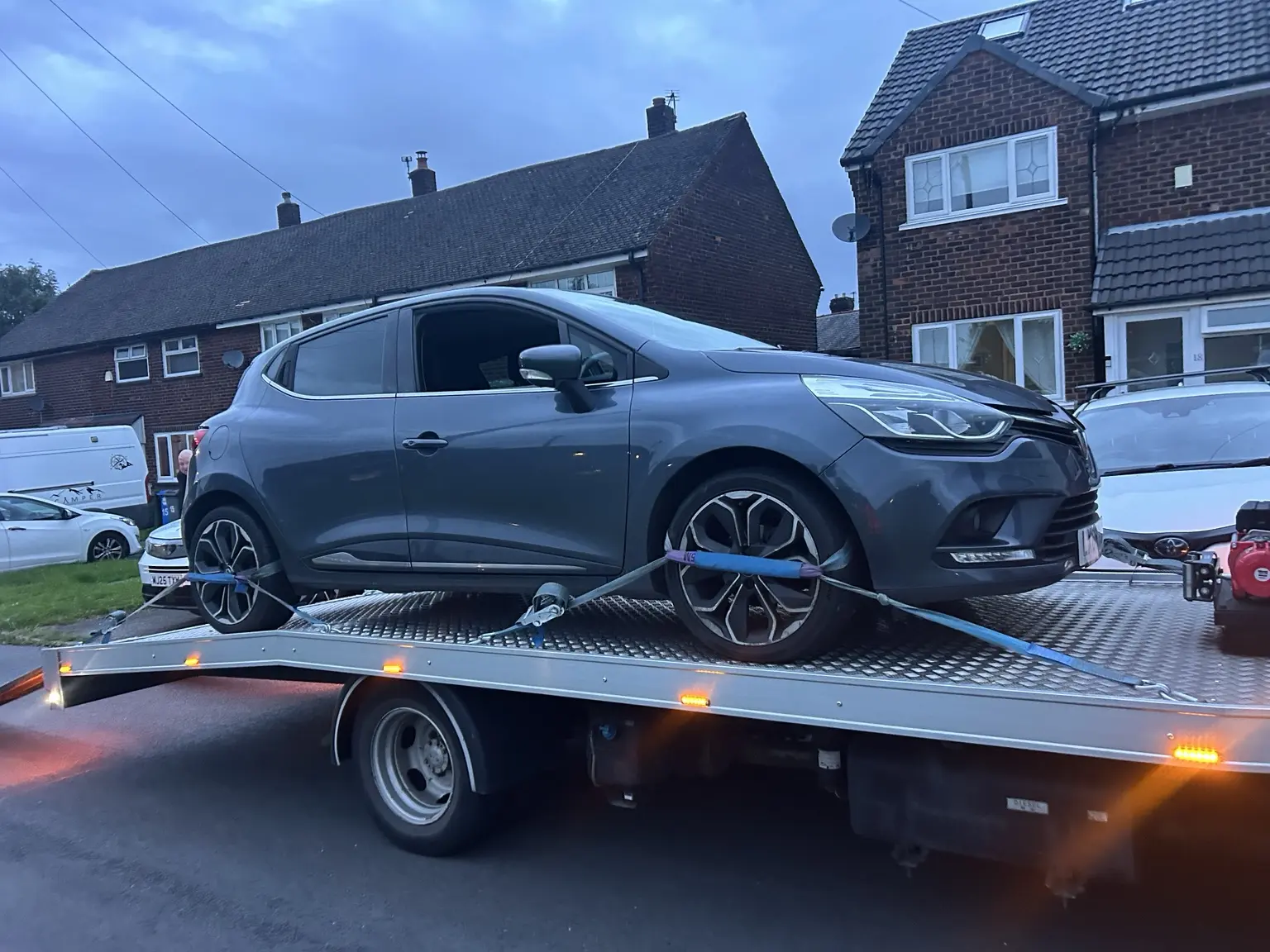
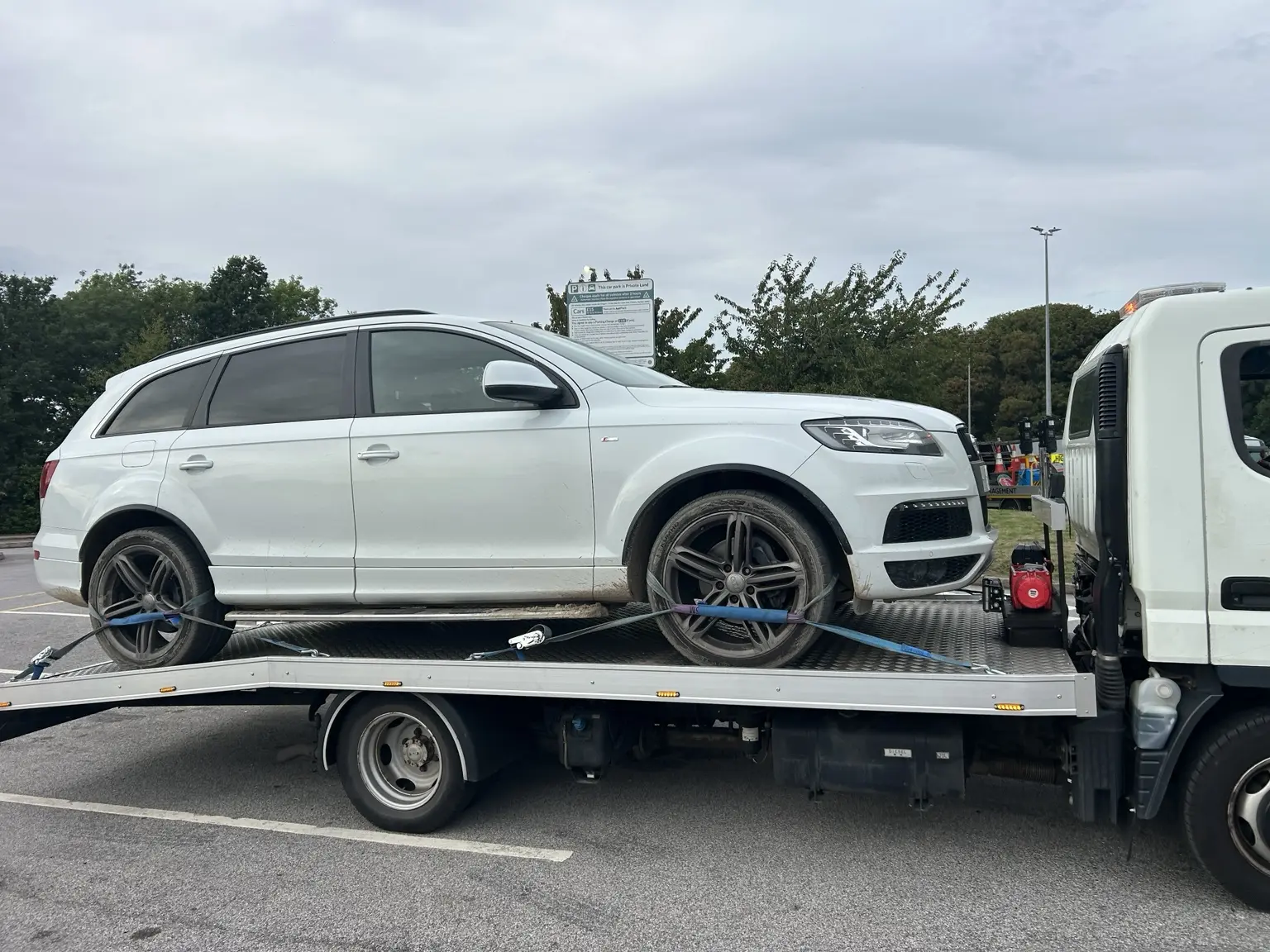
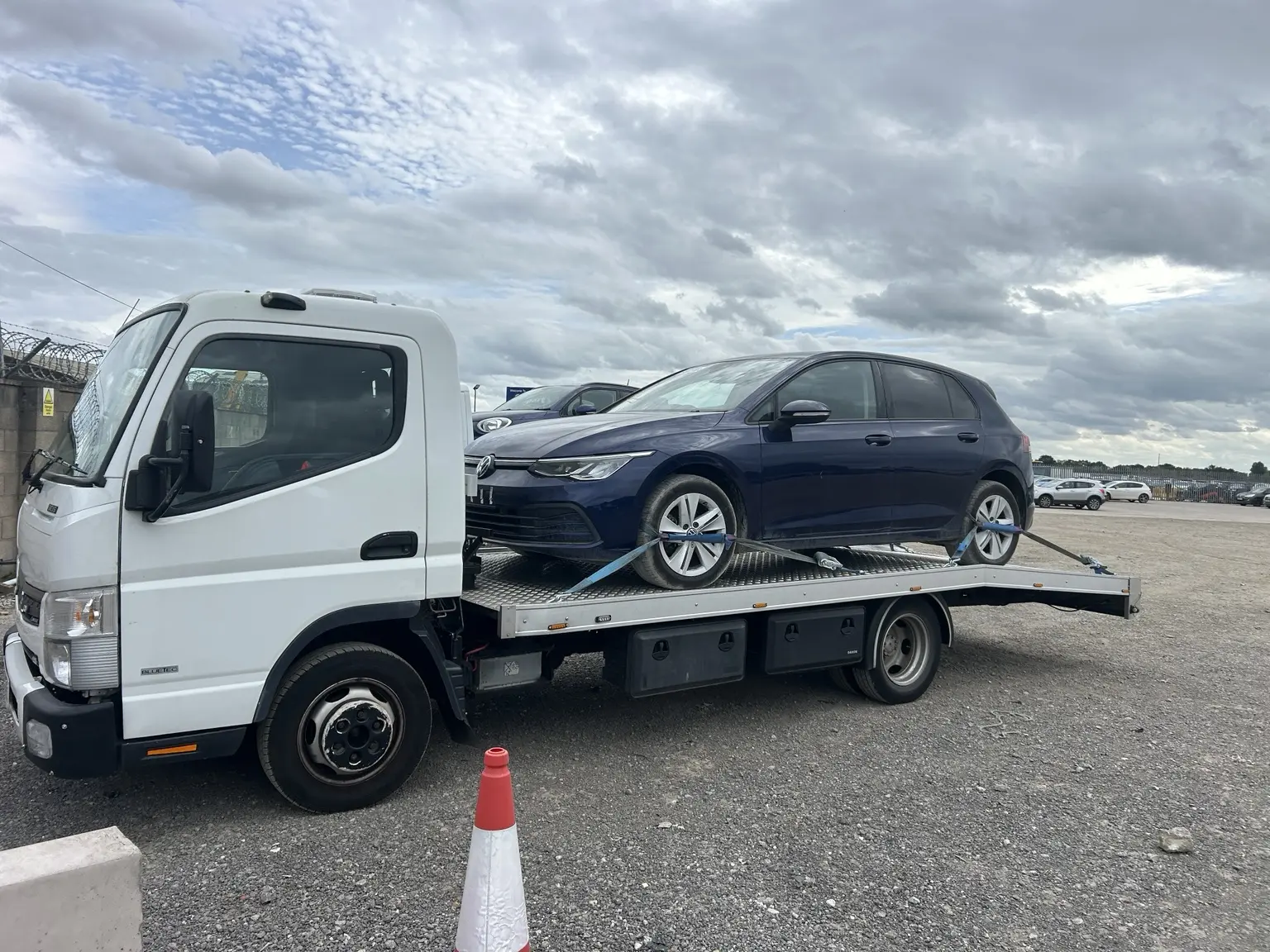
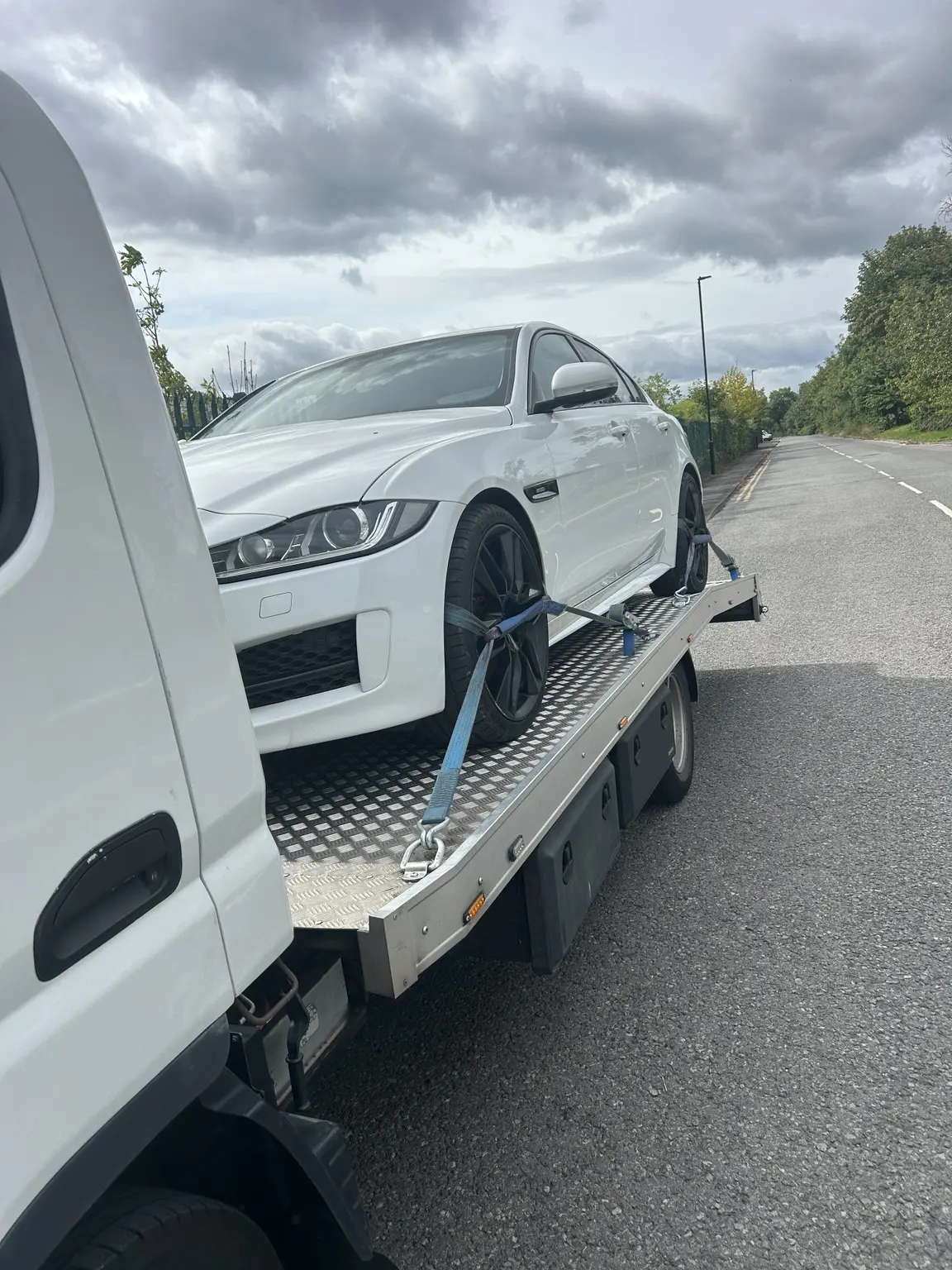
Vehicles secured on our flatbed trucks
These photographs show recovery work and the range of cars our operators handle. Every job is assessed separately for size, weight, condition and access.
From Rotherham through Doncaster to Goole
The map shows the M18 corridor joining the M1, A1(M), M180 and M62. We cover all seven junctions and nearby roads, with particular standby coverage around Doncaster and Rotherham. The map is a route guide, not a live truck tracker; actual attendance depends on the closest suitable available operator.
Planned transport around the M18
The same corridor coverage can be used for planned A-to-B vehicle transport. Customers arrange collection from homes, garages, dealerships, storage compounds, workplaces and accessible commercial sites around Doncaster and Rotherham. Planned jobs still require full access and vehicle-condition details because a non-runner or locked-wheel vehicle cannot be priced and loaded like a car that drives normally.
Auction collection is also available from supported UK auction sites. Provide the auction company and branch, lot number, registration if available, collection deadline, release requirements, vehicle condition and complete delivery address. Storage charges and release rules belong to the auction, so the customer remains responsible for ensuring the vehicle is paid for and authorised for collection.
For long-distance transport, include both full postcodes and the required date. We can then check route distance, truck capacity and scheduling. The quote is based on the actual journey and condition rather than a headline “from” price, so this page does not display a fixed recovery price that may not apply to your job.
Need an emergency recovery or a planned vehicle move?
Choose the service in the form and send the complete journey details.