Mud and soft ground
Send photos of the wheels and the route from firm ground so a suitable pull-out can be assessed.
Baloch Recovery Services · Bristol
A wheel off the hard surface can leave a vehicle stranded surprisingly quickly. Baloch Recovery Services takes enquiries for mud, ditch and grass verge pull-outs in Bristol and nearby areas, with recovery assessed around your vehicle, its position and safe access.
Help when grip has gone
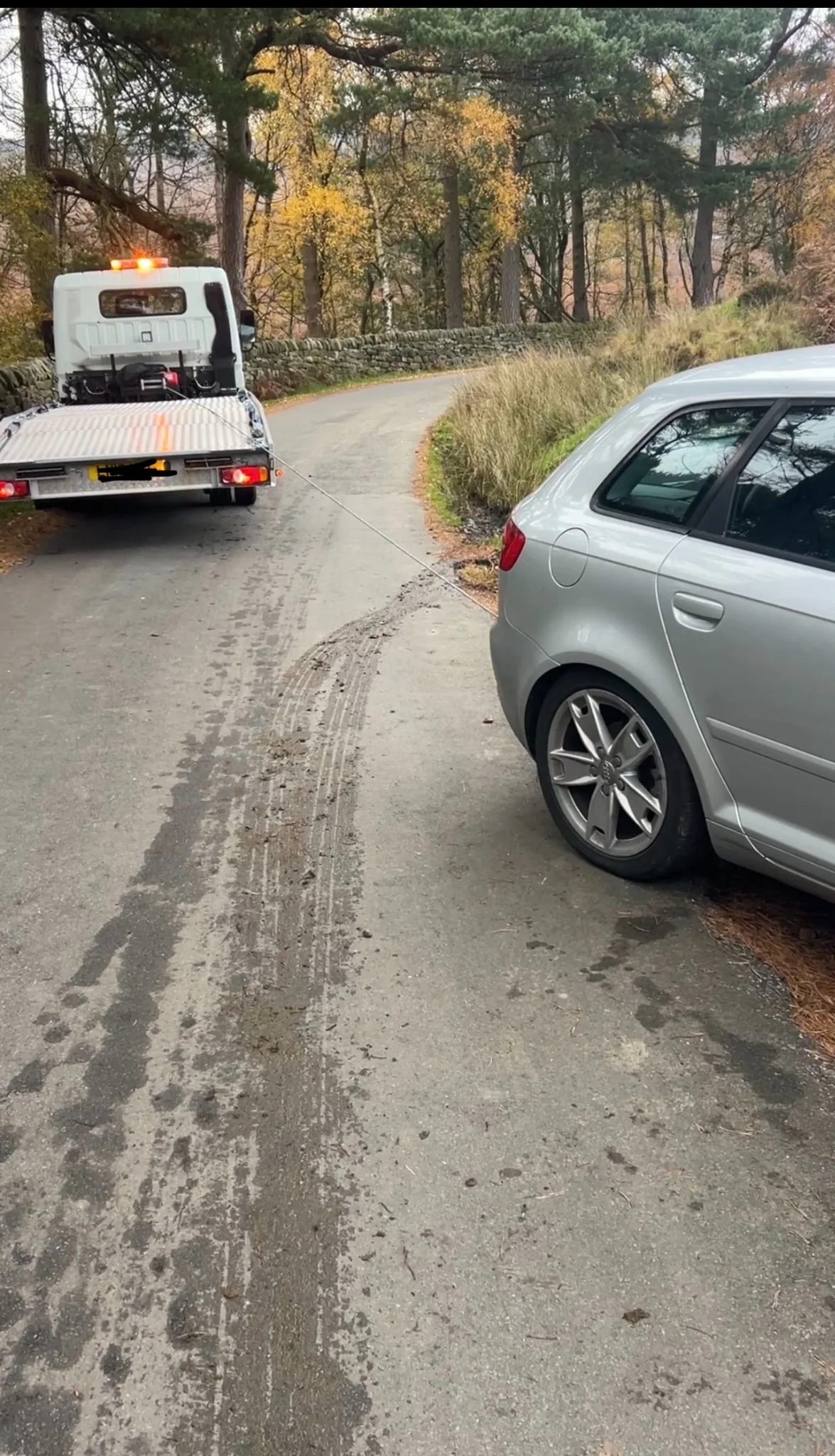
A muddy parking space, soft entrance or narrow roadside verge can turn a short stop into a recovery problem. You may have one wheel sunk beside a driveway, both driven wheels spinning on wet grass, or a vehicle resting at an angle below the road. These situations need different equipment and different space around the vehicle. Tell us what happened and what you can see, without moving closer to a hazardous position.
We consider pull-out enquiries across Bristol and the surrounding area for cars, SUVs and suitable vans. Acceptance depends on the vehicle, ground conditions, the recovery position and whether an appropriate truck can reach and work at the site. A postcode helps identify the area, but an exact location pin is particularly useful when the vehicle is behind a property, on private land or away from the road indicated by its postal address.
If the tyres are spinning without moving the vehicle, stop trying to drive out. Continued attempts can leave the wheels deeper or bring the underside into contact with the ground. Avoid asking people to stand beside or behind the vehicle to push it when its stability or surroundings are uncertain. Explain any attempts already made when you contact us, as the present position matters more than the original cause.
You can enquire at any time, day or night, and request a no-obligation quote. Let us know whether you need a pull-out only or expect the vehicle to travel onwards on a recovery truck. The recovery photographs on this page are general examples of our work; they are not presented as Bristol jobs.
Send photos of the wheels and the route from firm ground so a suitable pull-out can be assessed.
Show the vehicle position and surrounding access. The recovery plan depends on stability, damage and the space available.
Tell us how close the vehicle is to traffic and which wheels are stuck, locked or damaged.
Bristol and nearby approaches
Bristol enquiries can involve city streets, entrances on the outskirts or land reached through a neighbouring village. Give the place name that best describes your location, then add the pin and access route. A Bristol address alone does not establish which side of a main road the vehicle is on, whether there is a usable entrance or whether a truck can turn around. We check those details before confirming a booking.
The M4 and M5 meet at Almondsbury Interchange near Bristol, Aztec West and Cribbs Causeway. South Gloucestershire also identifies the A38 at Filton and transport routes around Patchway and Cribbs Causeway. If you are in this area, distinguish a motorway location from a nearby local road or private site. Include the motorway number, direction and nearest junction when relevant, together with a location marker if you can read one safely.
For an entrance or parking area close to a major road, describe the actual way in. A pin on a motorway or slip road may be close geographically while leading to the wrong access. Tell us about gates, height barriers and whether the entrance is reached from a service road. Never walk towards a junction or motorway to meet the truck.
The A4174 serves the eastern side of the Bristol area, with South Gloucestershire identifying locations including Emersons Green, Bromley Heath and Coldharbour Lane along the route. The A4 Bath Road runs through Brislington towards Hicks Gate and Keynsham. Name the correct road and the side or direction of travel; “near the ring road” leaves too much uncertainty when entrances and junctions are close together.
For a vehicle on land behind a business or house, include the address of the entrance as well as the stranded vehicle’s pin. Confirm who can provide access and whether a locked gate will be opened. If the vehicle is on someone else’s land, tell us who controls that land so access arrangements can be checked.
The A370 corridor includes Long Ashton, Backwell and Congresbury. The A38 provides another approach through North Somerset towards Bristol Airport, with Barrow Gurney nearby. These are separate routes, so please name the road you used and the nearest identifiable entrance. Enquiries from nearby places are considered individually; a place appearing here is not a promise that a truck is available there.
A rural address may cover more than one entrance. Explain whether the approach is a surfaced drive, a track or a field access, and whether any section is also soft. The truck needs an appropriate place to work, not simply a route to the vehicle.
Soft ground assessment
A vehicle can lose traction on grass before it looks deeply stuck. On softer ground, the tyres may then settle into ruts and the underside may start carrying weight. Tell us whether the car is still resting on its wheels, whether the body is touching the ground and whether its position has changed. Photos taken from a safe, firm location can help show this more clearly than a close view of one tyre.
A grass verge beside a Bristol approach road brings a different access problem from a muddy parking area on private land. Passing traffic, a narrow carriageway, a wall or a limited entrance may restrict where the recovery truck can stand. On a private site, the important question may be how far the soft ground extends. Include a wider photograph of the surroundings if you can take one without entering traffic or unstable ground.
Mention water, deep ruts, concealed edges or any damage visible from where you are already standing safely. We cannot establish ground strength from a photograph alone, so the proposed method remains subject to the operator’s assessment on arrival. A truck that would suit a straightforward roadside job may be unsuitable for a vehicle far across soft land.
Do not crawl underneath, jack the vehicle on soft ground or attach ropes to parts that appear convenient. Keep other people clear of the vehicle and allow the operator to assess suitable recovery points and the intended route back to firm ground. If the vehicle becomes less stable while you are waiting, move away if it is safe and update us immediately.
Uneven or sloping positions
A vehicle in a ditch may be supported unevenly, even when it appears to have suffered little damage. One side can be lower than the other, a wheel may be hanging clear, or the front or rear may be caught against the bank. Tell us the angle, which end entered first and whether the vehicle is resting on its underside. Describe the situation from a safe viewpoint rather than climbing down to inspect it.
The depth of the ditch is only one part of the assessment. The bank, distance from a firm working position, nearby obstacles and the space needed to return the vehicle to the road all matter. If there is a wall, fence, tree, drain or water close by, mention it. Do not enter water or stand below a vehicle on a slope to get a better photograph.
Please explain whether the incident involved an impact, whether anyone is injured and whether the vehicle obstructs traffic. Call 999 for immediate danger or injury requiring emergency help. A recovery enquiry does not replace emergency assistance. Where police or another authority is managing the scene, tell us before dispatch so attendance and access can be coordinated appropriately.
Some positions need a different recovery arrangement from a routine pull-out. We will explain what can be assessed remotely and what remains uncertain until the site is inspected. If the wheels, steering or suspension may be damaged, request onward transport at the same time. Getting a vehicle out of a ditch does not establish that it is safe to drive.
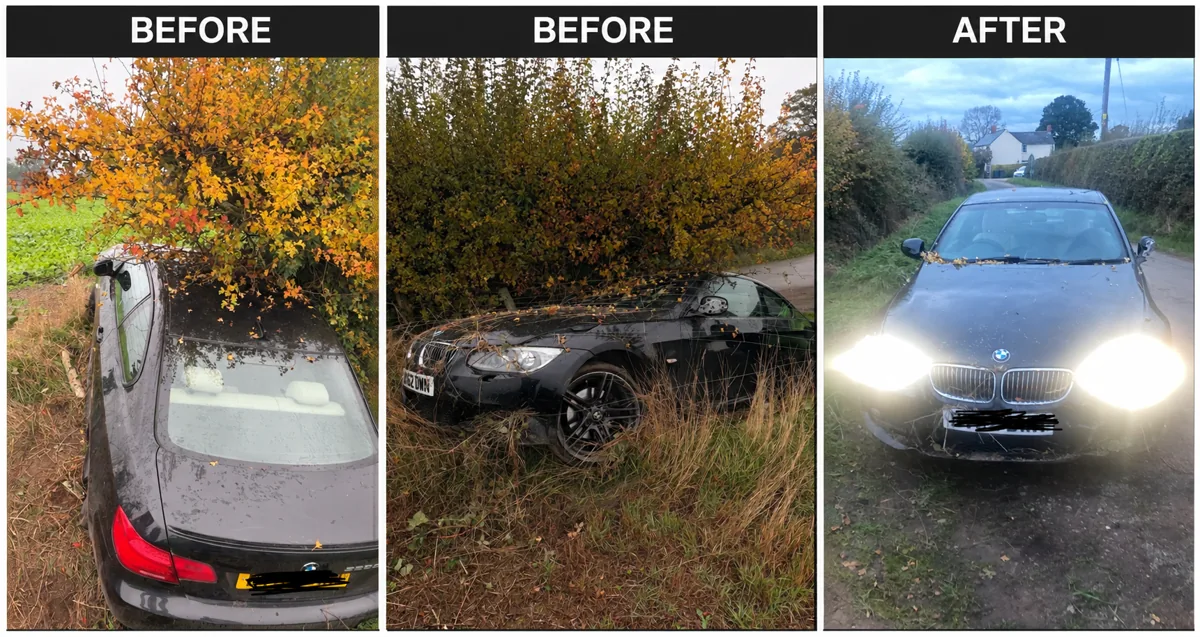
An existing recovery example. Send photos of your own vehicle and location so we can assess the Bristol request.
Vehicle and load details
Send the make and model, and tell us if the vehicle has unusual dimensions or modifications. The badge alone does not show the weight, clearance or condition that the operator will encounter. State whether it can roll, select neutral and release its parking brake, and whether a wheel is visibly damaged or pointing in an unusual direction. Report what you know without testing a vehicle that may move unexpectedly.
SUVs can be heavy despite their additional ground clearance. A low car may have less clearance beneath its front or underside. Tell us about any suspected contact with the ground and identify an electric or hybrid vehicle when you enquire. If a warning appeared after the incident, describe it. The operator can assess suitable handling rather than assuming every vehicle can be moved in the same way.
If keys are unavailable or a flat battery prevents normal controls working, say so at the outset. Do not dismantle trim or force controls to prepare for recovery. Explain the vehicle’s current state so equipment and loading requirements can be considered.
For a van, include its body type, approximate load and any weight information you have. A loaded van or Luton vehicle needs a specific weight and access check before acceptance. Describe whether the load has shifted or the body has contacted an obstacle. Its height, length and the route through gates or beneath branches can affect which recovery arrangement is suitable.
If people need to travel with the vehicle, tell us how many before booking. Space for one or two passengers depends on the truck’s available passenger seats and the arrangement confirmed for that job. Do not assume that every vehicle occupant can travel in the recovery truck.
Send a useful enquiry
Choose “Ditch pull-out” in the quote form for a mud, ditch or grass verge enquiry, then describe the actual situation in the message. If you are stopped near Bristol’s larger roads, put the road number and direction beside the location details. A short, accurate description is more useful than trying to diagnose the recovery method yourself.
We aim to respond to complete enquiries within five minutes; busy periods may take longer. A response may ask for clarification before a price or attendance can be confirmed. Please keep your phone available and make sure the contact number is correct. Send photographs or video only when you can do so from a safe position.
From enquiry to recovery
Once we have your location and vehicle details, we assess the enquiry and explain the proposed service. This includes whether the request appears suitable for the available equipment, how the truck can approach and whether onward transport is needed. If photographs leave an important uncertainty, we will ask about it rather than treating the first description as a complete site assessment.
We provide a no-obligation quote based on the information supplied. Check the collection position, intended work and any destination before accepting. A deposit is required before dispatch, with the balance payable on completion. Your booking should make clear what has been agreed and how to contact us if the situation changes while you are waiting.
A thirty-minute arrival is an aim only when a suitable nearby truck is available. The attendance estimate given for your enquiry depends on the location, road conditions and the recovery resources required. Access through Bristol or around a motorway junction can affect the journey; use the estimate confirmed for your booking when planning your next steps.
On arrival, the operator checks the vehicle and surroundings before beginning. If the position is materially different from the enquiry or the proposed method cannot be used safely, the next step and any change in scope must be discussed. Keep passengers and bystanders out of the working area, follow the operator’s directions and avoid returning to the vehicle until told it is safe to do so.
A quote for the actual job
A pull-out quote depends on more than the distance from Bristol. Vehicle weight, the amount of sinking, the angle in a ditch and the available working space can change the equipment and time required. Transport after the pull-out is another part of the job. Giving the destination at the outset helps us quote the service you actually need.
Access can be as important as the vehicle’s position. A car just beyond a firm entrance is different from one reached across a long soft track, even when both are described as stuck in mud. Height barriers, restricted gates or a location that requires coordination with a landowner can also affect the practical arrangements. Describe these honestly before accepting a quote.
Photos can help us identify likely requirements, but they cannot confirm every ground condition or hidden obstruction. Ask what the quote covers and tell us about anything that might have been missed. If the operator finds a material difference on arrival, any revised scope and price should be explained and agreed before additional work proceeds.
There is no single price on this page because the circumstances vary. An enquiry does not oblige you to book. Check the deposit and remaining balance when you accept, and make sure any onward journey is included in the agreed service. If you intend to seek reimbursement from an insurer or another provider, check its requirements directly; reimbursement is not assumed.
While help is arranged
On a motorway, if you cannot reach a place of relative safety and cannot get out safely away from traffic, remain in the vehicle with seat belts and hazard lights on and call 999 immediately. If you can leave safely, exit away from traffic and wait well away from the carriageway, behind a safety barrier where available. Check for a drop or other hazard beyond the barrier before moving there.
Follow the Highway Code and any instructions from emergency services. Do not walk into traffic, attempt repairs beside a motorway or put a warning triangle on its carriageway. Keep passengers together in a safe place. If an injury or immediate danger develops at any location, call 999 rather than waiting for a recovery response.
On other roads or private land, assess whether you can reach a firm waiting place clear of traffic and the stranded vehicle. Stay away from a ditch edge, moving vehicle or unstable bank. Do not position yourself downhill from a vehicle that could shift. Tell us where you are waiting so the operator can contact you without asking you to stand at the roadside.
If it is dark, raining or difficult to see the entrance, provide directions by phone rather than walking into an unsafe area to guide the truck. Keep children and other bystanders clear of the working space. Photos are helpful only when taking them does not expose you to additional danger.
Read the National Highways breakdown guidance and Highway Code breakdown rules for official advice about reaching a safe place and getting help.
The next part of the journey
Returning a vehicle to a hard surface may resolve a simple loss of grip, but a pull-out does not certify its roadworthiness. A ditch incident or contact with the ground can involve damage that is not immediately apparent. Tell the operator about any impact, warning light, leak, unusual noise or change in steering that you noticed before recovery.
If damage is suspected, arrange transport to a suitable destination rather than assuming the vehicle can continue. Provide the address and discuss access there, including opening hours if a garage or other business will receive it. Confirm who will take possession of the vehicle and keys. An onward journey outside Bristol needs to be included in the booking arrangements.
Before you leave, check the immediate practical details with the operator: whether the recovery work is complete, where the vehicle has been placed and what onward arrangements have been agreed. The remaining balance is due on completion. If you need paperwork for your own records, ask about it when booking so any requirements can be understood early.
For a vehicle pulled out on private land, coordinate with the person responsible for the site about access and its final position. Leave space for other vehicles and avoid stopping again on the same soft surface. If you are unsure whether the exit route is usable, explain that before the recovery finishes so the next movement can be considered as part of the agreed job.
Bristol pull-out FAQs
Yes. We consider enquiries from Bristol and nearby areas, including the approaches towards South Gloucestershire and North Somerset. Send the exact location rather than relying on the nearest city. Whether we can accept the job depends on suitable equipment, access and availability for that particular enquiry.
Yes. Select “Ditch pull-out” and explain that the vehicle is on grass or in mud. Tell us which wheels are affected and whether the underside is touching the ground. The description and safe photographs help us assess the situation; selecting the option does not mean every job uses the same method.
Send a location pin for the vehicle and identify the entrance the truck should use. For a field, rear parking area or private drive, these may be different places. Include the road name, any gate arrangements and the person who can provide access. Do not move into traffic to improve the location information.
We can assess it, but one trapped wheel does not necessarily mean a simple job. The vehicle may be resting unevenly or have wheel and suspension damage. Describe its angle and any impact, and send a wider photograph from firm, safe ground if possible. Avoid moving it while its stability is uncertain.
These need an individual weight and access check before acceptance. Provide the vehicle model, body type, load description and any known weight figures. Tell us about restricted entrances and whether the load has shifted. We will assess whether a suitable recovery arrangement is available for the vehicle as it is currently loaded.
If the tyres are spinning without progress, stop. Further attempts may deepen the ruts or leave the vehicle resting on its underside. Do not ask people to push from an unsafe position or attach improvised ropes. Tell us what you have already tried and whether the vehicle has moved or sunk further.
Photographs are useful, but you should never enter traffic, water or unstable ground to take them. Contact us with the information you can provide safely and explain why pictures are unavailable. A clear verbal description can start the assessment, although some uncertainties may need further discussion before a booking is confirmed.
Tell us the number of passengers before booking. One or two people may be accommodated only where the assigned truck has suitable available passenger seats and this is confirmed for the job. Larger groups may need another travel arrangement. Mention any particular seating needs early so they can be considered.
A deposit is required before dispatch and the remaining balance is payable on completion. Check the quoted service, deposit and balance before accepting the booking. Include any onward transport you need, and explain access restrictions or vehicle damage so the quote is based on an accurate account of the job.
A successful pull-out does not establish that the vehicle is roadworthy. An impact, damaged wheel, leak or warning light may mean onward transport is needed. Discuss those concerns before dispatch and provide a destination if appropriate. Do not continue driving simply because the vehicle is back on a surfaced road.
A clear next step
Send your exact location, vehicle details and safe photos. We will check suitable availability and confirm the recovery plan, price and estimated arrival before you decide.
Get my Bristol pull-out quoteChoose the answers and enter only the details we need.
Guaranteed response within 5 minutes after you submit your quote form. Easily send your vehicle details and share your current location using the form.