Mud and soft ground
Send photos of the wheels and the route from firm ground so a suitable pull-out can be assessed.
Baloch Recovery Services · Gloucester
Stuck on a soft verge, across a ditch or at a muddy entrance? Send your Gloucester location and safe photos to Baloch Recovery Services. We assess the ground, vehicle and truck access, then confirm a suitable recovery plan and no-obligation quote.
Start with the situation
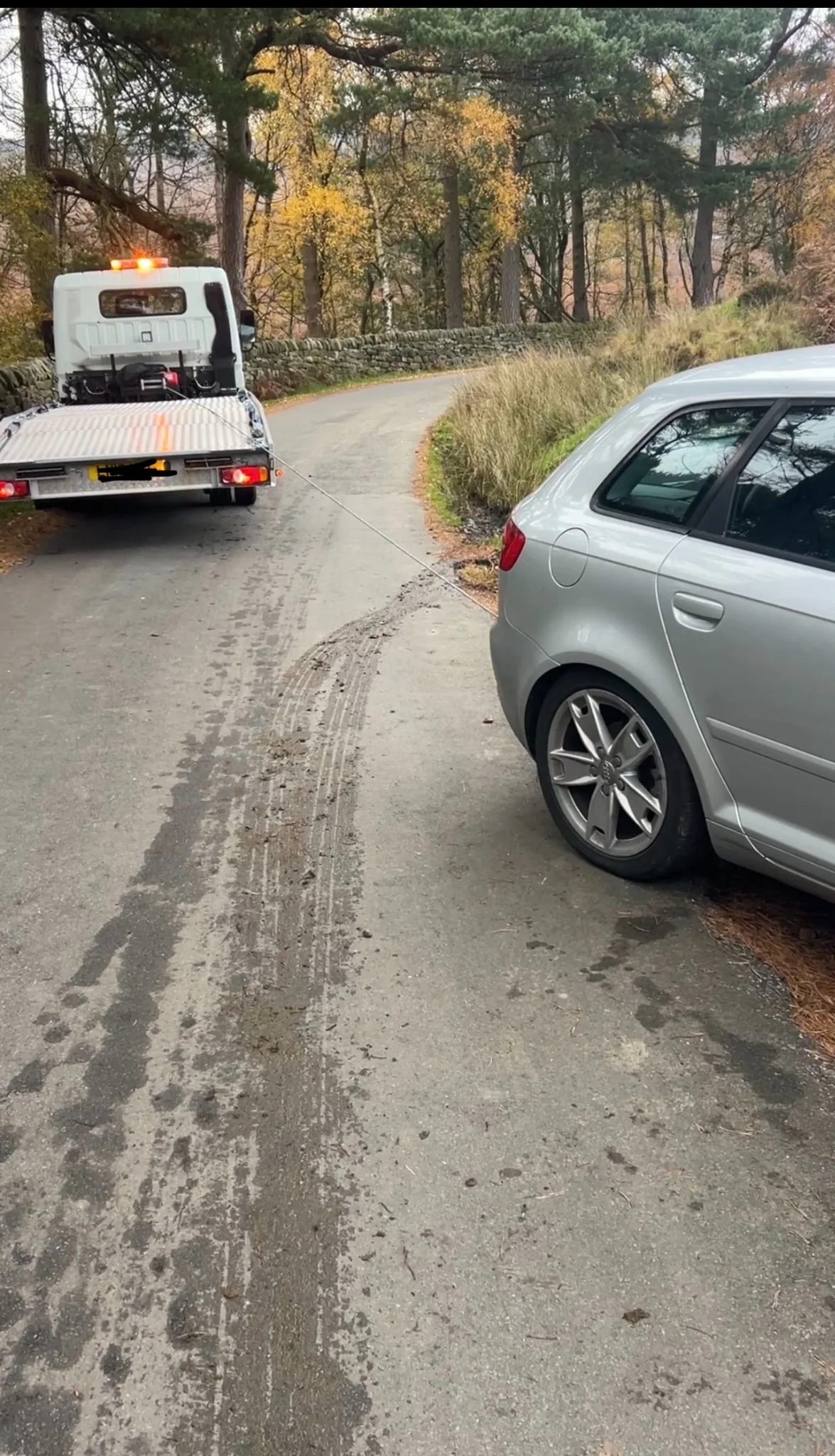
You might have pulled onto grass to let another vehicle pass, parked beside a rural property, or found that a driveway edge would not support a wheel. When a vehicle stops gaining traction, the useful next step is to describe where it sits and what has happened. Repeated attempts to drive away can deepen the ruts or change its position, making an initially straightforward assessment more complicated.
A pull-out enquiry is different from simply asking for a tow from a roadside parking space. We need to understand the ground between your vehicle and a suitable place for the recovery vehicle to stand. A car with all four wheels on level mud presents a different situation from one resting across a ditch, leaning towards a bank or showing damage after leaving the road.
Tell us whether everyone is safe before describing the vehicle. Then explain whether it became stuck while parking or manoeuvring, or whether there was an impact. Mention anything that has changed since it stopped: the vehicle settling further, water reaching it, a damaged wheel or traffic passing close by. These details help establish the right next step without asking you to investigate from an unsafe position.
Our Gloucester page covers enquiries for mud recovery, grass verge pull-outs and ditch recovery. Suitability is decided from the circumstances of each vehicle and site. If the vehicle also needs taking to a garage, home address or another destination, include that when requesting help so the quote can address the whole journey.
Send photos of the wheels and the route from firm ground so a suitable pull-out can be assessed.
Show the vehicle position and surrounding access. The recovery plan depends on stability, damage and the space available.
Tell us how close the vehicle is to traffic and which wheels are stuck, locked or damaged.
Local approaches and access
For enquiries around Longlevens, Barnwood and Hucclecote, give the street or property name as well as the precise stuck location. A vehicle on the edge of a residential drive, behind a business or beside an access lane may require a different entrance from the one a navigation app suggests. State whether the entrance is open and whether a gate, height barrier or parked vehicles restrict the approach.
We also assess requests around Brockworth and Churchdown, and on the southern side of Gloucester around Quedgeley and Hardwicke. These place names are useful starting points, but a nearby main road is not enough to locate a vehicle inside a site. A clear pin and an explanation of the last turning can avoid sending a recovery vehicle to the wrong side of a boundary.
West and northwest of Gloucester, Highnam and Maisemore need equally specific location details. The A40 runs between Highnam and the Over roundabout, where it meets the A417; Maisemore is on the A417. If your vehicle is on a lane or private property off either route, identify the actual entrance rather than pinning the nearest main-road junction.
The three Gloucester motorway approaches are not interchangeable. M5 junction 11 connects with the A40 Gloucester–Cheltenham route. Junction 11A connects with the A417 by Brockworth. Junction 12 connects towards the A38 through the B4008 and Cross Keys roundabout. If you have left the motorway, tell us which exit you used and the road you are now on.
For a vehicle still beside a motorway or another fast road, include the direction of travel and any driver location sign or marker information you can read without moving into danger. For a vehicle beyond the road, explain the access route separately. A photograph of the entrance can be more useful than several close-ups of the same buried wheel. Current traffic, restrictions and the conditions at the site all affect the approach.
Soft ground
Grass can hide a surface that offers very little support. A firm-looking edge may give way beneath one wheel while the other wheels remain on a drive or parking area. Describe how many wheels are off the solid surface and whether the underside appears to be resting on the ground. Do not crawl underneath or get close to a vehicle that could move just to answer these questions.
The route out matters as much as the spot where the vehicle stopped. Let us know whether the nearby firm surface is a road, paved drive, gravel area or another kind of access. Mention a narrow gateway, steep approach, low branches, a sharp bend or an obstacle between the vehicle and that surface. The recovery operator will decide how those features affect the work.
On private land, establish who can authorise access and who can open the gate. That might be a householder, business manager, farmer or site organiser. If you are visiting and do not know the entrance arrangements, ask the responsible person for the details. Having a contact available is particularly useful where a property has separate delivery, visitor and field entrances.
Photos should show the overall setting before the detail. From a safe position, capture the vehicle, the nearby ground and the approach, then any wheel that has sunk. Explain if the ground has softened since you parked or if the vehicle has already been moved. We use that information to assess the enquiry; the final method depends on what the operator finds on arrival.
Position and stability
A vehicle in a ditch may be supported unevenly, with a wheel below road level or part of the body resting against the bank. It can also have hidden damage from the initial movement off the road. Tell us whether the vehicle is upright, leaning, against an obstacle or partly across the channel. You do not need to measure the ditch or walk down its side.
A wider photograph taken from somewhere safe helps explain the relationship between the car, bank and road. Include any fence, wall, tree, drain or other obstruction in the description. If the vehicle is very close to passing traffic, that is a priority detail. Access and a suitable working position must be considered before a pull-out can be confirmed.
Please do not attach a rope to another car or try to improvise a pull while waiting. A vehicle that is leaning or resting on its underside needs an assessed recovery approach. Keep people away from its possible movement and tell us about any earlier pulling attempts. That information helps explain the current position without requiring you to repeat or demonstrate what was tried.
Water changes the assessment. If water is around the vehicle, say what you can see from a safe place and whether the level is changing. Do not enter a ditch or water to inspect the wheels. Sites near the Severn or other watercourses are assessed on their actual conditions; this service is a vehicle recovery enquiry, and an immediate threat to people requires the emergency services.
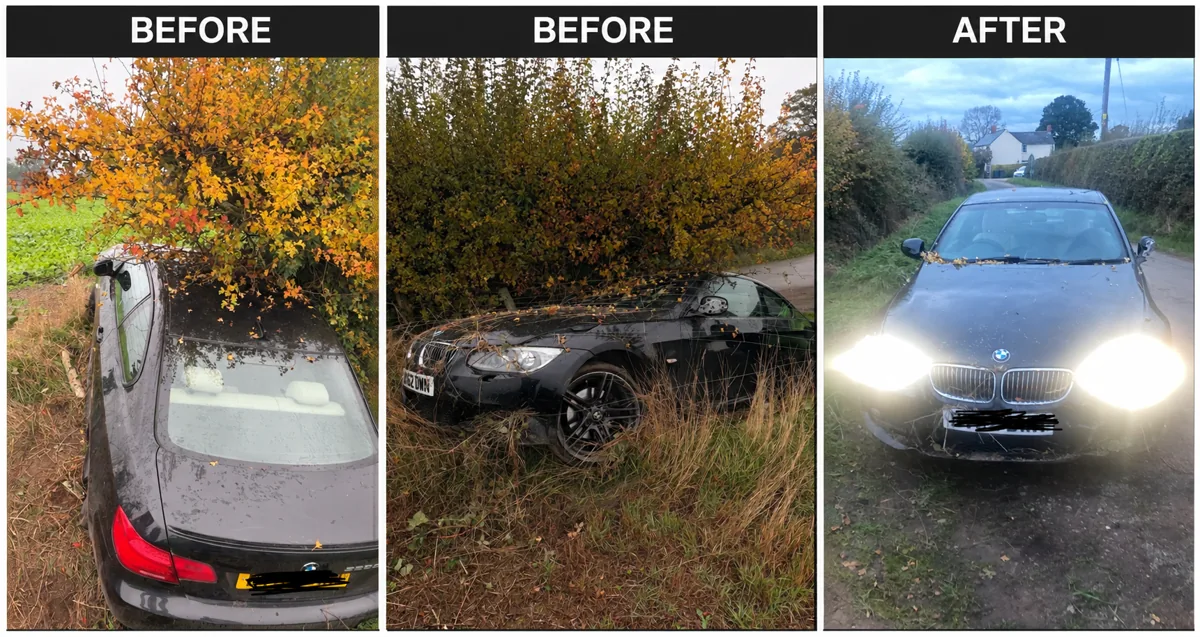
An existing recovery example. Send photos of your own vehicle and location so we can assess the Gloucester request.
Vehicle details matter
The vehicle description helps us decide whether the requested job suits the available recovery vehicle and the access. Send the make, model and registration where possible, and explain anything unusual about its condition or load. A similar-looking vehicle can have a different weight, transmission or handling requirement, so a description such as “a small car” or “a normal van” leaves important questions unanswered.
Tell us whether the vehicle can roll, whether neutral can be selected and whether the handbrake releases. Report a flat tyre, a wheel at an unusual angle or any known steering damage. For an automatic, hybrid or electric vehicle, give the exact model and mention warning messages or a loss of power. You do not need to force a control or attempt a repair to supply the information.
Four-wheel drive does not remove the need for assessment when a vehicle is embedded in mud or resting across a bank. An SUV may be heavier than a car and may sit differently on soft ground. Explain the current position and any previous attempts to move it rather than relying on its drive system as a guide to how simple recovery will be.
For a van, tell us the body type, size and what it is carrying. A loaded van or Luton needs a weight and access check before acceptance. Include any known gross weight, estimated load and restrictions at the entrance. Roof equipment, a high body, a long wheelbase or an attached trailer can also affect the assessment. If you are unsure of a detail, say so and provide whatever vehicle information you have.
Build a clear enquiry
Choose “Ditch pull-out” in the quote options for this type of request, then explain whether the vehicle is in a ditch, in mud or on a soft verge. A complete first message lets us assess more of the job at once. Start with a short description of what happened and whether anyone is in immediate danger; add the location and vehicle details next.
Where the vehicle and the usable entrance are separated, send two labelled pins if you can: one for the vehicle and one for access. Include the postcode as a useful address reference. On a farm, business site or larger property, describe which entrance is open and who will meet the operator. Do not assume that the nearest gate is wide enough or connected to the vehicle’s location.
An approximate description is better than taking a risk to obtain a perfect photograph. If darkness, traffic, an unstable bank or water prevents a clear view, explain that. Keep your phone available after sending the enquiry, as we may need to clarify the entrance, vehicle condition or destination. If somebody else is arranging recovery for you, make sure the person with the vehicle can also be contacted.
From enquiry to completion
We take enquiries 24/7. Send the details through the quote form to explain the situation, and we will assess the request and provide a no-obligation quote where the job can be accepted. Our response aim is within five minutes for a complete enquiry, although busy periods can take longer. Keep location and contact details together so a follow-up question does not delay the assessment.
Before you book, check what the quote covers: the pull-out, any onward vehicle transport and the destination if one is needed. Tell us about passengers at this stage. Travel for one or two passengers may be possible subject to the seats available in the recovery vehicle; the arrangement must be confirmed for your particular booking.
A deposit is required before dispatch, with the balance payable on completion. Once the job is accepted and the deposit is arranged, the recovery vehicle can be dispatched according to the confirmed booking. An arrival within 30 minutes is an aim when a suitable truck is already nearby. Distance, traffic, access and the nature of the recovery affect the estimate you receive.
On arrival, the operator assesses the position and working area before recovery begins. Explain any change since your photos were taken, including further sinking or newly visible damage. If the actual conditions differ materially from the enquiry, the approach and scope need to be reviewed. Keep your phone accessible and follow the operator’s directions about where to wait while the vehicle is being recovered.
Understand the quote
There is no single price that accurately describes every stuck vehicle. The cost depends on the position, weight, access and work required to return it to a suitable surface. A car a short distance from a firm drive can involve different arrangements from a loaded van beyond a restricted entrance. Photos and a clear description help us quote against the actual situation.
The ground and obstacles can affect how the job is planned. A bank, a narrow approach, limited standing space or damage that prevents a wheel from rolling may add complexity. A vehicle that has already been pulled into a different position also needs that history included. These are reasons to explain the site fully at the start, rather than judge the likely price only by the distance to the road.
Onward transport is another part of the scope. If you want the vehicle taken across Gloucester, back to your home or to a repairer elsewhere, provide the destination before booking. Explain whether that address has a suitable unloading area and whether someone will be there to receive the vehicle. Recovery from the ground and transport to a destination are connected decisions when the vehicle cannot continue safely.
Ask for clarification of anything you do not understand before paying the deposit. If you are arranging the job on another person’s behalf, agree who approves the quote and pays the remaining balance. Keep the booking details available so the operator has a clear handover. Accurate information helps reduce uncertainty, while any material difference found at the site needs to be discussed before proceeding with a changed scope.
People first
If anyone is injured or in immediate danger, call 999. On a motorway or other fast road, if you cannot leave the vehicle safely, stay inside with seatbelts fastened and hazard lights on and call 999 for police assistance. A recovery enquiry must not delay getting emergency help when traffic or the position of the vehicle threatens people.
Where you can leave safely, get out on the side away from traffic and move to a place of relative safety. Keep clear of the road and the vehicle, using a safety barrier where appropriate and watching for uneven ground or drops beyond it. Keep children under close supervision. Do not stand between your vehicle and approaching traffic or return to it for belongings.
Away from a fast road, the vehicle’s stability and the surrounding ground still matter. Stay clear of a leaning vehicle, the edge of a ditch and areas where you could slip. Do not go underneath the vehicle or walk into water to check it. If safe access to the occupants is doubtful, explain that when seeking help rather than attempting to resolve it yourself.
Take photographs only from somewhere safe, and tell us where you will be waiting. If a property owner can provide a safe place nearby, keep your phone with you and make sure the operator can find you. When the recovery vehicle arrives, wait for the operator’s guidance before approaching the working area or moving back towards your vehicle.
Read the National Highways breakdown guidance and Highway Code breakdown rules for official advice about reaching a safe place and getting help.
Plan the next movement
Reaching firm ground resolves the immediate position, but it does not establish that a vehicle is roadworthy. A wheel may have struck a bank, the underside may have made contact or a tyre may have been damaged. Tell the operator about any impact and anything you noticed before recovery. Do not assume that being able to start the engine means it is safe to drive away.
If there is visible wheel damage, a fluid leak, a warning message or concern about steering or braking, explain it before deciding what happens next. The vehicle may need onward transport and a garage assessment. Agree the destination and access arrangements so the recovery does not finish with the vehicle somewhere unsuitable for you or for the person receiving it.
For a delivery or work van, consider the load as part of that handover. Let the operator know if it may have shifted and whether the receiving location has any entry restrictions. Avoid starting to unload beside traffic or on unstable ground. Any arrangements for goods, colleagues or a replacement vehicle should be coordinated separately from the movement of the stranded vehicle.
If the pull-out took place on private land, keep the landowner or site contact informed about completion and any remaining access issue. The service photographs used on this website show general examples of Baloch Recovery Services work; they are not presented as Gloucester jobs. For your own enquiry, the most useful evidence is a safe view of your vehicle’s current position and a clear plan for where it should go next.
Gloucester pull-out FAQs
Send the location, vehicle details and a safe photograph of the verge and road. Explain whether one wheel has dropped off the edge or the whole car is on soft ground. We assess whether a suitable recovery vehicle can reach and work at the location, then confirm whether the job can be accepted and what the quote covers.
Yes, you can enquire about either area. Give the lane or property entrance as well as the vehicle pin: Highnam is approached from the A40, while Maisemore is on the A417. If the vehicle is beyond a gate or near water, describe the access and visible conditions. We need the individual site details before confirming a booking.
Give the junction relevant to your actual location and say whether you are still on the motorway. Junction 11 connects with the A40, junction 11A with the A417, and junction 12 reaches the A38 through the B4008 and Cross Keys. Include the direction of travel and your current road; an exit number alone may not locate you.
It needs an individual weight, position and access assessment. Tell us the van’s make, model, body type and load, along with any known weight information. A high or long vehicle may also face entrance and manoeuvring restrictions. Send wide photos where safe, and wait for confirmation that the proposed recovery arrangements suit the vehicle and site.
Tell us before booking. Also explain whether the handbrake releases, whether the wheels can roll and whether power is available. Provide the exact model, especially for an automatic, hybrid or electric vehicle. Do not force controls or try to bypass a system; the information is used to assess handling and transport requirements.
You can request an assessment, provided the access and the vehicle’s position are clearly described. Confirm who authorises entry and who can open any gates. Mention narrow passages, overhead restrictions, soft approaches and obstacles. A nearby road does not necessarily provide a suitable place to work, so include the approach in your photographs if you can do so safely.
If the wheels are spinning without progress, stop repeated attempts and describe the current position. Further movement can deepen ruts or shift the vehicle towards an edge. Do not improvise a tow with another vehicle. Keep people away from an unstable vehicle and let the recovery operator assess how it can be moved.
Contact us with the information you have. Explain why photographs are unavailable and describe the ground, angle, access and visible damage as clearly as possible. We may need further details before confirming the job or price. Your safety takes priority over obtaining an image, particularly beside fast traffic, on a steep bank or near water.
Ask for onward transport when you enquire and give the garage name, address and any receiving arrangements. That allows the destination to be considered with the recovery itself. If new damage becomes apparent after the vehicle reaches firm ground, discuss the next step before driving; a pull-out alone does not confirm that it is safe for the road.
Water around the vehicle requires a separate assessment of the actual conditions, access and risk. Stay out of the water and tell us what is visible from a safe place. This is not a water rescue service. Call 999 if anyone is threatened by rising water, trapped or otherwise in immediate danger.
A clear next step
Send your exact location, vehicle details and safe photos. We will check suitable availability and confirm the recovery plan, price and estimated arrival before you decide.
Get my Gloucester pull-out quoteChoose the answers and enter only the details we need.
Guaranteed response within 5 minutes after you submit your quote form. Easily send your vehicle details and share your current location using the form.