
Mud and soft ground
Send photos and a short safe video of the wheels and the route from firm ground so a suitable pull-out can be assessed.
Baloch Recovery Services · Doncaster & Worksop
Stuck beside a lane, at a muddy entrance or across a ditch? Send Baloch Recovery Services your exact location around Doncaster, Worksop or the nearby villages. We check the vehicle, ground and access before confirming a suitable pull-out and quote.
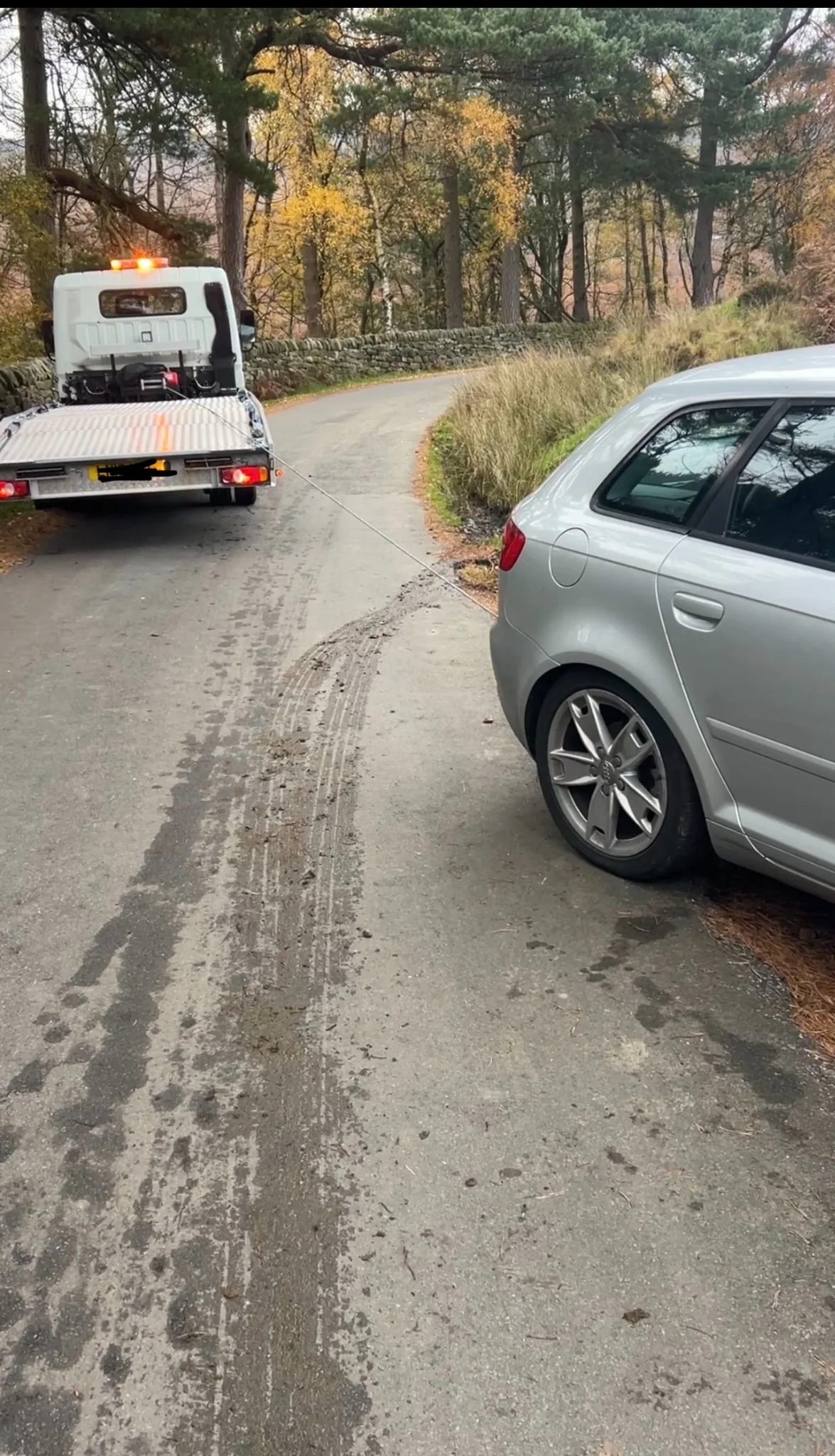
A practical next step
A car can become stranded with just one wheel beyond the edge of a drive. A work van may reach a property without difficulty, then sink when turning around on the grass. A ditch incident can leave the whole vehicle unevenly supported. Before deciding what equipment to send, we need to understand which of these situations describes your vehicle and whether anybody is in immediate danger.
This guide covers pull-out enquiries around Worksop, Doncaster and the places between them, including Retford, Bawtry, Carlton in Lindrick, Langold and Tickhill. A nearby town name starts the conversation, but the vehicle's exact position and the route into the site decide what can be arranged. A rural postcode may lead to a house or farm office rather than the entrance beside the stranded vehicle.
Tell us what happened in ordinary language. Explain whether you were parking, turning, making a delivery or involved in an impact. If you have already tried to move the vehicle, describe what changed. We need its present position, including any further sinking, rather than a picture of where it first stopped. There is no need to diagnose the winching method or identify an attachment point yourself.
Enquiries are welcome day and night, and a quote does not oblige you to book. Cars, SUVs and suitable vans are considered individually. A description of a simple pull-out does not establish that a particular truck can do it, so please include any restricted approach, uncertain ground or visible damage from the beginning. These details help us assess the whole request before dispatch.
Send photos and a short safe video of the wheels and the route from firm ground so a suitable pull-out can be assessed.
Show the vehicle position and surrounding access. The recovery plan depends on stability, damage and the space available.
Tell us how close the vehicle is to traffic and which wheels are stuck, locked or damaged.
Worksop, Doncaster and nearby areas
Give the town or village, a postcode if available and a map pin for the vehicle. If access is through another road or entrance, identify that too. A recovery truck cannot necessarily approach from the point that looks closest on a map. Let us know about locked gates, private roads, overhead restrictions and any instruction from the landowner about where vehicles may enter.
Worksop sits on the A57 route between the Sheffield/M1 side and the A1/Lincoln side, with the A60 providing a different north–south reference. The A619 is another approach from the Chesterfield direction. Say which road you actually used and where you left it. A vehicle on land off the bypass needs the access road, rather than a pin placed on the bypass itself.
For Carlton in Lindrick or Langold, the A60 Doncaster Road is a useful reference, but add the local turning and property entrance. Describe whether a truck can remain on a firm surface near the vehicle or must travel along a track. A wide photograph or short video of that approach is helpful when it can be recorded from somewhere safe.
Nearby enquiries may come from Retford, Blyth, Bircotes or Bawtry. Useful road references include the A638 London Road in Retford, A634 Sheffield Road in Blyth, A614 Bawtry Road in Bircotes and A614 Station Road in Bawtry. Name the correct settlement with the road: similar road names across this wider area can otherwise make a location ambiguous.
If a postcode covers several buildings, identify the entrance the operator should use and who can open it. A delivery address, visitor entrance and agricultural access can be different places. Tell us whether the vehicle is visible from the road and whether someone familiar with the site can explain the last part of the approach by phone.
For Doncaster, give the neighbourhood or nearby settlement as well as the main address. Around Tickhill, the A60 Worksop Road can help establish your approach. If the vehicle is still beside a major road, include the direction of travel and a safely visible junction or location marker. If it is now on private land, explain that change clearly so the road reference is not mistaken for the recovery position.
Coverage depends on the actual vehicle, site and availability of suitable equipment. The places mentioned here help describe the area; the estimate you receive is based on your specific request. Traffic, an unsuitable entrance or a specialist recovery requirement can affect attendance even when two locations are close together.
If your vehicle needs onward transport after a pull-out, or has broken down on a firm surface, these local recovery pages explain the available services. Include any onward destination when requesting your quote.
Soft ground and lost traction
The visible rut is only part of a mud recovery. The vehicle may be resting on its tyres, on its underside or partly on an edge that could give way. Describe which wheels are affected and whether the body appears to touch the ground. Do not crawl underneath to check. If you cannot see a detail safely, report it as unknown rather than trying to obtain an exact measurement.
If the wheels spin without making progress, stop repeated attempts to drive out. More wheelspin can deepen the rut or change the angle of the vehicle. Keep bystanders away from its possible movement and avoid asking people to push beside a ditch, bank or passing traffic. Tell us about any earlier pulling attempt, including whether it moved the vehicle further from a firm surface.
Show where the firm ground begins, if you can photograph it safely. A surfaced drive immediately alongside a car creates different access possibilities from a field or track with a long soft approach. Mention standing water, a hidden edge, a narrow gate or an obstacle behind the vehicle. The operator decides whether the ground provides a suitable working position after assessing the site.
On private land, tell us who has permission to authorise recovery access. Ask the site contact about entrances or restrictions you do not know. Do not move barriers or remove fencing to make room without the responsible person's agreement. Include any concern about vulnerable surfaces or property in your enquiry so it can be considered when the recovery plan is discussed.
Position, support and damage
A vehicle with one side below road level may look almost upright while being supported unevenly. Another may be resting against a bank, caught at the front or rear, or damaged underneath. Describe which end entered the ditch and whether the vehicle is leaning. A photograph of the whole scene is usually more useful for this initial description than a close view of a single wheel.
Include the road edge, bank and nearby obstacles in the description. Tell us about fences, walls, trees, drains or water that could restrict the recovery. You do not need to enter the ditch, stand below the vehicle or test whether it will move. Keep clear if the vehicle appears unstable and report any change in its position while you wait.
Let us know whether there was a collision and whether police or another authority is managing the scene. Emergency instructions take priority over a private recovery arrangement. Call 999 for injury needing emergency help or immediate danger to people. If water is rising or somebody cannot leave a dangerous position, seek emergency assistance rather than treating the situation as an ordinary booking.
We assess whether the enquiry suits the available equipment and explain any important uncertainty. A vehicle resting deeply in a ditch or with damaged wheels may need a different arrangement from a routine winch-out. Ask about onward transport if you suspect damage. Returning the vehicle to road level is not evidence that its steering, tyres or suspension are safe for the next journey.
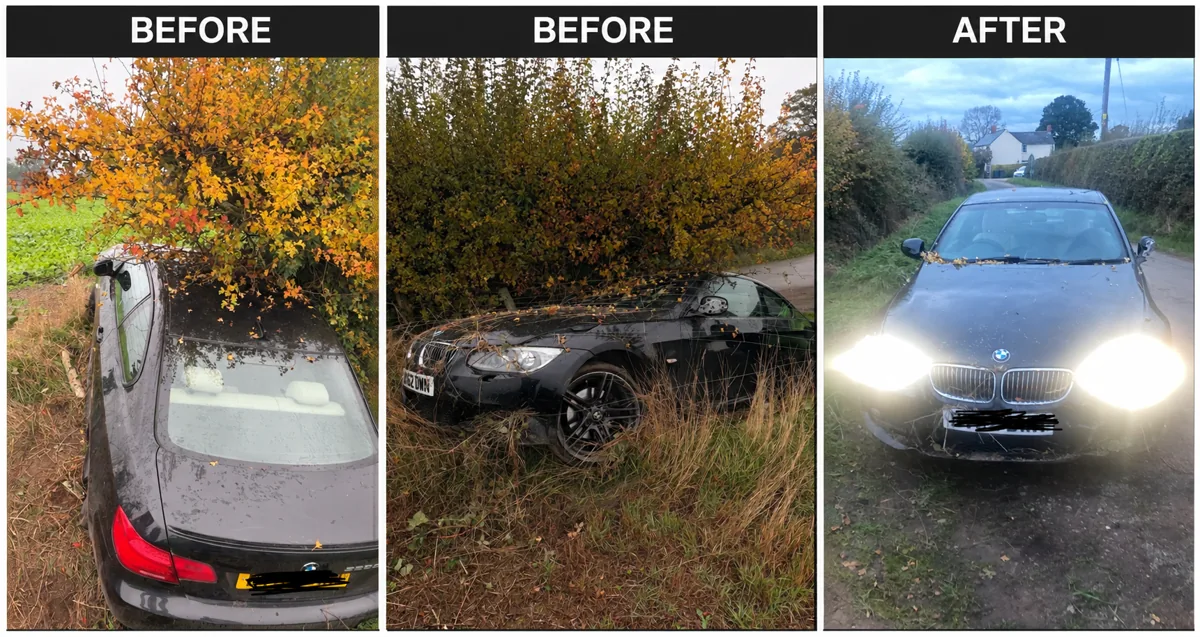
An existing recovery example. Send photos and a short safe video of your own vehicle and access so we can assess your request.
Match the vehicle to the job
Provide the make, model and registration where possible. Explain whether the vehicle can roll, select neutral and release its handbrake. A wheel at an unusual angle, a flat tyre or known steering damage needs to be included before dispatch. If the vehicle's position makes a check unsafe, simply explain what you already know; do not test it by letting it move.
A low car may have little clearance beneath its body, while an SUV can have a substantial weight even when the visible rut is shallow. Four-wheel drive is not a substitute for assessing ground support. Identify an automatic, hybrid or electric vehicle and mention warning messages, loss of power or suspected underbody contact so its handling requirements can be considered.
Tell us whether you have the keys and can access the vehicle normally. A flat battery or locked parking brake may change loading arrangements. Do not force a selector or dismantle controls to prepare for attendance. The exact model and current condition are more useful than an assumption that the vehicle can be moved in the usual way.
For a van, describe its body type, size and load. Include any reliable weight information, roof equipment, tail lift or long rear overhang. A loaded van or Luton needs a specific weight and access check before acceptance. Tell us if goods have shifted or whether the van became stuck while entering a restricted delivery address; both details can change the assessment.
If passengers need to travel with the recovered vehicle, state the number before accepting a booking. One or two passengers may be accommodated only where suitable seats are available in the assigned truck and the arrangement is confirmed. A vehicle recovery booking does not automatically provide seats for everyone travelling with the original vehicle.
Photos, video and location
Select “Ditch pull-out” in the quote form for a vehicle stuck in a ditch, mud or a grass verge. Requesting the right service helps direct the enquiry, while your message explains the actual job. Send clear photographs and a short scene and access video when it is safe. If you cannot capture them safely, explain why and provide the information you have.
A wide view can show the relation between the vehicle and the road, while the video helps explain the approach and any slope. Record only from a safe place: do not walk around an unstable bank or step into traffic to cover every angle. If somebody else is making the booking, make sure the person at the vehicle can answer questions about its current position.
From assessment to dispatch
We aim to respond to complete enquiries within five minutes, although busy periods may take longer. A first response may request another detail before a price or truck can be confirmed. Keep your phone available after sending the form and check that your number is correct. If you move to a safe waiting place away from the vehicle, tell us how the operator can contact you.
The proposed booking should identify the recovery location, the work being quoted and any onward destination. Read those details before accepting, especially if a driver, vehicle owner and employer are all involved. Agree who can authorise the job and who will pay. A clear handover is useful when the person requesting the quote will not be present at collection.
A deposit is required before dispatch, with the remaining balance payable on completion. An arrival within 30 minutes is an aim when a suitable truck is nearby; the actual estimate is confirmed for your enquiry. Availability, journey time, the approach and the equipment needed determine that estimate. Sending a form alone does not mean a truck has been assigned.
When the truck arrives, the operator assesses the vehicle and working area before starting. Explain anything that changed after the original photos or video, including further sinking or damage that has become visible. A material change may require the plan and price to be reviewed before additional work is agreed. Follow the operator's directions about where passengers and bystanders should wait.
Understand the quote
The quote depends on the vehicle and the work required, not simply the town name or the distance to the nearest road. Weight, damage, the amount of sinking and the angle in a ditch can all affect the assessment. Include the access route and any onward journey so the proposed service covers the help you are actually requesting.
A limited working position can matter even when the stranded vehicle is easy to see from the road. A truck may face a narrow turn, a soft approach, an overhead restriction or a locked gate. These are practical details to raise at the start. Photographs help, but they cannot establish every hidden obstruction or ground condition before the operator arrives.
Ask whether the quote covers a pull-out only or also transport to a garage, home or another address. Provide the destination postcode and explain any unloading restriction there. If a garage will receive the vehicle, confirm its receiving arrangements with the garage. Getting the vehicle free and placing it somewhere suitable afterwards are both important parts of planning the job.
There is no obligation to accept the quote. Check the deposit, balance and agreed work before proceeding, and ask about anything that is unclear. If you plan to claim the cost back from an insurer or another organisation, check its requirements directly. Keep your booking information for reference; reimbursement cannot be assumed from a recovery quote alone.
While attendance is arranged
Call 999 if anyone is injured or in immediate danger. Beside a motorway or another fast road, if you cannot leave safely to get well away from traffic, remain in the vehicle with seatbelts and hazard lights on and call 999 for police assistance. If a safe exit is possible, leave away from traffic and move to a place of relative safety, watching for drops or unstable ground.
On private land or a quieter road, consider the vehicle's stability as well as passing traffic. Keep clear of ditch edges, water and the area below a leaning vehicle. Do not stand where the vehicle could trap you against a wall, tree or another vehicle if it moves. Follow any emergency-service instructions and tell us about circumstances that make reaching a safe waiting place difficult.
Keep children and bystanders away from the recovery area. If a site contact offers somewhere suitable to wait, take your phone and explain where you are. Provide entrance directions remotely instead of standing in the road to flag down a truck. Do not return to an unsafe position to collect another photograph; an update explaining the limitation is enough to keep the enquiry accurate.
Read the National Highways breakdown guidance and Highway Code breakdown rules for official advice about reaching a safe place and getting help.
A clear onward plan
A vehicle back on firm ground may still need mechanical inspection. Contact with a bank or the underside, a damaged wheel or a warning message should be discussed before driving. Tell the operator about an impact or a change in steering that occurred before attendance. A pull-out resolves the position of the vehicle; it does not certify its roadworthiness.
If onward transport is required, confirm the full destination and who will receive the vehicle and keys. Explain whether it can roll when unloaded and whether the receiving address has a suitable space. A garage that is closed, a locked compound or a narrow driveway can introduce another access problem. Those arrangements are easier to resolve while agreeing the original booking.
For a business vehicle, make sure the person responsible for it understands the agreed destination and any passenger arrangements. Ask about the recovery record you need for your employer, vehicle owner or insurer before completion. If a load needs separate handling, coordinate it with the responsible person rather than attempting to unload beside traffic or while the vehicle is unstable.
Before the operator leaves, confirm that the agreed work is complete and that the vehicle is positioned appropriately for the next step. The remaining balance is due on completion. The photographs on this page are general recovery examples, not a claim that your particular ground conditions will allow the same method. Your own location, pictures and safe video are what support an assessment.
Doncaster & Worksop pull-out FAQs
Yes. Send the exact location around Worksop, Doncaster or a nearby place such as Retford, Bawtry, Carlton in Lindrick or Langold. The area name helps us locate the enquiry, while vehicle position, access and suitable truck availability determine whether the job can be accepted. Include the actual entrance if it differs from the vehicle pin.
Give your direction of travel and the nearest junction or safely visible landmark, then say whether the vehicle is beside the carriageway or on land reached from another road. A nearby map pin may not identify usable access. Deal with any immediate traffic danger first and only send photographs or video from a safe position.
Please send a short scene and access video along with clear photographs when it is safe. It helps show the vehicle's position, slope and approach in context. If traffic, darkness, water or an unstable edge makes recording unsafe, explain that. We may need further information before confirming the recovery, but you should not take a risk to obtain it.
We can assess the situation. Show the relationship between the wheel, drive edge and the rest of the vehicle, and describe any contact underneath. One affected wheel can still leave a car unstable or damaged. Avoid repeatedly trying to drive out if it is sinking, and do not stand beside a wheel or edge that could move.
Loaded vans need an individual weight and access check. Send the model, body type, load description and known weight information, with photos of the approach if safe. Mention a Luton body, tail lift or height restriction. Acceptance depends on an appropriate recovery arrangement for the van as it is loaded and positioned.
Report that before dispatch and identify the exact vehicle model. Explain whether neutral can be selected, whether power is available and whether there is wheel damage. These details affect movement and loading. Do not force controls or test an unstable vehicle; report unknown answers so the assessment includes the uncertainty.
Send the vehicle and entrance pins, describe the approach and confirm who can authorise access. Gates, soft tracks, narrow turns and limited working space all matter. The truck may need a different entrance from the one used by your car. Keep the landowner or site manager available to clarify access where necessary.
No. It is an arrival aim when a suitable recovery truck is nearby. The estimate confirmed for your booking depends on availability, travel conditions, access and the required equipment. Our five-minute response aim applies to complete enquiries, and busy periods may take longer. Confirm the actual estimate before deciding to book.
Include onward transport in the enquiry and provide the destination postcode and receiving arrangements. The quote should make clear whether it covers extraction only or transport as well. If damage becomes apparent after the pull-out, discuss the next step before driving. Being on firm ground does not by itself establish that the vehicle is safe.
A deposit is required before dispatch and the balance is payable on completion. Tell us about passengers when requesting the quote. One or two may travel only where suitable seats are available in the assigned truck and this has been confirmed. Check both the payment terms and passenger arrangement before accepting the booking.
A clear next step
Send your exact location, vehicle details and safe photos or video. We will check suitable availability and confirm the recovery plan, price and estimated arrival before you decide.
Request my Worksop recovery quoteChoose the answers and enter only the details we need.
Guaranteed response within 5 minutes after you submit your quote form. Easily send your vehicle details and share your current location using the form.