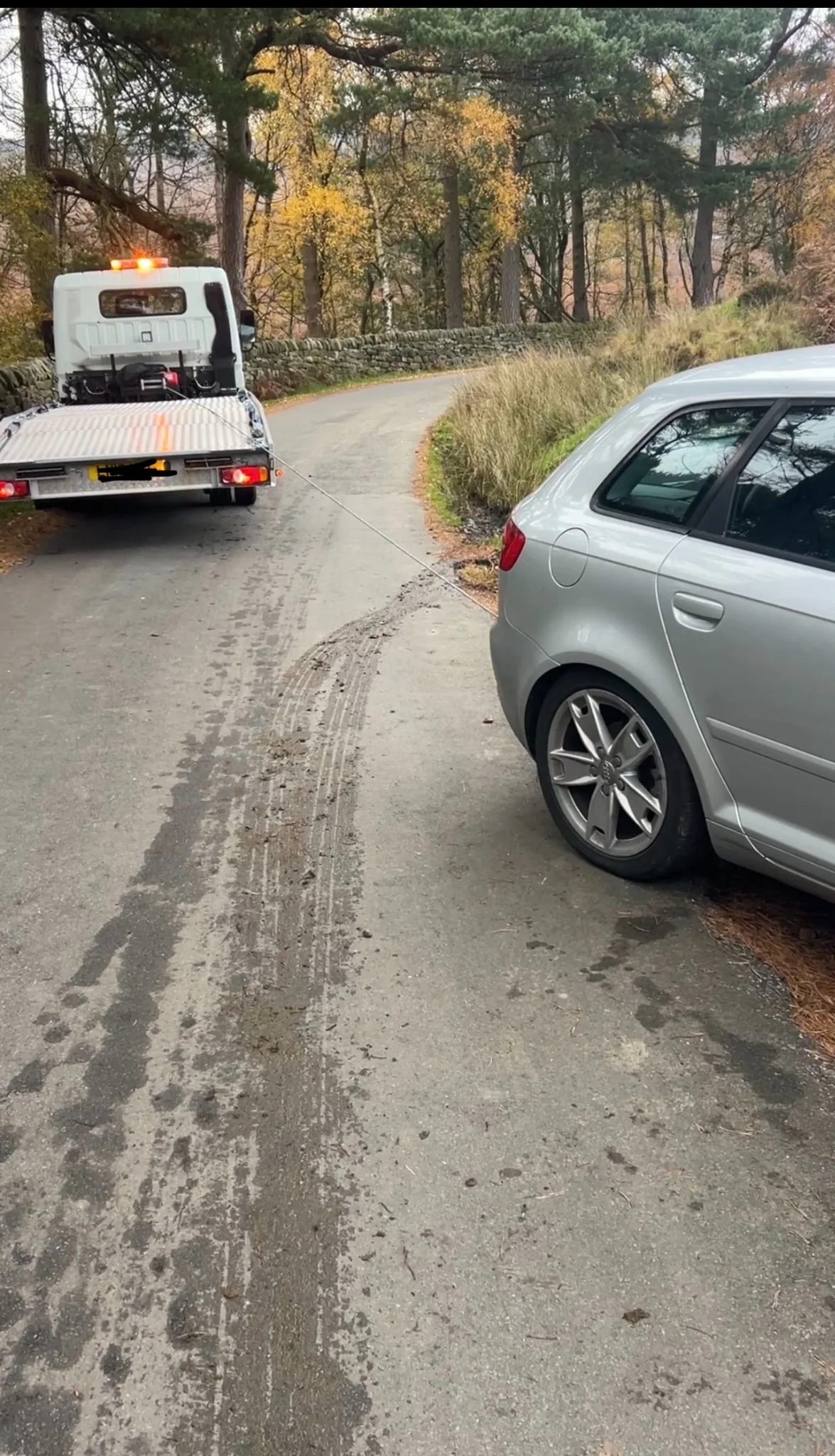
Mud and soft ground
Send photos and a short safe video of the wheels and the route from firm ground so a suitable pull-out can be assessed.
Baloch Recovery Services · Newark
Stranded beyond a road edge, on a muddy approach or beside a ditch around Newark-on-Trent? Baloch Recovery Services assesses the vehicle and access before arranging a suitable pull-out. Send your exact location and safe scene information for a no-obligation quote.
A recovery plan for the actual position
Getting a vehicle onto firm ground is a different task from collecting one that is already parked on a suitable surface. A car may be unable to leave a grass parking area even though it starts normally. A delivery van can become stranded at a muddy entrance. A vehicle in a ditch may have damage or uneven support as well as lost traction.
Our Newark pull-out enquiry process begins with the vehicle's present position. Tell us which wheels are affected, whether the body appears to contact the ground and whether there was a collision. Explain any previous attempt to drive or pull it out, particularly if that left it deeper in the ground or at a different angle. Do not attempt another move just to demonstrate the problem.
The approach matters too. A postcode can identify the right property without showing the gate, track or road a recovery vehicle must use. Send the exact location and explain the final part of the route. We assess the vehicle, working space and suitable availability before confirming an arrangement, rather than treating every request described as a pull-out as the same job.
Enquiries are welcome 24/7 and the quote is no-obligation. You can clarify the proposed work, price and arrival estimate before deciding whether to book. If someone is in immediate danger or needs urgent emergency help, deal with that first. A private quote request should not delay emergency assistance or instructions from those managing an incident.
Send photos and a short safe video of the wheels and the route from firm ground so a suitable pull-out can be assessed.
Show the vehicle position and surrounding access. The recovery plan depends on stability, damage and the space available.
Tell us how close the vehicle is to traffic and which wheels are stuck, locked or damaged.
Newark-on-Trent and nearby places
This page covers enquiries for Newark-on-Trent and surrounding places. Include the town or village, a postcode if known and a map pin at the vehicle. If the usable entrance is elsewhere, identify it separately. Let us know if an address search directs visitors to a different gate or an approach that a recovery truck cannot use.
The A1, A46 and A17 are useful references around Newark, but the number of the main road does not locate every nearby property. For the A46, references such as Farndon and Winthorpe help identify the area. Add your direction of travel and the junction or turning you actually used. Distinguish a vehicle beside a main carriageway from one on a separate local road or private site.
If a location marker or sign is already visible from safety, include it. Do not walk along a fast road, cross traffic or approach a junction to read another sign. A map pin helps identify the vehicle's position; it does not automatically describe a safe or permitted route to it. Explain any separate entrance the operator needs to use.
For Balderton, Fernwood, Coddington or Farndon, give the actual settlement and local address with the enquiry. Say whether the vehicle is on a residential drive, a yard, an event parking area or land reached along a track. Tell us about barriers, narrow turns, low structures and soft sections on the approach, including any point beyond which there is no suitable turning space.
The A617 Kelham Road and A616 Great North Road are further useful road references. Enquiries around Kelham, Winthorpe, Collingham, Southwell and nearby villages can be assessed using the exact site details. Include the landowner or site contact where access needs arranging. Availability depends on the vehicle, ground, approach and suitable equipment, so an area name alone cannot confirm attendance.
If your vehicle needs onward transport after a pull-out, or has broken down on a firm surface, these local recovery pages explain the available services. Include any onward destination when requesting your quote.
Soft entrances, tracks and verges
Mud recovery can involve a wheel in a rut, several wheels sinking or a vehicle resting partly on its underside. Tell us what you can see without getting underneath. A photograph of the whole vehicle and nearby firm ground gives useful context, while a close wheel image on its own may hide the distance or slope that the operator needs to assess.
Avoid repeated wheelspin when the vehicle is not making progress. It can deepen the rut and change the support beneath the vehicle. Keep people away from its potential movement and do not arrange pushing beside a bank, traffic or other hazard. Explain earlier attempts honestly, including any change in the ground or the angle of the vehicle.
A grass verge, field entrance and unsurfaced yard can require different access arrangements. Describe the route from a firm surface to the vehicle, with any narrow gate, sharp turn or weak-looking section. Do not assume a recovery truck can follow the same route your car used. The operator needs to assess a suitable working position as well as a way to enter.
If the land belongs to someone else, identify who can authorise access and confirm any restrictions. Do not remove fencing, open prohibited routes or move site barriers to create space without permission. Mention vulnerable surfaces or property near the recovery area so these can be considered when the proposed method and scope are discussed.
Banks, slopes and uneven support
A vehicle in a ditch may have one end below road level, one side leaning against the bank or wheels at very different heights. Tell us which part entered first and whether it appears stable. Include visible contact with a tree, wall, fence or the ground. The recovery plan depends on how the vehicle is supported and the available space around it.
A wider photograph and a short safe video can help explain the slope and access. Record only from a safe position; do not descend into the ditch or stand below the vehicle. If the bank is soft, water is present or the vehicle shifts while you wait, keep clear and update the information. You do not need to test whether it will move.
State whether there was an impact and whether police or another authority is attending. Follow their instructions about access and waiting positions. Call 999 where people need urgent emergency help or face immediate danger. Rising water, an unstable position or somebody unable to leave danger should not be treated as a routine quote enquiry.
Some incidents need equipment or assistance beyond a straightforward winch-out. We explain what can be assessed from the description and images, then check suitable availability. The operator reviews actual conditions on arrival. Include any likely onward transport, because moving the vehicle out of the ditch does not confirm that damage to its tyres, wheels or underside can be ignored.
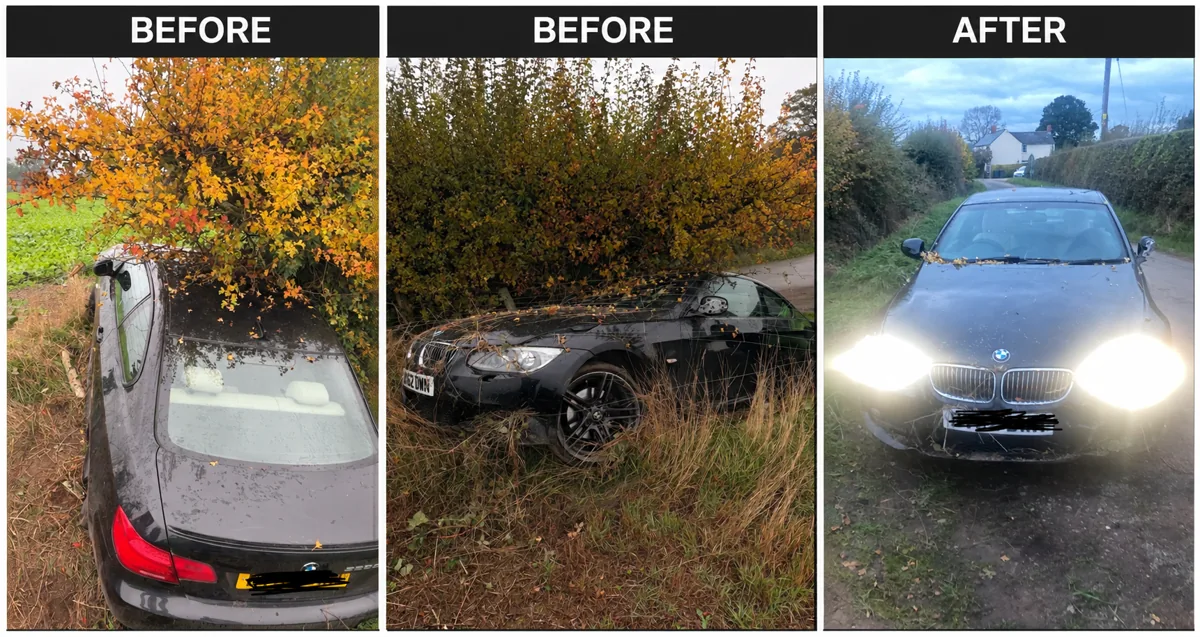
An existing recovery example. Send photos and a short safe video of your own vehicle and access so we can assess your request.
The vehicle and load
Cars, SUVs and suitable vans are assessed individually. Give the exact make and model where possible, with the registration and any unusual body or equipment details. Explain whether the vehicle can roll, select neutral and release its handbrake. Use what you already know; do not let the vehicle move or enter an unsafe position to answer a question.
Identify an automatic, hybrid or electric model and mention any loss of power or warning messages. Tell us about wheel damage, a flat tyre, steering that does not respond normally or suspected contact underneath. These details affect handling and possible loading. A vehicle that looks lightly stuck may still require precautions specific to its model and condition.
Confirm whether the keys are available and the vehicle can be accessed normally. If the parking brake or selector will not operate, report it without forcing the controls. The recovery operator decides what preparation is appropriate. There is no need to identify an attachment point yourself or fit improvised equipment before the assessment.
For a work van, describe the size, body type and load, with reliable weight information if available. Mention a high roof, Luton body, tail lift, long overhang or attached trailer. A loaded or Luton van needs an individual weight and access check before acceptance. Explain whether goods have shifted or the van became stuck during a restricted delivery manoeuvre.
Tell us if passengers need onward travel. One or two people may be accommodated where suitable available seats in the assigned truck are confirmed before booking. Do not assume that recovery of the vehicle automatically includes transport for the whole party. Mention children or particular access needs so the possible arrangement can be checked.
Location, photos and video
Select “Ditch pull-out” in the quote form for mud, ditch and grass-verge situations. Your message should describe the job itself, including any onward destination. We request photographs and a short scene and access video when safe, as the approach, slope and surrounding ground help determine whether a suitable truck can work there.
There is no requirement to put yourself at risk to complete the enquiry. Do not enter traffic, climb down a bank or approach water for a clearer picture. Explain if images cannot be taken safely. A person booking on behalf of the driver should also provide a way to contact someone at the location for clarification.
Agree the work before dispatch
We aim to respond within five minutes to complete quote enquiries, although busy periods may take longer. A response may ask for another photograph or access detail before a price can be confirmed. Keep your phone available after submitting and check that the contact number is correct. Explain if you have moved to a safe waiting place away from the vehicle.
Once the position and requirements are understood, we check suitable truck availability and explain the proposed job. Around 30 minutes is an arrival aim only where an appropriate nearby truck is available. Your actual ETA is confirmed before dispatch. Traffic, restricted access or the need for a particular recovery arrangement can affect how quickly attendance is possible.
Review the quote before deciding. It should distinguish a pull-out onto firm accessible ground from onward transport to another address, or include both when agreed. Confirm the vehicle details, access point, destination and any passenger arrangement. You are not committed simply by requesting the quote, and questions can be resolved before you accept it.
A deposit is required before dispatch to confirm the booking and assign the truck. The amount is explained in advance, with the remaining balance payable on completion of the agreed service. Notify us if another operator moves the vehicle or the scene changes. The operator assesses actual conditions on arrival and discusses any material change needed to the proposed work.
The factors behind your quote
The recovery location is only one part of the price. A car beside a firm driveway is different from a loaded van farther along a soft track, even when both use the same postcode. The vehicle's weight, condition and position affect the equipment and work needed. The depth of the rut or ditch is another detail to describe safely.
Truck access and working space are important. Tell us about narrow turns, locked gates, low structures and any ground that may not support the intended approach. Locked wheels or damaged steering may also change the plan. A standard transport quote cannot establish the cost of an unseen winching job, so include those details from the outset.
If you want the vehicle taken to a garage or home, provide the full destination and any delivery restrictions. Include the receiving person's arrangements and whether the premises will be open. This allows the quote to address the whole request. A pull-out booking should not leave an assumed onward journey that has not been assessed or priced.
Check what the quoted amount covers, the deposit and the balance before confirming. If part of the situation is unknown, say so and ask how it affects the assessment. Changes such as a different vehicle position, inaccessible gate or extra transport need to be discussed. Clear information helps both sides agree the same service before the truck is sent.
Choose a safe waiting position
Call 999 first when someone needs urgent emergency assistance or there is immediate danger. Give your best available location and explain the hazard. Follow emergency-service instructions, including any direction to stay clear or move to a safer position. Do not delay this while gathering pictures, comparing quotes or waiting for a recovery enquiry response.
Beside a motorway or other fast road, leave the vehicle only if safe, using the side away from traffic. Wait somewhere suitable away from the vehicle and passing traffic, with care around barriers, hidden drops and uneven ground. Do not cross the carriageway or wait where an impact could push the vehicle towards you. Being partly on a verge does not remove these risks.
If you cannot get out safely on a motorway, remain belted with hazard lights on and call 999. Use the official guidance linked below and follow instructions for the situation. Do not walk along the road to seek a better signal, photograph or location marker if that would expose you to danger. Describe information already available from safety.
On private land, keep passengers and bystanders away from the vehicle's possible movement, unstable banks and water. Avoid improvised ropes or a second pulling attempt while an assessed recovery is being arranged. Supervise children and pets in a safe place. When the operator arrives, give them space to check the site and follow their directions about the working area.
Read the National Highways breakdown guidance and Highway Code breakdown rules for official advice about reaching a safe place and getting help.
After the vehicle reaches firm ground
A successful pull-out resolves the vehicle's position, but does not establish that it is safe to drive. Damage may have occurred during the original incident or contact with the ground. Tell the operator about warning lights, leaks, tyre or steering concerns and unusual behaviour you have noticed. Seek appropriate inspection where the condition remains uncertain.
If onward recovery is needed, confirm the destination and arrangements agreed in the quote. Provide the full address, the correct entrance and any restriction that could affect unloading. A garage, workplace and private home may each have different access or receiving requirements. The operator needs these details before planning the final part of the journey.
Check who will accept the vehicle and any keys, including an agreed out-of-hours arrangement where relevant. Tell us before changing the destination, because another route, distance or delivery restriction can affect the service and price. Keep passenger travel arrangements clear too: seats depend on the assigned truck and need advance confirmation.
On completion of the agreed service, the remaining balance is payable under the booking arrangements. Keep your phone available during the handover and collect belongings without entering the working area unexpectedly. To start a Newark-area enquiry now, send the location, vehicle details and safe scene information through the quote form so the whole recovery request can be assessed.
Newark pull-out FAQs
Yes. This guide is for Newark-on-Trent and nearby places such as Balderton, Fernwood, Coddington, Farndon and Winthorpe. Give the actual town or village and exact vehicle location when enquiring. The vehicle, access and suitable truck availability determine whether a particular job can be arranged.
Include the road, direction and any safely known junction or location marker. Explain whether the vehicle is on the main road itself, a nearby local road or private land with separate access. Follow emergency instructions and do not enter traffic to gather more information. A location and access assessment comes before confirmation.
A suitable recovery can be considered after assessing the vehicle, ground and approach. Send safe scene photos and a short access video, identifying firm ground, gates and any restrictions. Confirm who can authorise entry. The presence of a nearby road does not automatically mean a truck has a suitable working position.
We request photographs and a short scene and access video when these can be taken safely. They help explain the position, slope and approach. Do not descend into a ditch, enter traffic or approach water to record them. If safe images are unavailable, explain why and send the information you already have.
Loaded and Luton vans require an individual weight and access check. Include the body type, dimensions, load and reliable weight information, plus any tail lift, trailer or unusual equipment. Suitability is confirmed for the actual vehicle and ground conditions before dispatch, rather than assumed from a general van description.
No. A 30-minute arrival is an aim where a suitable nearby truck is available. The actual ETA is confirmed after the enquiry is assessed. Traffic, the access route, existing availability and equipment requirements can mean a longer wait. Do not delay emergency assistance because you are waiting for a private recovery estimate.
The response aim is five minutes for complete enquiries, although busy periods may take longer. An initial response may request clarification before a price or truck can be confirmed. Include accurate contact details and stay reachable so questions about the vehicle or entrance can be resolved.
Tell us before booking, with the exact model and any loss of power or visible damage. Movement restrictions can affect the handling and loading plan. Do not force controls or move the vehicle to test them. If you do not know whether a wheel or brake can release, report that uncertainty.
A deposit is required before dispatch to confirm the booking and assign the truck. The amount, remaining balance and agreed work are explained before you decide. The balance is payable on completion of the agreed service. Check whether onward transport and any other requested work are included in the quote.
Provide the destination at the first enquiry so onward transport can be assessed and quoted. One or two passengers may travel only where suitable seats in the assigned truck are available and confirmed. The pull-out itself does not automatically include another journey or passenger seats, so agree these details before booking.
A clear next step
Send your exact location, vehicle details and safe photos or video. We will check suitable availability and confirm the recovery plan, price and estimated arrival before you decide.
Request my Newark recovery quoteChoose the answers and enter only the details we need.
Guaranteed response within 5 minutes after you submit your quote form. Easily send your vehicle details and share your current location using the form.