
Mud and soft ground
Send photos and a short safe video of the wheels and the route from firm ground so a suitable pull-out can be assessed.
Baloch Recovery Services · Wakefield
A car or van can lose traction just beyond a firm driveway or road edge. Send Baloch Recovery Services your Wakefield location and details of the scene. We assess the vehicle, ground and access before confirming a suitable recovery plan and quote.
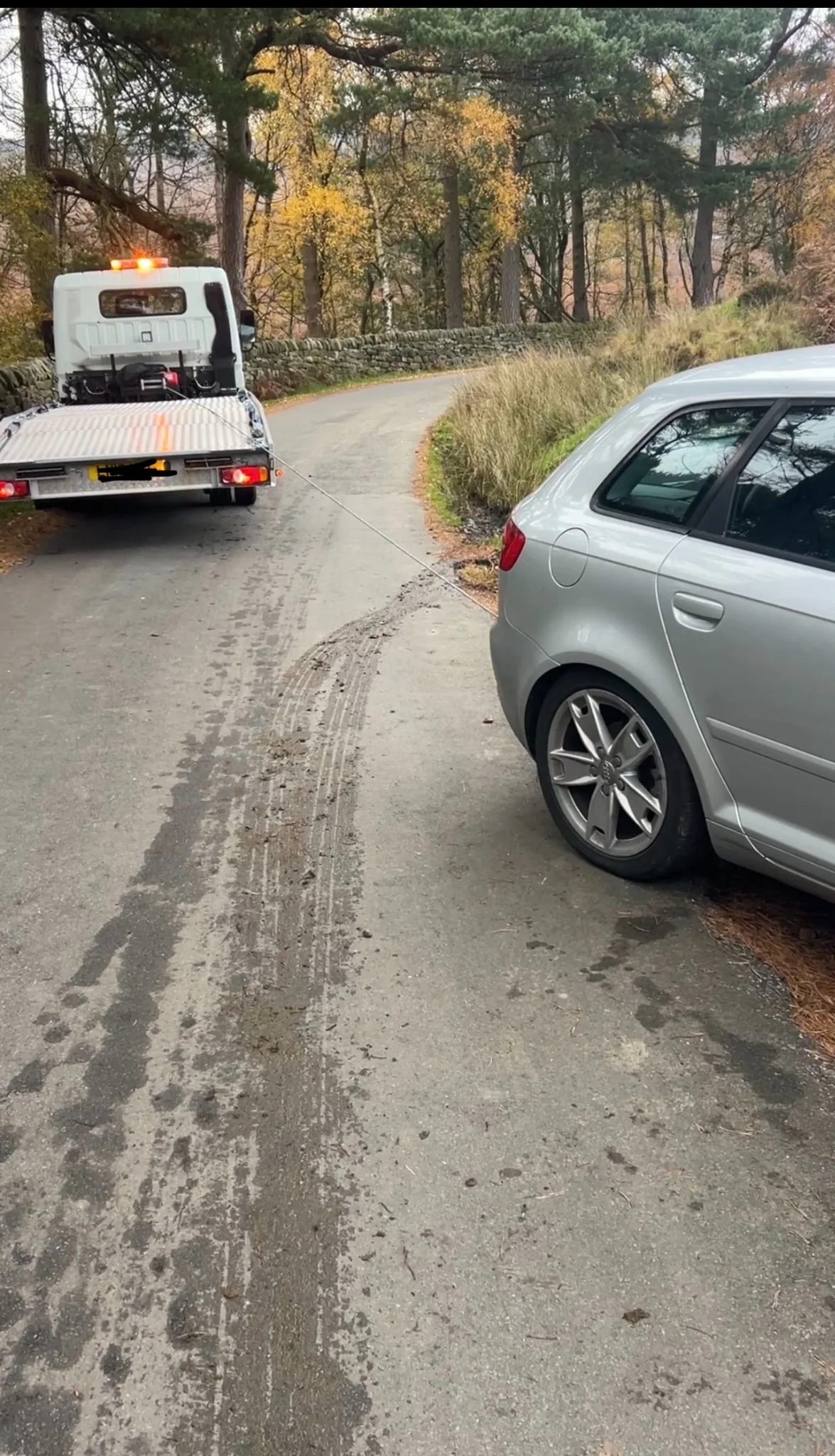
Start with the situation
A vehicle stuck off the road needs an assessment of what is supporting it and how it can be reached. It may have working steering and an engine that starts, yet be unable to move because the tyres are sinking. It may instead be resting underneath, leaning beside a bank or damaged after entering a ditch. These differences affect the recovery arrangement.
Our Wakefield pull-out enquiries cover mud, grass verges, roadside ditches and suitable private-land locations. Describe what happened and what the vehicle looks like now. Tell us if it has moved further, sunk deeper or started leaning since your first attempt to leave. A current description is more useful than assuming that a job will be simple because the original mistake seemed minor.
You do not need a breakdown membership or a technical explanation of the recovery method to request a quote. We welcome enquiries around the clock and check suitable availability for each location. The quote is no-obligation, and you can decide after the proposed service, price and estimated arrival have been explained.
If you are arranging help for another person, establish who is at the vehicle and how they can be contacted. Ask them for information they already know or can obtain safely. Do not ask someone beside traffic or an unstable vehicle to walk around it for a better picture. Immediate danger needs emergency help before an ordinary recovery enquiry.
Send photos and a short safe video of the wheels and the route from firm ground so a suitable pull-out can be assessed.
Show the vehicle position and surrounding access. The recovery plan depends on stability, damage and the space available.
Tell us how close the vehicle is to traffic and which wheels are stuck, locked or damaged.
Wakefield and nearby areas
Send a map pin for the vehicle and an address or postcode if available. Add the place name even when the pin looks clear, and explain whether the nearest entrance is somewhere different. A recovery truck needs a usable approach and working position; the shortest line on a map does not show gates, private boundaries or an entrance on another road.
The A61 serves communities around Wakefield including Outwood and Stanley to the north and Belle Vue and Sandal to the south. Say which area you are in and identify the actual road or driveway. A familiar route name helps orient the enquiry, but it should not replace the precise location of a vehicle behind premises or on a track.
On the A638 Doncaster Road side of Wakefield, add the nearest identifiable turning or property entrance. Describe whether the vehicle is beside the main road, on a separate access road or inside a site. If you are on land reached through a gate, tell us who can authorise entry and whether they can be present.
The M1 approaches to Wakefield include junctions 39, 40 and 41. If the vehicle is on the motorway, state the direction of travel and any junction or location marker already known or safely visible. If it is on a local road nearby, make that clear. Do not walk towards a motorway sign or cross traffic to improve your location description.
Enquiries from Ossett, Horbury, Normanton and surrounding places can also be assessed. Use the real town or village rather than a Wakefield label when another name is more accurate. For a yard, field entrance or visitor parking area, explain the final turning and any restricted approach. Suitable coverage and attendance are confirmed for the individual vehicle and site.
If your vehicle needs onward transport after a pull-out, or has broken down on a firm surface, these local recovery pages explain the available services. Include any onward destination when requesting your quote.
When the ground will not support the vehicle
A wet verge may look firm from the driver's seat while being soft beneath a tyre. A car can also become stuck while turning on grass, leaving a parking field or making space at a narrow entrance. Describe which wheels have sunk, whether the vehicle remains level and whether its underside appears to contact the ground. Report only what you can see safely.
Stop repeated attempts if the wheels spin without useful movement. Continued wheelspin can deepen the rut and leave less clearance beneath the vehicle. Avoid having people push beside moving traffic, a bank or the likely path of the vehicle. If you have already tried to move it, tell us what happened and whether its position changed.
Show the nearest firm surface and the route between it and the vehicle. A truck able to remain on a suitable surfaced drive faces a different situation from one that would have to travel along a long soft track. Mention standing water, slopes, narrow gates or obstacles that limit the available space. Ground that supported your car may not be suitable for recovery equipment.
For an event site or private property, identify the person who controls access and explain any restrictions they have given you. Do not remove fencing or open a prohibited route to create space. The operator considers the recovery position and property access together, with any important uncertainty discussed before the job is accepted.
Uneven support and awkward positions
A vehicle partly below the road can be supported by the bank, its wheels or its bodywork. It may appear upright while sitting at an angle that makes movement difficult to predict. Explain which end entered the ditch, whether the vehicle is leaning and whether it is against a tree, fence or other obstacle. A wider scene image helps show these relationships.
Tell us about water, damaged barriers, a crumbling edge or any contact underneath. Mention a collision and whether police or another authority is managing the location. Do not climb into the ditch, stand below the vehicle or attempt to check underneath. If the position changes while you wait, update the enquiry from a safe place.
People's safety comes before gathering recovery information. Call 999 if someone needs urgent emergency assistance or there is immediate danger. Follow instructions from emergency services and anyone managing the incident. A private recovery booking should not delay that response or be treated as confirmation that an unstable scene is safe.
The recovery method and equipment depend on the assessed position. Some situations require more support than a routine winch-out, particularly with damaged wheels, significant leaning or deep ground contact. Explain whether onward transport will be needed. Getting the vehicle back to road level does not establish that its tyres, steering or suspension are fit to continue driving.
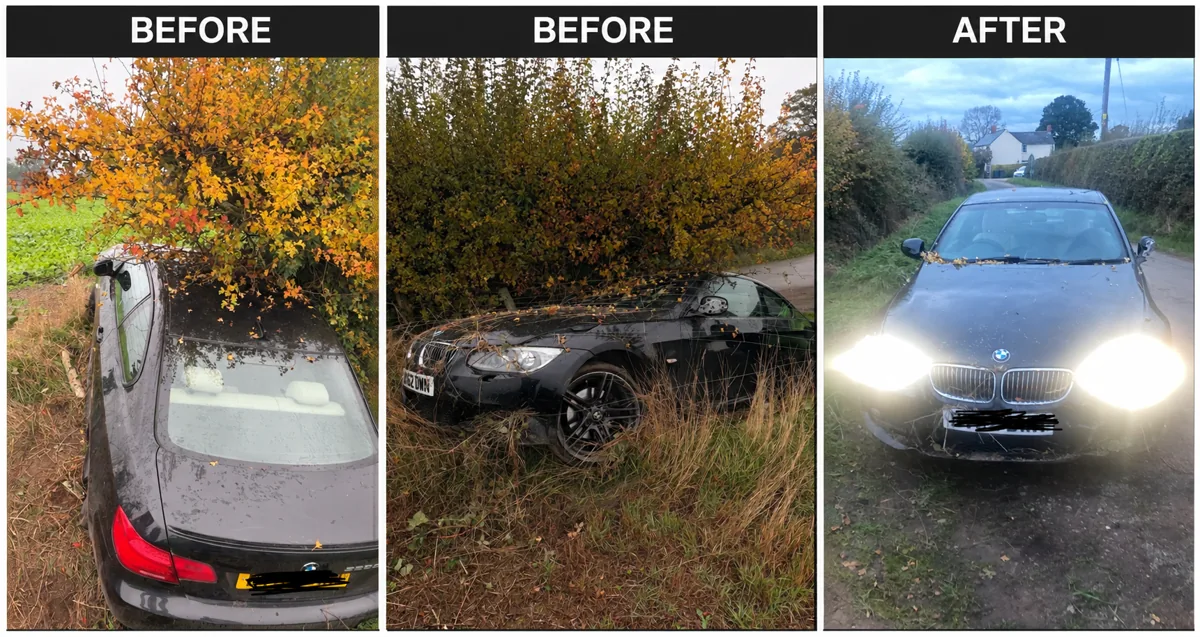
An existing recovery example. Send photos and a short safe video of your own vehicle and access so we can assess your request.
Vehicle details that change the plan
Give the make, model and registration if you have them. State whether the vehicle can roll, select neutral and release its handbrake, using information you already know. Do not allow it to move to test those answers. If a control will not operate or you are unsure, say so; the operator needs that uncertainty included in the assessment.
A small car may have limited clearance underneath, while an SUV may be heavy despite sitting in a shallow rut. Four-wheel drive does not establish that the vehicle can regain traction or that the surrounding ground is firm. Mention flat tyres, unusual wheel angles, damaged steering and anything that could affect controlled movement.
Identify an automatic, hybrid or electric model and tell us about warning messages, loss of power or suspected underbody contact. Explain whether you have the keys and can access the vehicle. Do not force the selector, parking brake or other controls to prepare for recovery; the exact model and current condition guide the handling assessment.
For a van, include its body type, size and load, with reliable weight information where available. Tell us about a high roof, Luton body, tail lift or anything extending beyond the usual bodywork. Loaded and Luton vans require an individual weight and access check before acceptance. Do not assume that suitability for an empty van also covers a heavily loaded one.
Mention a trailer or other attached equipment at the first enquiry. Also tell us how many people need onward travel. One or two passengers may be accommodated only where the assigned recovery truck has suitable available seats and this is confirmed in advance. Vehicle transport does not automatically provide seats for everyone in the original party.
Prepare a useful enquiry
Choose “Ditch pull-out” in the quote form for a vehicle stranded in mud, a ditch or a grass verge. Describe the actual position and include onward transport if required. We request photographs and a short scene and access video when these can be taken safely, because the approach and surrounding ground affect which equipment can be sent.
Start with a wide view showing the vehicle in relation to the road or firm surface. Add useful wheel or access views only from a safe position. Do not walk into traffic, enter water or approach an unstable edge to complete a set of pictures. If safe images are unavailable, explain that and send the details you already have.
Assessment, agreement and dispatch
We aim to respond to complete quote enquiries within five minutes, although busy periods may take longer. A first reply may ask for clarification before a truck or price can be confirmed. Keep your phone available and check the contact number you submit. If somebody else is booking, explain how the person at the vehicle can answer access questions.
The review considers the vehicle, its support, the available approach and any onward destination. We then explain the proposed service and check suitable truck availability. A 30-minute arrival is an aim only where an appropriate nearby truck is available. The actual estimated arrival is confirmed for your booking; it can be affected by traffic, the approach and the equipment needed.
Read the quote as a description of the agreed job. Ask whether it covers only the pull-out onto firm accessible ground or also transport elsewhere. Confirm the entrance, destination, vehicle details and any passenger arrangement before accepting. A no-obligation quote gives you the opportunity to clarify these points before making a booking.
A deposit is required before dispatch to confirm the booking and assign the truck, with the balance payable on completion of the agreed service. The amount and payment arrangements are explained before you commit. Tell us promptly if another operator recovers the vehicle, access becomes unavailable or the vehicle moves. The operator reassesses the actual conditions on arrival and discusses any necessary change to the agreed work.
A quote based on the whole job
A postcode alone cannot establish a reliable pull-out price. Two cars a few metres apart may need different equipment if one is on a firm entrance and the other is supported unevenly in a ditch. The quote considers the vehicle's weight and condition, how deeply it is stuck, the ground, the working position and the route for the recovery truck.
Restricted access can matter as much as distance. Mention a narrow entrance, a long soft approach, limited turning room or a locked gate at the outset. Loaded vans, locked wheels and damage that prevents normal movement also need to be included. Good information helps establish the proposed service and avoids relying on a price for a different type of job.
Onward transport is a separate requirement to explain when enquiring. Provide the destination and any delivery restrictions so the quote can cover the full request. If a garage will receive the vehicle, check its opening hours and who can accept the handover. A successful pull-out does not automatically include another journey to a garage or home.
Before paying the deposit, check the amount, remaining balance and scope described in the quote. Ask about anything that is still uncertain because the site cannot be fully assessed from the information available. If the situation changes, update us. Materially different conditions or additional work need to be discussed rather than assumed to be included in the original description.
People before photographs
If anyone is in immediate danger or needs emergency assistance, call 999 first and follow the operator's instructions. Do not wait for a private quote response or finish gathering photographs. Give your best available location description and explain whether the danger involves traffic, an unstable vehicle, injury or another immediate hazard.
On a motorway or other fast road, only leave the vehicle if it is safe. Use the side away from traffic and move to a suitable safe place away from the vehicle and moving traffic. Take care around barriers, hidden drops and uneven ground. Never cross the carriageway, and do not stand where a collision could push the vehicle towards you.
If you cannot get out safely on a motorway, keep your seat belt fastened and hazard lights on and call 999. Follow the official guidance linked below and instructions from those managing the incident. A vehicle partly on a verge may still be exposed to moving traffic; being outside a running lane does not by itself make every waiting position safe.
At a private or rural site, keep people clear of banks, water, the vehicle and any likely movement path. Do not attach an improvised rope or organise another pulling attempt while waiting for an agreed recovery. Supervise children and pets in a safe place. When the operator arrives, allow room for the assessment and follow instructions about where people should wait.
Read the National Highways breakdown guidance and Highway Code breakdown rules for official advice about reaching a safe place and getting help.
Plan what happens next
A vehicle on firm ground may still have damage from the original incident or contact with the ground. Tell the operator about warning lights, steering concerns, tyre damage, leaks or unusual behaviour that you have noticed. Do not assume that a pull-out is a mechanical inspection or proof that the vehicle can safely continue its journey.
If onward transport is needed, confirm the destination and agreed scope before loading. Providing the address at the initial enquiry helps the full job to be assessed, including access at the other end. Explain narrow gates, height restrictions or limited unloading space at a garage, workplace or home, rather than assuming that any arrival point can receive a recovery truck.
For a garage handover, check that someone can accept the vehicle and explain any agreed key or out-of-hours arrangement. If the destination changes after booking, tell us before the onward journey. A different route, distance or delivery restriction may affect the service and price, so the revised plan needs to be clear to everyone involved.
Confirm any passenger seats separately, using the arrangement agreed for the assigned truck. Keep belongings, keys and contact details organised without entering an unsafe working area. The remaining balance is payable when the agreed service is completed. If you need help now, use the quote form with your exact Wakefield-area location, vehicle details and safe scene information so the next step can be assessed.
Wakefield pull-out FAQs
Yes. Send your exact location, vehicle make and model, and a description of the wheels, ground and available access. Include safe photographs and a short access video where possible. The enquiry is assessed for a suitable recovery arrangement; a request does not confirm that every vehicle or location can be accepted.
Enquiries from these places and the wider Wakefield area can be assessed. State the actual town or village, a map pin and the entrance that reaches the vehicle. Suitable truck availability, the vehicle and the site determine whether the job can be arranged and what arrival estimate can be offered.
Give the road, direction of travel and any junction or location marker already known or safely visible. Explain whether the vehicle is on the major road itself or a nearby local road. Put people’s safety first and follow emergency instructions. We assess private recovery only after the actual position and access are understood.
We request photographs and a short scene and access video when it is safe, because they help show the ground, angle and approach. Never enter traffic, water or an unstable position to record them. If you cannot obtain them safely, explain that and send the information you already have.
No. Around 30 minutes is an arrival aim where a suitable nearby recovery truck is available. The actual ETA is confirmed for the booking after the vehicle, access and equipment requirements are assessed. Traffic, the approach and the availability of the right truck can make attendance take longer.
The response aim is five minutes for complete quote enquiries, but busy periods may take longer. A reply may ask for another detail before a price or truck can be confirmed. Include your location, vehicle details, scene information and a correct contact number to help the assessment proceed.
These vehicles need an individual weight and access assessment. Give the body type, size, load, reliable weight information and details of the ground and entrance. Mention a tail lift or unusual dimensions. Suitability must be confirmed before dispatch; a general van enquiry does not establish that every loaded vehicle can be accepted.
Tell us before booking, together with the exact model and any known damage or loss of power. Locked wheels or a parking brake issue can change the handling and loading plan. Do not force controls or move the vehicle just to test them; report unknown details as unknown.
The deposit amount and agreed service are explained before you confirm. A deposit is required before dispatch to confirm the booking and assign the truck. The remaining balance is payable on completion of the agreed service. Ask whether the quote includes onward transport and clarify any uncertainty before paying.
Include the garage address and receiving arrangements in the enquiry so onward recovery can be assessed and quoted. A pull-out onto firm ground does not automatically include another journey. If one or two passengers also need to travel, request this before booking so suitable seats in the assigned truck can be checked.
A clear next step
Send your exact location, vehicle details and safe photos or video. We will check suitable availability and confirm the recovery plan, price and estimated arrival before you decide.
Request my Wakefield recovery quoteChoose the answers and enter only the details we need.
Guaranteed response within 5 minutes after you submit your quote form. Easily send your vehicle details and share your current location using the form.