
Mud and soft ground
Send photos and a short safe video of the wheels and the route from firm ground so a suitable pull-out can be assessed.
Baloch Recovery Services · Hull
Stuck off the firm surface in Hull or a nearby village? Baloch Recovery Services assesses mud, ditch and grass-verge pull-outs for cars, SUVs and suitable vans. Send your exact location, safe photos and a short scene/access video for a no-obligation quote.
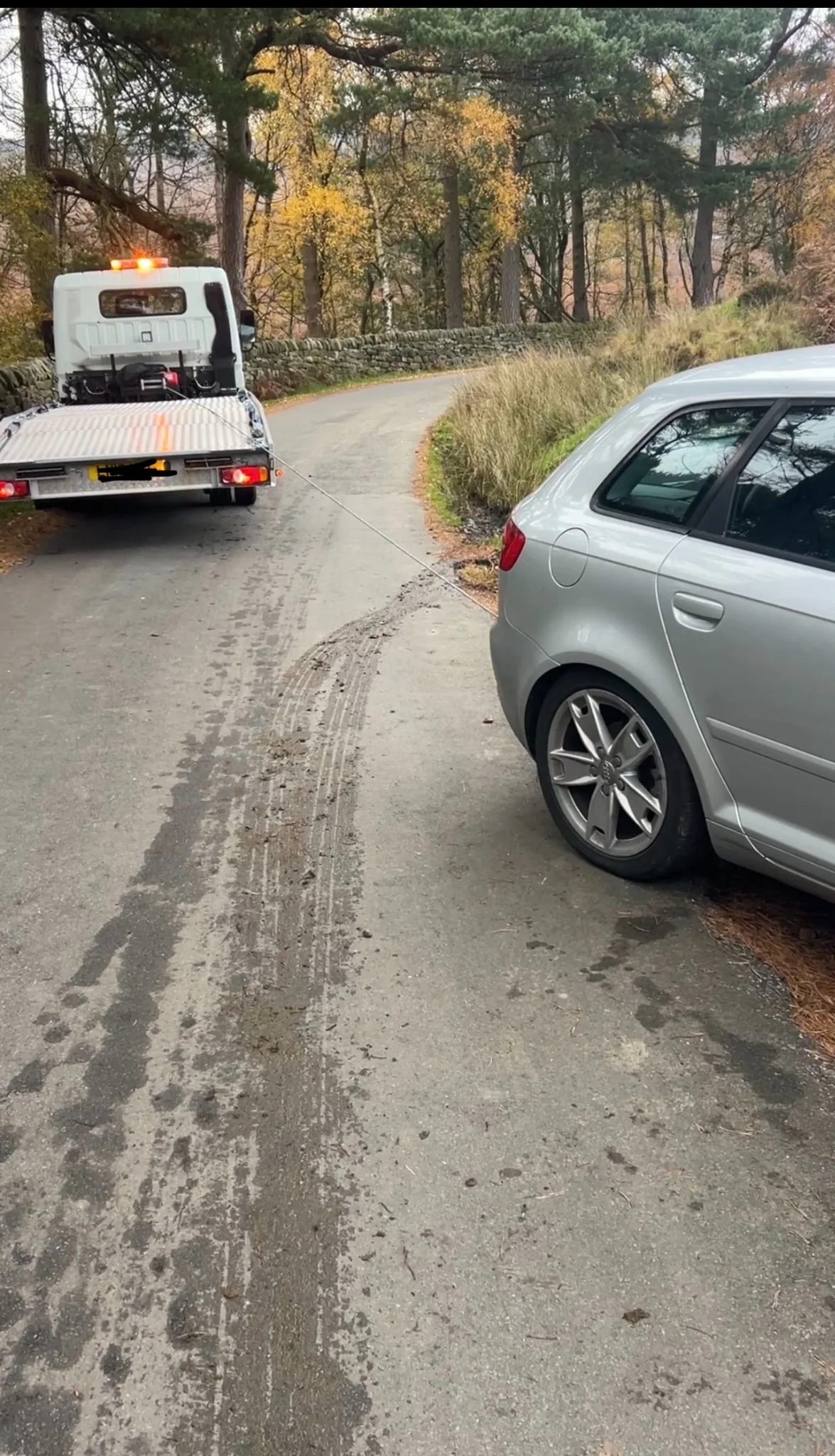
Hull pull-out enquiries
A vehicle can lose traction without having a mechanical breakdown. One wheel may have dropped off the edge of an entrance, a van may have sunk while turning, or a car may have slid towards a ditch. The useful starting point is the position it has reached: what supports the wheels, whether the body is touching the ground and where recovery equipment could stand. Baloch Recovery Services uses those details to assess a suitable response.
Choose 'Ditch pull-out' in the quote enquiry for a mud, ditch or grass-verge problem. Enquiries are accepted 24/7. Include your exact location, vehicle details, safe photographs and a short scene/access video so we can provide a no-obligation quote. If recording would put you at risk, explain what is unavailable. Being close to a main road does not establish that a recovery truck can reach the vehicle from that road.
Send photos and a short safe video of the wheels and the route from firm ground so a suitable pull-out can be assessed.
Show the vehicle position and surrounding access. The recovery plan depends on stability, damage and the space available.
Tell us how close the vehicle is to traffic and which wheels are stuck, locked or damaged.
Hull and nearby places
A Hull postcode can identify the general area while still leaving several possible entrances. Send a precise pin for the vehicle and, if different, identify the gate or entrance a truck should approach. Give the nearest named road or place as supporting information. A business reception, house number or destination saved in your navigation app may be somewhere different from the spot where you are stuck.
The A63 is the useful road reference for Clive Sullivan Way and Castle Street through Hull. The M62 lies on the approach farther west; saying only 'M62 near Hull' may identify the wrong stretch. Tell us the road you are actually beside, your direction of travel and the nearest signed junction or landmark you can identify safely. Distinguish between the main carriageway, a slip road, an adjoining road and a private access. A vehicle visible from the A63 may need to be reached through a completely separate entrance. Do not walk along a fast road or cross barriers to obtain a marker or a better pin.
Around Hessle, the A63, A15 and A164 approaches make the exact road especially useful. The A164 serves the wider Beverley area, while the A1079 includes Beverley Road in Hull. For a request around Cottingham, Hessle or Beverley, supply the village or town as well as the actual roadside location. Explain whether you are on a public road, a private driveway or a track beyond a gate. An address covering several buildings is less useful than the usable entrance, the distance from firm ground and any restriction on a truck turning or stopping there.
Hedon Road is the A1033, so an eastern Hull enquiry should not automatically be labelled as the A63. If you are towards Hedon or at a commercial entrance, give the road name, site name and correct gate. Let us know whether site staff can authorise entry, whether a gate is locked and whether the soft section begins before or after the hardstanding. A wide yard entrance can lead to a narrow or weak internal route. The operator may need to work from a different position from the stranded vehicle, making the connection between the entrance and scene an essential part of your video.
If your vehicle needs onward transport after a pull-out, or has broken down on a firm surface, these local recovery pages explain the available services. Include any onward destination when requesting your quote.
Mud and soft verges
Grass can conceal a depression, and a thin layer of gravel does not show how well the ground underneath will support a vehicle. Describe which wheels are on the soft surface and whether any remain on tarmac or concrete. Mention visible ruts, a raised edge between the surfaces or the underside resting on the ground. A car with only one wheel off the paved area can still present a difficult recovery angle.
For parking areas, delivery entrances and private drives, show the connection to a firm working area if you can do so from safety. A truck needs suitable support for its own weight and equipment; it cannot necessarily follow the route your car took. Photographs show the detail around individual wheels. A short scene/access video helps connect those details to the entrance, available space and any obstacle between the truck and vehicle.
If you were directed onto grass by a venue, customer or site representative, include that context and identify who can authorise recovery access. Their knowledge of another entrance or a firm area may help assessment. Permission to park, however, does not by itself establish permission for a recovery truck to enter or for equipment to be positioned elsewhere on the property.
Ditch and edge recovery
A ditch enquiry needs more than an estimate of how far the vehicle has left the road. Tell us whether it is level or leaning, which wheels you can see and whether it is resting against an edge, bank or obstacle. The depth of a ditch alone does not reveal how stable the vehicle is. You do not need to diagnose the recovery method; a clear description from a safe position is more useful.
If there is water, explain what is visible without approaching it. Do not enter the ditch to test the depth or inspect concealed wheels, and do not try to restart a vehicle that may have taken in water. Rising water, an unstable vehicle or an immediate threat to someone needs urgent attention. Call 999 for immediate danger or injury; a recovery enquiry does not replace emergency assistance.
Also describe the relationship to passing traffic. A vehicle below the road edge can still leave part of its body in the carriageway or restrict visibility near a bend. Tell us if a barrier, sign, wall or fence is involved. The operator must assess whether the recovery can be carried out safely and whether additional control of the working area is needed.
On private property, identify the landowner or responsible site contact and any restriction on access beside the ditch. Do not move fencing or try to drag the vehicle away from an obstacle to make room. Recovery planning includes where the vehicle can be supported throughout the movement and where it can finish, rather than simply getting it back over the nearest edge.
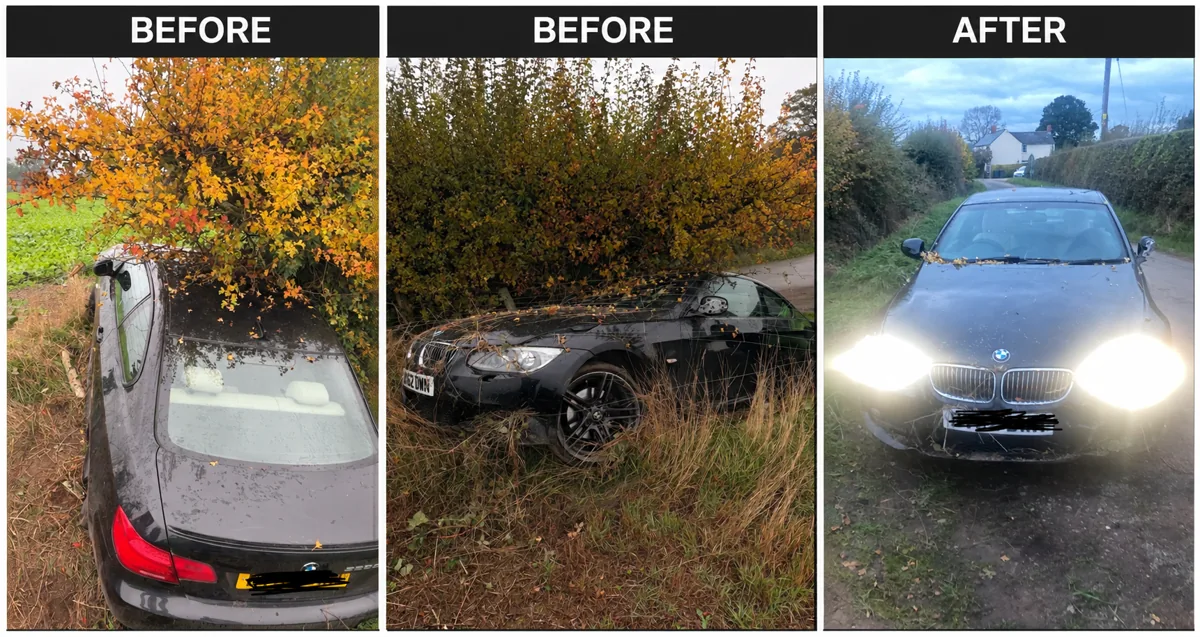
An existing recovery example. Send photos and a short safe video of your own vehicle and access so we can assess your request.
Vehicle suitability
Pull-out suitability is assessed individually for cars, SUVs and suitable vans. Provide the make, model and body type rather than just 'car' or 'van'. Tell us if it is electric or hybrid, whether you have the keys and whether its normal controls are available. Clearance, weight, transmission and the condition of the wheels can affect the equipment and handling required.
Four-wheel drive does not make an SUV suitable for every soft surface or recovery position. Explain whether the vehicle can roll, steer and select neutral, and whether the handbrake releases, using what you already know. Report a wheel pointing at an unusual angle, a damaged tyre or possible suspension damage. Do not carry out tests beside moving traffic or release a brake on an unstable vehicle simply to answer the enquiry. Unknown details can be assessed by the operator.
For a work van, include its size and the load it is carrying. Tools, stock and equipment can materially change the recovery assessment. Loaded vans and Luton vans need a weight and access check before suitability is confirmed. Mention the body height, any tail lift, rear overhang and restrictions at the entrance. An entrance that admitted your van may still be unsuitable for the recovery truck, particularly where turning space or the strength of the surface is limited.
Tell us how many people are with the vehicle and whether anyone has mobility or other access needs. Transport for one or two passengers may be possible, subject to available seats in the assigned truck; it must be confirmed during booking. Mention children and any seating requirements before dispatch. Do not assume everyone can travel with the recovered vehicle or remain inside it while it is being pulled. Follow the attending operator's instructions about a suitable waiting position.
Prepare your enquiry
Select 'Ditch pull-out' and send the following information together where possible. For pull-outs, we request safe photographs and a short scene/access video: the pictures show detail, while the video explains how the scene connects to a possible working area. Record only from a secure position away from traffic, unstable ground and the vehicle's possible movement. If you cannot provide either safely, say so and describe the scene. Do not delay seeking emergency help to complete an enquiry.
From enquiry to dispatch
We aim to respond within five minutes to complete enquiries, although busy periods can take longer. Include the location, vehicle details and safe scene information. If photographs or video are unavailable for safety reasons, explain that in the first message.
The enquiry is reviewed for the ground conditions, vehicle position, road environment and truck access. We may need clarification about an entrance, a loaded van or possible wheel damage before confirming the proposed service. The quote is provided without obligation. Ask for the intended outcome to be clear, including whether the booking covers a pull-out only or also transport to a specified destination.
Once the service and price are agreed, a deposit is required before dispatch. The remaining balance is payable on completion. Confirm the payment arrangements and any site access contact while booking, so the assigned operator has the information needed to reach the scene. If the vehicle has moved or conditions have worsened, send that update before a truck is dispatched wherever possible.
A 30-minute arrival is an aim only where a suitable truck is nearby. The ETA is confirmed for the actual booking and depends on availability, routing and the recovery requirements. It is not established by a Hull postcode alone. Use the confirmed estimate when arranging access, and keep a safe means of receiving messages available while you wait.
A quote for the situation
A useful price starts with the circumstances of the recovery. A car beside firm hardstanding presents a different task from a leaning vehicle in a ditch or a loaded van beyond a soft access track. The relevant details include the vehicle's weight and position, the supporting ground, the distance from a suitable working area and the equipment needed to carry out the movement safely.
Access restrictions can also change the assessment. A narrow gate, restricted turning space, damaged wheel or load that was not mentioned initially may affect whether a particular truck is suitable. For commercial sites around Hull and the surrounding area, tell us about entry arrangements before booking. It is better to establish the usable gate and authorised working space than rely on the main postal address.
Request a no-obligation quote and make sure its scope matches the help you need. If onward recovery is required, provide the destination at the outset; a garage or home address changes the journey being considered. If the circumstances found on arrival differ materially from the enquiry, any revised work and price should be explained before additional work is agreed.
While you wait
On a fast road, follow the safest option for the position you are in. If it is unsafe to get out, stay inside with seatbelts fastened, switch on hazard lights and call 999. If a safe exit is possible, leave on the side away from traffic and move to a place of relative safety. Do not stand beside the vehicle in the path of traffic or walk back along the road to guide a truck.
Call 999 for immediate danger or injury. Explain if a vehicle is obstructing a live lane, someone is trapped or the position is becoming unstable. The recovery enquiry can describe those circumstances, but it is not an emergency response channel. Give the location from information already available rather than taking risks to inspect road signs or the underside of the vehicle.
Away from the main road, keep people clear of a leaning vehicle, the ditch edge and any potential recovery route. Keep children and pets with a responsible adult in a safe place. Do not wait downhill from a vehicle that could move, or beside ground that appears to be breaking away. Poor light is a reason to limit inspection, not to venture closer.
Share where you are waiting if it differs from the vehicle pin. If a safe video cannot show the entrance, describe its location and restrictions instead. Report meaningful changes, such as further movement or rising water, from safety. When the operator arrives, let them establish the working area and follow their directions before approaching.
Read the National Highways breakdown guidance and Highway Code breakdown rules for official advice about reaching a safe place and getting help.
Once firm ground is reached
Reaching a firm surface does not establish that the vehicle is safe to continue driving. It may have damaged a tyre, wheel, steering component or underside when it left the road. Mud can conceal damage, and a warning light or fluid leak needs attention. Explain anything you noticed before the recovery, including an impact, an unusual sound or the engine stopping after contact with water.
If the vehicle cannot roll normally, has suspected mechanical damage or should not be restarted, discuss onward recovery. A suitable garage, home address or other agreed destination can be included in the assessment. Supply that destination during the original enquiry if there is already a concern. An apparently successful pull-out should not lead to an assumption that a short drive home is appropriate.
The receiving location matters too. Check that it can accept the vehicle at the expected time and identify the correct entrance, parking position and any key arrangement. A closed workshop gate or a destination with another soft parking area can create a new access problem. Confirm passenger arrangements separately, including whether the assigned truck has available seats for one or two people.
After the work, follow the operator's instructions before approaching or moving the vehicle. The remaining balance is payable on completion of the agreed service. If driving is appropriate, choose a firm route away from the scene and avoid returning across the surface that caused the problem. If it is not, agree the onward movement and handover details so the vehicle has a practical destination.
Hull pull-out FAQs
Yes. Baloch Recovery Services assesses grass, mud and ditch pull-outs for cars, SUVs and suitable vans individually. Choose 'Ditch pull-out' and provide the exact pin, vehicle details, safe photographs and a short scene/access video. Describe the distance to firm ground and the available entrance. Explain if recording is unsafe so the enquiry can proceed with that limitation.
Use the road you are actually on. The A63 runs through Hull, including Clive Sullivan Way and Castle Street; the M62 is farther west on the approach. Add your direction of travel and a safely identifiable signed junction or landmark. Say whether you are beside the main road or on an adjoining access, since they may need different approaches.
Yes, send an enquiry for assessment with the actual location and access details. The nearby place name helps orient the request, but the vehicle pin and usable truck entrance are needed for a practical response. Availability, truck suitability and the ETA are confirmed for the booking. Being within the surrounding area does not establish a particular arrival time.
Photographs can show a wheel, ground clearance or damage clearly, while a short scene/access video connects the vehicle to the road, entrance and possible working area. Both help the pull-out assessment. Record only from safety. If traffic, darkness, unstable ground or your circumstances prevent either, explain what you cannot provide and describe the access instead.
Describe the water and vehicle position from a safe place, including whether the water appears to be rising. Do not enter the ditch, test the depth or restart a vehicle that may have taken in water. Call 999 for immediate danger or injury. Recovery suitability and any need for onward transport must be assessed for the actual conditions.
Possibly, subject to an individual weight and access assessment. Give the make, model, body type, load description and any known weight information. Include the van's height, tail lift where fitted, ground conditions and access restrictions. A loaded or Luton van should not be booked on the assumption that equipment suitable for a car will also be suitable for it.
Report whether those controls work if you already know; do not release a brake or test movement on an unstable vehicle just to supply an answer. Tell us if neutral cannot be selected, the handbrake is stuck or a wheel is damaged. Wait for the attending operator's assessment and instructions about positioning and vehicle controls.
We aim to reply within five minutes to a complete enquiry, with longer waits possible during busy periods. A 30-minute arrival is an aim only when a suitable truck is nearby. Your ETA is confirmed during booking after the location and requirements are assessed. Neither response nor arrival timing should be treated as a guarantee.
A deposit is required before dispatch, and the remaining balance is due on completion. Confirm the quoted service and payment arrangements when booking. One or two passengers may be accommodated subject to available seats in the assigned truck. Give the passenger count and any seating or mobility needs in advance so arrangements can be confirmed.
Onward recovery can be assessed alongside the pull-out. Give the intended destination when enquiring, especially if there is wheel damage, a mechanical fault or possible water exposure. Confirm the garage can receive the vehicle and describe its access. The quote should make clear whether onward transport is included; getting the vehicle free alone does not establish that it is roadworthy.
A clear next step
Send your exact location, vehicle details and safe photos or video. We will check suitable availability and confirm the recovery plan, price and estimated arrival before you decide.
Request my Hull recovery quoteChoose the answers and enter only the details we need.
Guaranteed response within 5 minutes after you submit your quote form. Easily send your vehicle details and share your current location using the form.