
Mud and soft ground
Send photos and a short safe video of the wheels and the route from firm ground so a suitable pull-out can be assessed.
Baloch Recovery Services · Nottingham
A wheel off the hard surface can leave a vehicle stranded surprisingly close to a usable road. Baloch Recovery Services assesses mud, ditch and grass verge pull-outs around Nottingham, using your location and safe scene information to plan suitable help.
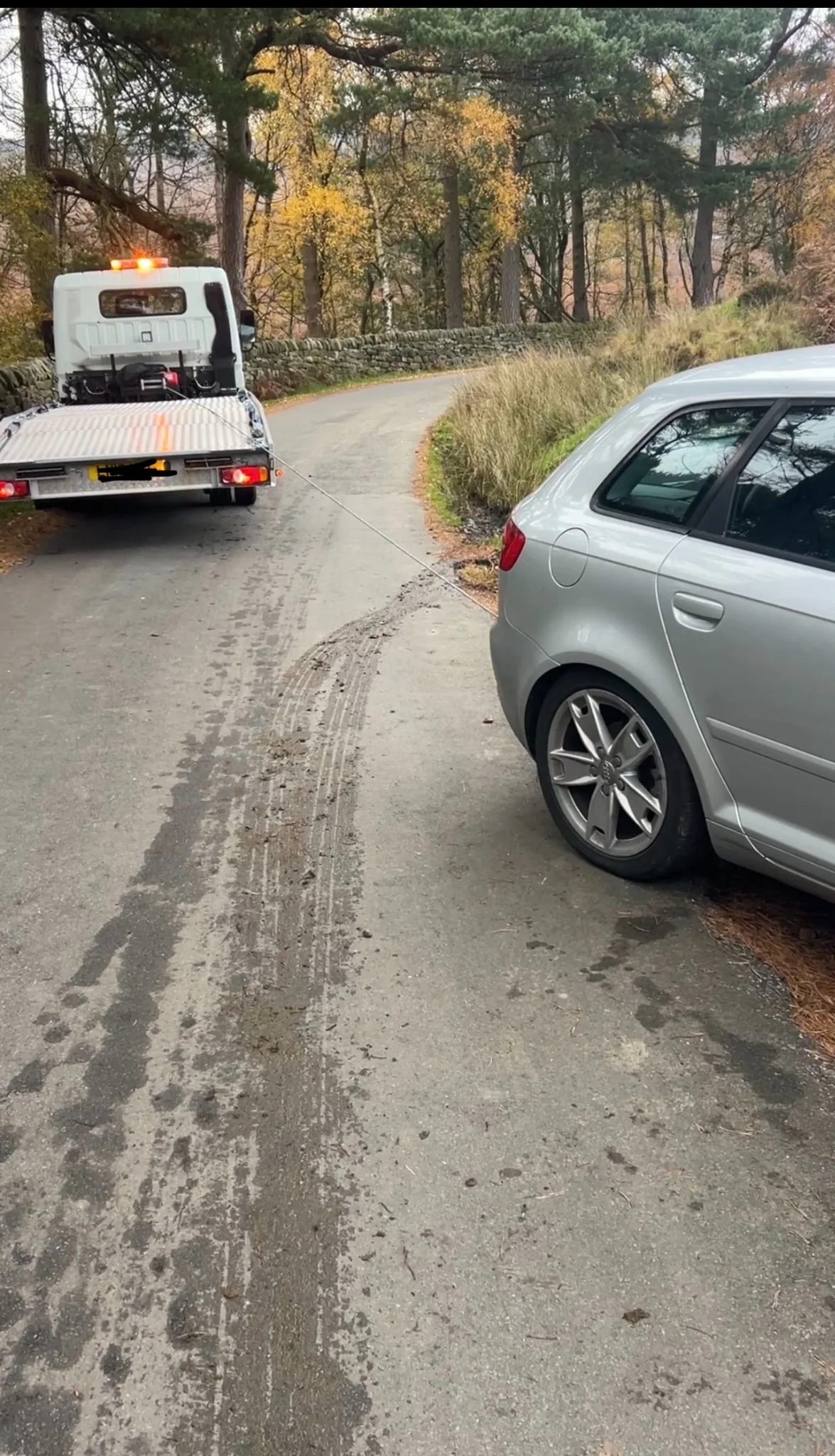
Help with a stuck vehicle
A car may become stuck after parking beside a property, turning at the end of an access lane or moving onto a grassy edge to make space. The important question is what now supports the vehicle. One tyre on soft ground, both driven wheels buried and a vehicle resting on its underside need different assessments, even when they share the same postcode.
Baloch Recovery Services takes enquiries for cars, SUVs and suitable vans needing a pull-out around Nottingham. Describe whether the vehicle is upright, how far it sits from a firm surface and whether any part remains in the road. The assessment also considers where a recovery truck could stand and where the vehicle could safely finish once it moves.
Enquiries are accepted 24/7. Availability and the suitability of the recovery arrangement are checked for the individual situation. A roadside location, private driveway or field entrance does not by itself establish that a standard pull-out will be possible.
Send photos and a short safe video of the wheels and the route from firm ground so a suitable pull-out can be assessed.
Show the vehicle position and surrounding access. The recovery plan depends on stability, damage and the space available.
Tell us how close the vehicle is to traffic and which wheels are stuck, locked or damaged.
Nottingham and surrounding places
Nottingham enquiries can involve the city itself and surrounding places including Beeston, West Bridgford, Arnold, Carlton, Hucknall and Ruddington. These names help establish the general area, but the actual pin and access route determine the assessment. A vehicle behind a building or beyond a gate may be approached from a different road from its postal address.
For locations around Beeston and the western approaches, distinguish the A52 from the local road or private access where the vehicle is stopped. For West Bridgford and Ruddington, explain the approach to your location rather than giving only a broad south Nottingham description. Where a journey involves a River Trent crossing, an accurate pin helps avoid directing a truck towards an entrance on the wrong side.
On the northern side, Arnold and Hucknall are useful starting points for describing an enquiry. If the A60 is your nearest main road, also identify the road you actually left. Around Carlton and the eastern approaches, distinguish a location near the A612 from one directly beside it. A main road reference can narrow the search without describing the final access.
For the M1, A52 or A453, provide the direction of travel and the nearest junction or signed landmark you already know. State whether you are on the main carriageway, a slip road, a service area or a separate local road. Do not walk towards a sign or cross traffic to obtain a missing detail. The recovery plan must account for the road environment.
Access information is especially useful where a postcode serves several businesses, buildings or parking areas. A gate name, entrance photograph taken safely, or a description such as ‘vehicle behind the building, access from the side road’ can prevent confusion. Mention any locked gate, height barrier, narrow turn or restriction on larger vehicles before dispatch.
If your vehicle needs onward transport after a pull-out, or has broken down on a firm surface, these local recovery pages explain the available services. Include any onward destination when requesting your quote.
Soft surface assessment
A grassy parking edge can look level while hiding soft soil underneath. The first useful distinction is whether the vehicle has simply lost traction or has sunk enough for the underside to touch the ground. If you already know which wheels are affected, include that information. Avoid trying to discover the answer by repeatedly driving forwards and backwards.
For a garden edge, overflow parking area or private grass access, say whether the surface belongs to a homeowner, business or site operator. Tell us about permission to enter and any restrictions they have identified. Features such as decorative edging, drainage covers, buried services or low branches can affect the working area and should be mentioned if known.
Stop further attempts if the vehicle is digging in or changing position. Keep passengers and other people away from the area where the vehicle may move. Recovery personnel will assess the suitable method on arrival; this enquiry process does not require you to attach a rope, arrange another vehicle to tow it or prepare a makeshift route.
Road edge and drainage channels
A ditch enquiry may involve one wheel dropping below the road edge or a vehicle sitting further down a bank. Describe what you can see from a safe place: whether it remains upright, which side is lower and whether the bodywork appears to contact the ground. Mention visible damage and any change in the vehicle's position since it stopped.
The space above and beside the ditch matters. A narrow verge, hedge, fence or nearby traffic may limit where recovery work can take place. Tell us whether another vehicle could reach the area by an established firm route, and whether your vehicle obstructs that route. Do not remove fences, cut vegetation or drive another vehicle onto the verge to test it.
Water changes what can be assessed. State whether you are beside a drainage channel, near a waterside access or actually in water. Do not approach the water to check its depth or the condition of a bank. This service enquiry is not an emergency water rescue arrangement; injury or immediate danger requires 999 and the instructions of the emergency services.
A pull-out is confirmed only after considering the vehicle, its position and access. Some situations require a different recovery arrangement, traffic management or further assessment. If emergency services or the road operator are already involved, include that information and follow their directions. Do not move barriers or enter a restricted area while waiting for a private recovery assessment.
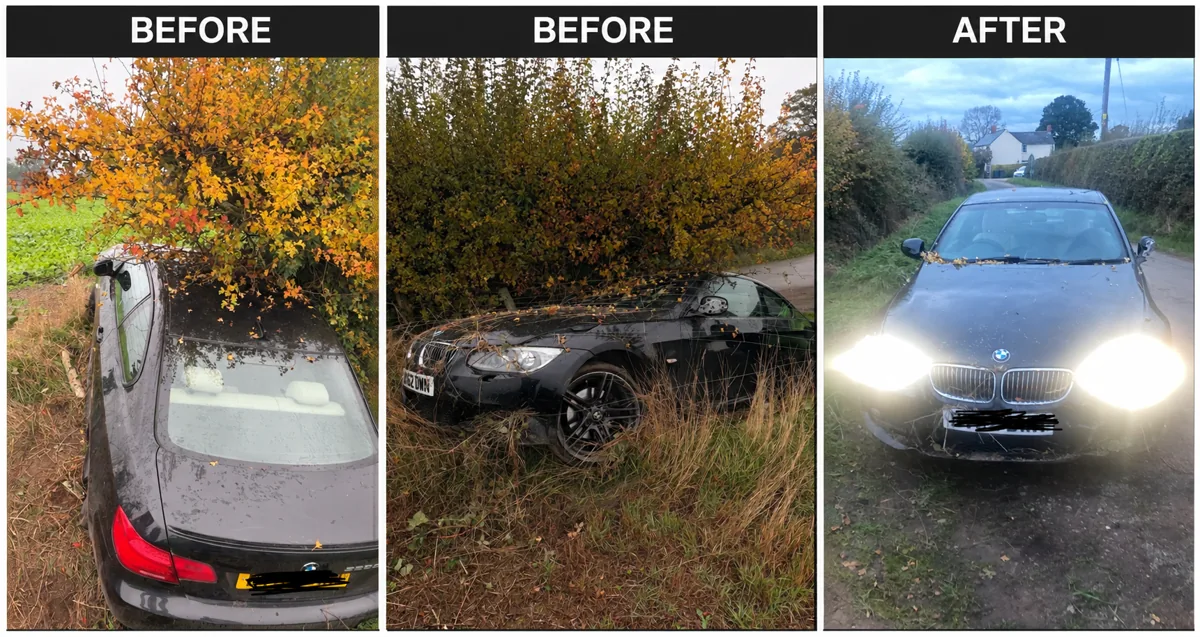
An existing recovery example. Send photos and a short safe video of your own vehicle and access so we can assess your request.
Vehicle suitability
Provide the make and model rather than describing the vehicle only as a small car or a van. The assessment considers its size, ground clearance, position and condition. An SUV's appearance does not establish suitable recovery points or mean it can safely drive out of a soft verge. The actual vehicle and circumstances guide the plan.
Tell us whether the wheels roll, whether neutral can be selected and whether the handbrake releases. Give only what you already know or can establish without putting yourself at risk. If a battery problem, electronic parking brake or missing key prevents a check, explain it. Do not force controls or repeatedly restart a vehicle simply to answer the form.
Visible wheel or tyre damage is relevant even if the original problem was getting stuck. A wheel turned at an unusual angle, a flat tyre or bodywork close to a tyre may affect loading and onward transport. Tell us about fluid leaks, warning messages or unusual noises already noticed, without investigating beneath the vehicle.
Vans are assessed individually for weight and access. Say whether the van is empty or loaded, describe the load and provide known weight information. A loaded delivery van or Luton requires checks of the vehicle's size, load and the space available for the assigned truck. Do not assume that a van suitable for road transport is automatically suitable for the same pull-out arrangement.
For an electric or hybrid vehicle, identify that version when enquiring and mention any displayed warning or known damage. Recovery must suit the manufacturer's requirements and the vehicle's condition. If the vehicle cannot be made ready to roll, that information helps determine the appropriate arrangement before a truck is dispatched.
Prepare your enquiry
Select ‘Ditch pull-out’ and explain both where the vehicle is and how a truck would reach it. The exact pin is particularly valuable for grounds behind a property, separate car parks or an entrance away from the main address. Include the postcode too, alongside a contact method you can monitor from your safe waiting position.
Please provide safe photographs and a short video of the scene and access. Show the overall vehicle position, the surrounding surface and the entrance or approach where these can be seen safely. A slow overview from one safe position is sufficient; do not film while driving, stand in traffic or approach a ditch edge for a better angle.
Explain if darkness, traffic, an unstable position, poor signal or another safety concern prevents photographs or video. Do not delay reporting immediate danger to complete an enquiry. Missing media may mean additional questions are needed, but nobody should enter an unsafe area to obtain it.
From enquiry to attendance
Your enquiry begins with an assessment of the information supplied. The aim is to respond within five minutes to a complete enquiry, although busy periods can take longer. This response aim concerns the initial enquiry; it does not confirm that a truck has been assigned or that the vehicle can be recovered using a particular method.
A no-obligation quote lets you consider the proposed service and ask what it includes. Confirm whether you need only the pull-out or also transport afterwards, and provide the destination before agreeing the booking. Mention any passenger requirement at this stage so seating on the assigned truck can be checked.
A deposit is required before dispatch, with the balance due on completion. Follow the payment and booking instructions provided for your enquiry. Confirming the vehicle details, service and access before dispatch helps avoid sending an unsuitable arrangement or arriving without permission to enter a private site.
A 30-minute arrival is an aim only when a suitable truck is nearby. Your ETA is confirmed for the booking and depends on availability, travel and the situation at the location. Keep your contact method available for updates. If an incident becomes dangerous while you wait, use the emergency services rather than treating an estimated arrival as protection.
A quote for the actual situation
There is no reliable way to price a Nottingham pull-out from the area name alone. The vehicle's position, the ground, working space and the equipment needed all matter. A vehicle a short distance from a road may still be difficult to access if the firm surface is separated from it by an obstacle or a steep change in level.
Vehicle condition also changes the work. Wheels that will not roll, a parking brake that stays applied or damage affecting loading may require an alternative arrangement. For vans, the load and known weight are part of the assessment. An apparently similar vehicle in a photograph may need a different approach because of information the photograph cannot show.
Onward transport should be included in the discussion before booking. Give the actual destination and tell us whether it has an accessible handover point. A request to move the vehicle onto nearby firm ground has a different scope from a request to take it to a garage, home or another agreed place after extraction.
While help is being arranged
If anyone is injured or there is immediate danger, call 999. On a fast road, if it is unsafe to leave the vehicle, remain inside with seatbelts fastened, switch on hazard lights and call 999. If you can leave safely, exit away from traffic and move to a place of relative safety. Follow emergency services and road operator instructions.
Keep people away from the vehicle's possible movement path, the ditch edge and soft banks. An upright vehicle can still be unstable, particularly if it is leaning or its position changes. Do not stand between it and a wall, fence, another vehicle or recovery equipment. Tell the operator if passengers cannot reach a safe waiting place.
On private land, ask the responsible person about a safe place to wait if one is available. Keep children and animals under control and away from traffic and the recovery area. Do not gather beside the stuck vehicle to guide arriving traffic or ask somebody to stand in the road to flag down the truck.
Avoid further driving attempts, improvised towing or attaching straps and ropes yourself. Do not crawl underneath, jack the vehicle up on soft ground or enter standing water to inspect it. Leave decisions about the recovery method and working area to the attending personnel. A short delay in obtaining more information is preferable to creating another hazardous situation.
Read the National Highways breakdown guidance and Highway Code breakdown rules for official advice about reaching a safe place and getting help.
Plan the next step
A successful pull-out does not confirm that the vehicle is safe to drive. Tyres, wheels, steering, brakes and underside components may need attention, particularly after a drop into a ditch or contact with the ground. Tell the attending personnel about warning messages, unusual noises or visible damage already noticed. Do not set off solely because the wheels can turn again.
If onward recovery is needed, confirm the destination and its access arrangements. A garage address is not enough if the gates are closed or nobody can accept the vehicle. Check the agreed handover point and any timing restrictions. For a home destination, mention narrow access or other features that could affect unloading.
Passenger travel must be agreed for the assigned truck. One or two passengers may be accommodated, subject to its available seats; this is checked for your booking. Tell us the number travelling and any seating needs in advance. Do not assume all occupants can travel with the recovered vehicle or wait until loading to raise the question.
Keep the booking details and agreed destination available through completion. If your plans change, explain the new destination or handover requirement before transport begins so the arrangement can be reviewed. The balance is due on completion. Any decision to continue driving should follow an appropriate assessment of the vehicle's condition, with further transport arranged where required.
Nottingham pull-out FAQs
Yes, send an enquiry with the exact pin and postcode for those areas. Carlton, Hucknall and Ruddington enquiries can also be assessed. Give the actual access road and any gate or barrier details. The location name helps identify the area, while truck availability, the vehicle's position and access determine whether a suitable arrangement can be offered.
An approximate description can point towards a nearby road without showing the entrance that reaches you. Send the precise vehicle pin and identify the usable entrance, particularly if it is behind a property or reached from another road. There is no need to suggest a bridge or routing shortcut; accurate location information lets the approach be assessed.
Provide both the vehicle's location and the entrance a truck would use. Explain the route between them, including tight turns, gates, barriers and changes in surface. If a site manager controls access, establish how entry can be arranged. A postcode or the building's front entrance alone may not describe the route to the stranded vehicle.
Explain what is visible from your safe position and which details are obscured. Safe photographs and a short overview video can show the surroundings without requiring you to approach the wheels. Do not clear vegetation, step into a channel or go underneath to improve the view. Uncertain ground or vehicle contact may require further assessment.
A short scene and access video is requested alongside safe photographs, but only when it can be obtained safely. If darkness prevents a useful or safe recording, say so and describe the position and entrance. Do not walk along an unlit verge or towards traffic to film. Additional questions may be needed to complete the assessment.
A loaded van or Luton needs an individual weight, load and access assessment. Supply the make and model, body type, known weight information and a description of what it carries. Include whether its wheels roll and how a truck would reach it. The proposed recovery arrangement must be suitable for that vehicle and location before dispatch.
Identify the electric model and report any known damage or warning message. Include whether neutral can be selected, the parking brake releases and the wheels roll, marking anything unknown. Recovery has to suit the vehicle's condition and manufacturer's requirements. Do not force controls, inspect underneath or keep attempting to drive out to answer these questions.
The response aim is five minutes for complete enquiries, with busy periods sometimes taking longer. A 30-minute arrival is an aim only when a suitable truck is nearby. The ETA is confirmed for your booking after availability and suitability checks. Submit clear location and access information so missing details do not prevent an initial assessment.
Choose ‘Ditch pull-out’ for a mud, ditch or grass verge recovery enquiry. You can request a no-obligation quote and clarify the proposed work before booking. A deposit is required before dispatch and the remaining balance is due on completion. Include any onward destination at the start so the quote can reflect the service you need.
Request onward transport when enquiring and confirm the garage can receive the vehicle at an agreed accessible handover point. Passenger travel is checked separately against seats on the assigned truck; one or two passengers may be accommodated subject to availability. Give the number travelling and any seating needs before booking so the complete arrangement can be confirmed.
A clear next step
Send your exact location, vehicle details and safe photos or video. We will check suitable availability and confirm the recovery plan, price and estimated arrival before you decide.
Request my Nottingham recovery quoteChoose the answers and enter only the details we need.
Guaranteed response within 5 minutes after you submit your quote form. Easily send your vehicle details and share your current location using the form.