
Mud and soft ground
Send photos and a short safe video of the wheels and the route from firm ground so a suitable pull-out can be assessed.
Baloch Recovery Services · Lincoln
Stranded beside a lane, in muddy parking or beyond a driveway edge? Baloch Recovery Services assesses mud, ditch and grass verge pull-outs in Lincoln and nearby places. Send your location, vehicle details and safe scene photos and video for a no-obligation quote.
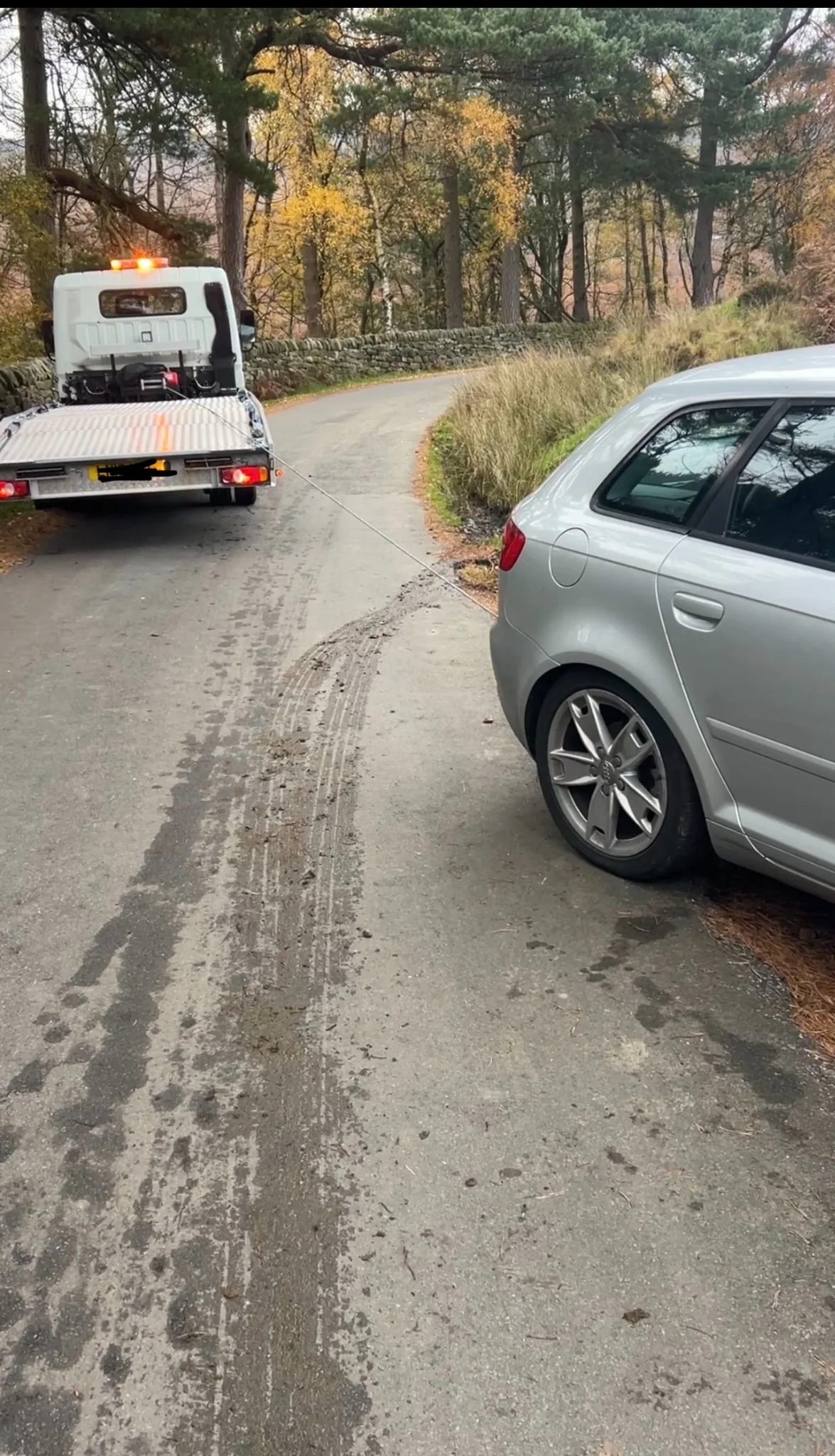
A practical first assessment
A car can look close to the road and still need a carefully planned recovery. One wheel might have dropped from a driveway edge, the driven wheels may have sunk into a grass parking area, or the whole vehicle may be sitting below the surrounding ground. For a Lincoln pull-out enquiry, start by describing the position now, including any change after an attempted escape.
Baloch Recovery Services considers mud, ditch and grass verge recovery for cars, SUVs and suitable vans in Lincoln and nearby places. Each enquiry is assessed against the vehicle, its stability, the ground and the space available for an appropriate recovery truck. Being within the area does not establish that a particular vehicle or recovery position can be accepted.
Stop trying to drive if the wheels spin without useful movement. Further attempts can deepen ruts or bring the underside into contact with the ground. Keep people clear of the vehicle's possible movement and do not arrange an improvised tow or ask passengers to push an unstable vehicle. Explain whether it became stuck while parking, turning, moving aside or leaving a property; that helps establish what may be underneath it.
Send photos and a short safe video of the wheels and the route from firm ground so a suitable pull-out can be assessed.
Show the vehicle position and surrounding access. The recovery plan depends on stability, damage and the space available.
Tell us how close the vehicle is to traffic and which wheels are stuck, locked or damaged.
Lincoln and its approaches
Lincoln's main approaches include the A46, A15, A57 and A158. These road names help identify the wider area, but a truck needs the entrance that actually reaches your vehicle. A pin on a nearby main road can send it to the wrong side of a fence, property or divided carriageway. Send the stranded vehicle's exact pin and explain the accessible entrance separately when they differ.
For a vehicle near the A46 or A57, give the road you were using and your direction of travel before describing the place where you stopped. If you left the main route for a business, accommodation, driveway or field entrance, name that entrance and the road it opens onto. Do not use a nearby large junction as the sole location if the vehicle is further along a side road.
North Hykeham enquiries should identify the particular property or access track, with any gate, height restriction or limited turning space. A vehicle behind a building may require a completely different approach from the one suggested by its postcode. Tell us whether the proposed truck route is surfaced all the way or crosses grass before reaching the recovery position.
The A15 and A158 provide useful location references around the northern and eastern approaches to Lincoln. Add the nearest named road or junction and which side your vehicle occupies. For an enquiry around Nettleham, use the village name together with a precise pin; an address for a nearby house may not identify the track or verge where the vehicle is sitting.
If your route involves a narrow lane, explain where a larger vehicle could turn or wait without blocking access. Mention blind bends, a short entrance or a gate set close to the road if these affect your particular location. There is no need to walk the approach to measure it: describe what you already know and show it from an existing safe position.
Lincoln Eastern Bypass is a useful reference for enquiries on the eastern side of the city, including the wider Washingborough and Bracebridge Heath areas. State whether the vehicle is beside a main road, on a connecting road or inside private land. A pin near the bypass does not imply that recovery equipment can approach directly from it.
Within Lincoln itself, give the road name and any relevant property access arrangements. If the vehicle is on a slope, say which way it faces and whether it has moved since stopping. Report steps, retaining edges or restricted forecourts when present. These details allow the access assessment to reflect the actual site rather than assumptions about the neighbourhood.
If your vehicle needs onward transport after a pull-out, or has broken down on a firm surface, these local recovery pages explain the available services. Include any onward destination when requesting your quote.
Soft surfaces
A grass surface may support a parked vehicle initially and then lose grip as it moves. The important distinction is whether the tyres are simply slipping, have sunk into the ground, or have left the vehicle resting on its underside. Describe the depth visually from somewhere safe; do not reach underneath, crawl beside the vehicle or put yourself downhill to get a better view.
For a muddy driveway or entrance near Lincoln, identify the nearest firm surface and the distance between that surface and the vehicle. A recovery truck needs a suitable working position, and driving it onto the same soft area can create another problem. Explain whether the route includes gravel, paving, grass or an unmade track, including any surface change at the gateway.
If you became stuck in temporary parking at a private venue, ask the site representative which entrance recovery vehicles should use. Tell us about locked barriers, pedestrian routes and any restrictions on bringing a truck onto the land. The owner's permission to enter does not by itself confirm that the surface is capable of supporting the assigned equipment.
Below the road edge
A vehicle that has dropped into a ditch may need more than a straightforward pull towards the nearest road. Its angle, the height of the road edge and the position of the wheels can affect how it moves. Tell us whether the vehicle is leaning, whether all wheels appear to touch the ground and whether a bumper or the underside is resting against a bank.
Describe water, vegetation, broken fencing, a wall or another vehicle close to the stranded vehicle. You do not need to identify what is hidden beneath water or thick growth. Say clearly when you cannot see. A vehicle partly submerged, badly tilted or resting against an obstacle requires a different assessment from one with a single wheel in a shallow roadside depression.
Access matters on both sides of the recovery. The operator needs to consider where the truck can work and where your vehicle can be placed after it is freed. A narrow entrance or road edge may provide too little room even where the vehicle is close by. Avoid promising a particular towing point or approach before the vehicle and surroundings have been checked.
Do not enter the ditch, connect ropes, use another vehicle to pull, or stand in the likely recovery path. If the vehicle shifts, leaks fluid or begins to obstruct traffic, explain the change immediately when updating the enquiry. Immediate danger or injury requires 999. A recovery booking does not replace emergency assistance or any traffic control the situation may require.
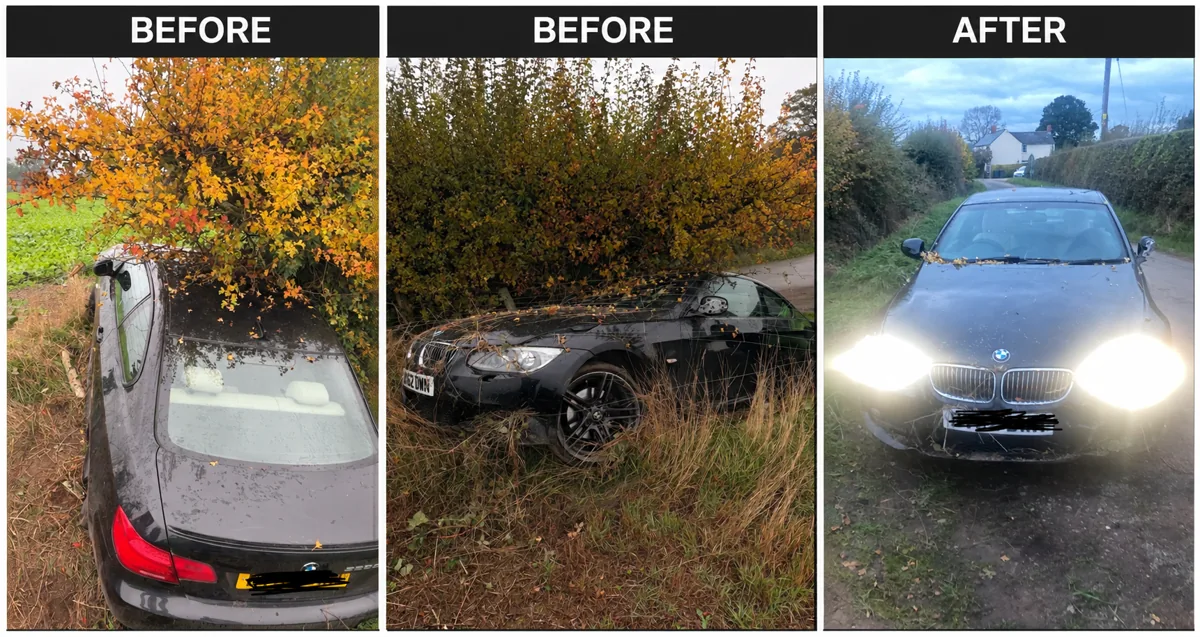
An existing recovery example. Send photos and a short safe video of your own vehicle and access so we can assess your request.
Suitability matters
The description of the ground is only part of the enquiry. We also need to understand the vehicle's size, weight, condition and available movement. Please provide the make and model rather than describing it only as a small car, family SUV or work van. Include an approximate year if known, and identify electric or hybrid vehicles so their handling requirements can be considered.
Say whether the vehicle still rolls, whether neutral can be selected and whether the handbrake releases. These are questions about its known condition, not instructions to test it on a slope or unstable ground. Report a flat tyre, a wheel pointing unusually, steering difficulty, visible suspension damage or an impact before it became stuck. A four-wheel-drive badge does not establish that the vehicle can drive out safely.
Low bodywork, a long wheelbase or an underside already touching the ground can change the recovery assessment. Show the overall position in safe photographs and explain what you cannot see. Do not remove trim or expose recovery attachments yourself simply to complete the enquiry.
Vans are considered individually. Tell us the body type and whether the van is empty or loaded, with the gross vehicle weight from information you already have if available. For a loaded van or Luton, describe the load and any uncertainty about its weight. Equipment suitability and the available access must both be checked before acceptance.
Mention height restrictions, an awkward rear overhang and any equipment or trailer attached to the vehicle. Keep the load as it is unless a competent person gives appropriate directions; moving cargo beside a leaning van can introduce further risk. If you need onward transport, supply the destination at the same time so the full job can be assessed.
Build a useful enquiry
Choose “Ditch pull-out” in the quote enquiry for a mud, ditch or grass verge recovery. A complete description helps us work out whether suitable equipment can attend and what the quote needs to cover. The location and access information are particularly valuable where a Lincoln postcode covers several entrances or the vehicle is some distance from the public road.
Please send safe photographs and a short scene and access video with a pull-out enquiry. Useful views show the whole vehicle, its relationship to firm ground and the entrance or approach a truck would use. The video helps explain distances and layout that a close photograph can miss.
Only record from somewhere already safe. Do not walk into traffic, along an exposed verge, into a ditch or behind an unstable vehicle to obtain media. If photos or video are unavailable or unsafe, explain that in the enquiry and describe the scene in words. Do not delay emergency assistance to gather evidence.
From enquiry to dispatch
The no-obligation quote should reflect the agreed work: the assessed pull-out, any required onward recovery and the destination supplied. Check the scope before accepting. A deposit is required before dispatch, with the balance due on completion. Ask for clarification if you are unsure whether the proposed service includes transport after the vehicle has been returned to firm ground.
We aim to respond to a complete enquiry within five minutes, although busy periods can take longer. Arrival within 30 minutes is an aim only when a suitable truck is nearby and available for the assessed job. The ETA is confirmed for your booking; the location page does not promise that arrival time for every Lincoln enquiry.
Confirm passenger arrangements before dispatch. One or two passengers may travel only where the assigned truck has suitable available seats; do not assume space for everyone. Tell us about children or other seating requirements so arrangements can be checked. If the vehicle's position, access or intended destination changes while you wait, update the booking rather than leaving the operator to discover it on arrival.
Understand the scope
The practical difficulty of reaching and moving the vehicle affects the quote. A car slipping on a level grass parking area differs from a loaded van leaning below a road edge. Vehicle weight, wheel condition, depth, angle, working distance and the truck's access all matter. We do not publish a single price that assumes these situations require the same work.
Please distinguish the distance from the nearest road from the distance to a usable truck position. A vehicle behind a property may be geographically close but separated from hard standing by a restricted entrance or unsuitable ground. Mention those limitations at the start. The quote can then be based on the intended approach instead of an assumption that the truck can stop beside you.
Onward transport should also be part of the discussion where needed. Provide the destination postcode and any receiving-site restrictions, such as a gate that must be opened. If you are still deciding between home and a garage, say so and have the scope clarified before dispatch. A roadside pull-out and transport to another location involve different requirements.
You can request a no-obligation quote before deciding. Confirm the deposit, the work included and the balance due on completion. If the scene proves materially different from the information supplied, any necessary change to the work and price should be explained before additional work proceeds.
Protect people first
On a fast road, judge the traffic risk before stepping out to inspect the vehicle. If it is unsafe to exit, stay in the vehicle with seat belts fastened, put the hazard lights on and call 999. Explain your position and follow the emergency operator's instructions. Do not leave a protected position to make a recovery video or check how far a wheel has sunk.
If you can exit safely, use the side away from traffic and move to a place of relative safety away from the vehicle and carriageway. Where a safety barrier is present and safely reachable, wait behind it. Keep passengers together and do not stand where an approaching vehicle could push the stranded vehicle towards you. Avoid crossing a road to reach a landmark for the enquiry.
On private land, stay clear of the area into which the vehicle could slide, roll or be moved during recovery. Keep children, other visitors and pets out of the working area. Do not shelter in the ditch or immediately below a leaning vehicle. A dry-looking grass bank is not automatically a safe place to stand beside a recovery operation.
Tell us if you have no safe waiting place, if visibility is deteriorating or if access has become obstructed. Have your location information ready so it can be relayed without another walk around the scene. Immediate danger or injury requires 999. Continue to prioritise people over obtaining more detailed photographs, checking the vehicle or protecting a planned journey.
Read the National Highways breakdown guidance and Highway Code breakdown rules for official advice about reaching a safe place and getting help.
Once the vehicle is free
Returning a vehicle to firm ground does not establish that it is roadworthy. A wheel can suffer damage during the original drop, and mud or an impact can conceal problems until the vehicle is accessible. Tell the operator about any collision, warning message, fluid leak or unusual sound that occurred before recovery, even if the vehicle now looks more level.
Do not continue driving if a tyre is damaged, steering feels abnormal, the vehicle cannot brake normally or there are signs of a fluid leak or loose bodywork. A pull-out is not a mechanical inspection or repair. If there is uncertainty about whether the vehicle can be used safely, discuss onward recovery to a suitable destination instead of assuming the journey can resume.
Have a clear handover location in mind. If transport to a Lincoln-area garage is required, confirm that the garage can receive the vehicle and explain its entrance arrangements. For a home address, say where the vehicle can be placed without blocking a footway, shared driveway or another vehicle. These details are useful at booking and should be updated if your plans change.
Lincoln pull-out FAQs
Yes. Send the exact vehicle pin, postcode and actual entrance, particularly for a private track or land behind a property. Acceptance depends on the vehicle, ground and safe truck access. A village name alone cannot establish a suitable recovery approach.
Give the road name, direction of travel and nearest named junction or entrance. Explain whether you are beside that road or inside a separate site. Send a precise pin safely and describe the entrance if it differs from the vehicle’s location.
Use it as a wider reference, then give the exact road and entrance. Around Washingborough or Bracebridge Heath, the vehicle may be on a connecting road or private land. Being close to the bypass does not establish suitable truck access.
Yes: safe photographs and a short scene and access video are requested for pull-outs. Show the vehicle’s position and approach from safety. Never enter traffic, a ditch or unstable ground. If either is unavailable or unsafe, explain why and describe the scene.
Report what you already know about neutral, rolling and handbrake operation. Do not release the handbrake or test movement where the vehicle could roll, slide or become less stable. Say if you have not checked; the operator will assess appropriate handling.
Loaded vans and Lutons require individual weight, position and access checks. Give the make, model, body type, known gross weight and load details. Mention gates, height limits and the approach surface. Equipment suitable for a car may not suit your van.
Thirty minutes is an arrival aim only when a suitable truck is nearby and available. Your ETA is confirmed for the assessed booking. The separate five-minute response aim applies to complete enquiries; busy periods can take longer. Neither time is guaranteed.
The quote is without obligation, so you can decide once its scope is clear. Accepted bookings require a deposit before dispatch, with the balance due on completion. Check whether the quoted work includes the pull-out alone or onward recovery to your destination.
One or two passengers may travel subject to available seats in the assigned truck. Confirm the number of people and any child seating requirements during booking. If the truck cannot accommodate everyone, separate passenger arrangements need to be agreed before dispatch.
Report any tyre, wheel, steering or suspension damage and ask about onward recovery. Supply the destination, postcode and receiving arrangements. A successful pull-out does not certify roadworthiness. If damage or warnings make driving uncertain, have the next step assessed before proceeding.
A clear next step
Send your exact location, vehicle details and safe photos or video. We will check suitable availability and confirm the recovery plan, price and estimated arrival before you decide.
Request my Lincoln recovery quoteChoose the answers and enter only the details we need.
Guaranteed response within 5 minutes after you submit your quote form. Easily send your vehicle details and share your current location using the form.