Mud and soft ground
Send photos and a short safe video of the wheels and the route from firm ground so a suitable pull-out can be assessed.
Baloch Recovery Services · Derby
A vehicle can lose traction just beyond a driveway, delivery entrance or parking area. Baloch Recovery Services takes Derby pull-out enquiries around the clock, assessing the ground, vehicle position and truck access before confirming a suitable recovery plan and quote.
Assessed recovery
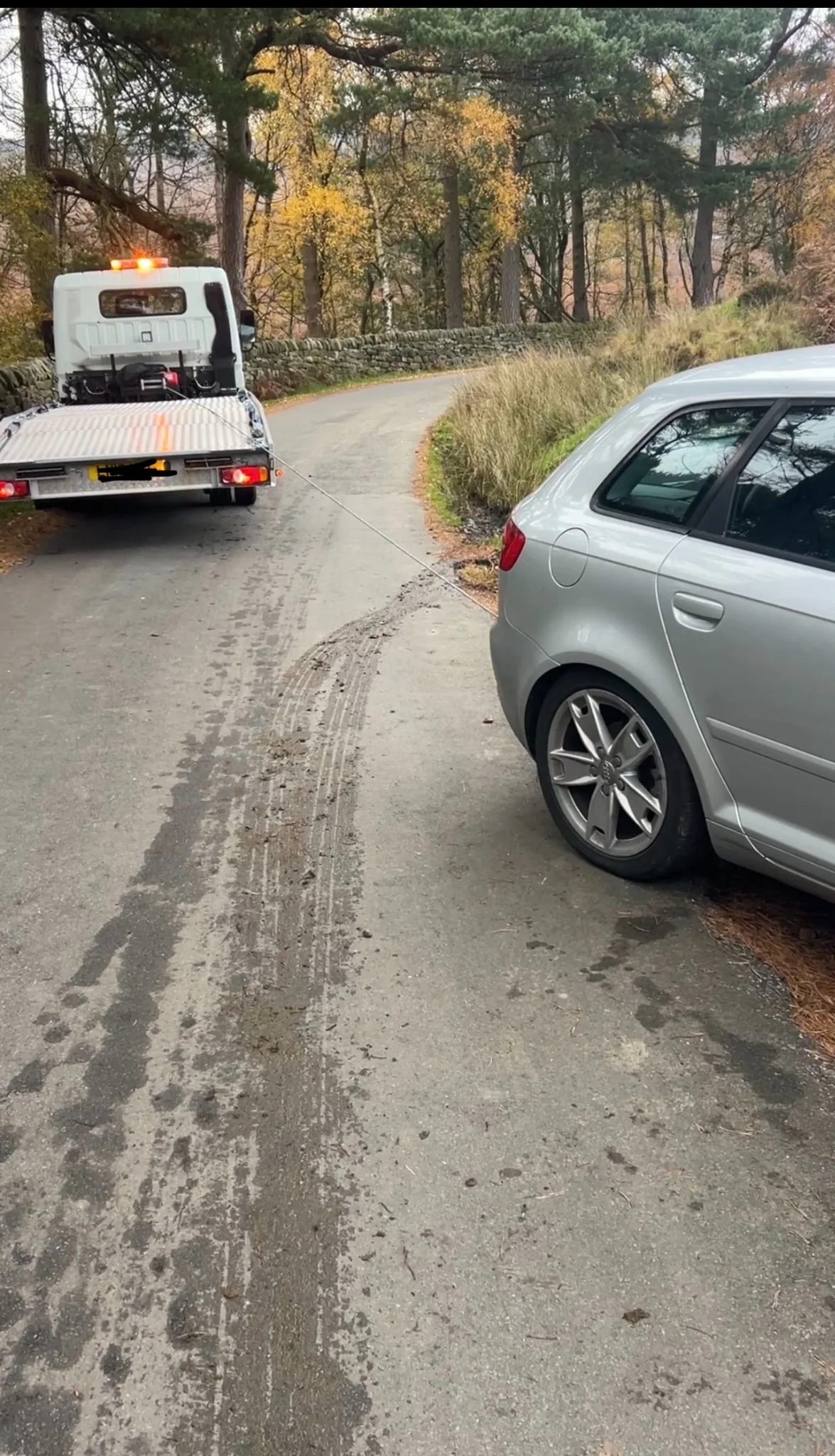
A short distance onto grass can leave a car unable to move, particularly when the wheels sink below the level of a driveway or paved entrance. A delivery van may reach a property without difficulty and then lose traction while turning. If that has happened in Derby, describe where the vehicle is resting and request an assessment before trying another manoeuvre.
Baloch Recovery Services considers mud, grass verge and ditch pull-outs for cars, SUVs and suitable vans. Each enquiry needs a review of the vehicle, the surrounding ground and the route a recovery truck would use. Being close to a road does not automatically make the vehicle accessible: a narrow entrance, sloping verge or weak surface can change the equipment and working position required.
The first distinction is whether the vehicle has simply lost grip or is also damaged, grounded or leaning. Let us know if its underside appears to be touching the ground, if a wheel is at an unusual angle, or if one side has dropped into a drainage channel. Describe only what you can see safely. You do not need to investigate beneath it or move closer to a ditch.
Enquiries are available 24/7. Choose “Ditch pull-out” on the quote form and explain whether the problem involves mud, grass or a ditch. You can request a no-obligation quote before deciding to book. If onward recovery is likely to be needed, include the destination from the beginning so the proposed service covers more than getting the wheels back onto firm ground.
Send photos and a short safe video of the wheels and the route from firm ground so a suitable pull-out can be assessed.
Show the vehicle position and surrounding access. The recovery plan depends on stability, damage and the space available.
Tell us how close the vehicle is to traffic and which wheels are stuck, locked or damaged.
Derby and nearby approaches
For Derby enquiries, give the suburb or nearby place as well as the exact vehicle location. Littleover and Mickleover are useful starting descriptions for a vehicle on the western side of the city; Allestree identifies the northern side. Spondon, Chellaston and Alvaston provide different approach information. These names help explain the area, but a map pin and the actual entrance are still needed.
The A38, A52 and A50 are relevant major routes around Derby. The M1 is outside the city and can also be part of an approach to the wider area. If the vehicle is beside one of these roads, identify the road, direction of travel and nearest signed junction or landmark. Avoid using “near Derby” alone for a location that may require access from a particular carriageway.
A vehicle off a residential street presents different access questions from one beyond a delivery yard or rural gateway. Tell us whether the entrance is shared, gated or controlled by a barrier, and whether someone can provide lawful access. Include any height restriction, tight turn or narrow passage before the vehicle. A truck needs a practical place to work once it arrives, as well as a route to the address.
For an enquiry near the A38 and A50 around Willington, explain which local road or property entrance actually reaches the vehicle. The same applies around Spondon and the A52, where a nearby main road may not provide direct access. Send a second pin for the entrance if it is separated from the vehicle. Coverage and attendance are confirmed against the exact location and the availability of suitable equipment.
If your vehicle needs onward transport after a pull-out, or has broken down on a firm surface, these local recovery pages explain the available services. Include any onward destination when requesting your quote.
Soft ground
Mud recovery can involve more than a tyre slipping on a wet surface. The ground may have softened beneath several wheels, the vehicle may have settled onto its underside, or a wheel may be trapped against the edge of a paved track. Tell us whether the vehicle is level and how far it is from firm ground. Approximate descriptions are enough when measuring would put you at risk.
A Derby driveway, grass parking area or site entrance may look suitable for a vehicle but offer little support once it is stationary. If the trouble started while turning or reversing, explain that sequence. Say whether the vehicle has moved further into the soft area since it first stopped. This helps the recovery assessment distinguish a straightforward loss of traction from a position that needs more controlled handling.
Avoid repeated attempts to drive out. Spinning wheels can deepen ruts and make the position harder to assess, while a sudden movement can take the vehicle towards a bank, wall or person. Keep bystanders clear and leave recovery equipment decisions to the attending operator. We do not ask customers to arrange improvised towing, attach ropes or use another vehicle to pull.
Photos from a safe position should show the whole vehicle, the wheels that are affected and the nearby firm surface. A short scene and access video should also show how a truck could reach the area. Mention soft patches along that route, not just around the stranded vehicle. If the location is private, explain any restrictions on using the ground and who can authorise access. The final method is confirmed after the scene is assessed.
Position and stability
A ditch enquiry needs a careful description of the vehicle's resting position. There is a substantial difference between one wheel over a shallow edge and a vehicle leaning down a bank with several wheels below road level. Tell us which side is affected, whether the vehicle appears stable and whether it is touching a fence, tree, wall or other obstruction. Keep your description to what is visible without approaching danger.
Around the edges of Derby, a drainage ditch can be partly concealed by grass, and a narrow entrance can leave little space alongside a vehicle. Please describe the width of the available working area and any traffic passing the scene. A pull cannot be assessed from the distance to the road alone: the angle, ground support and room for suitable equipment all affect whether assistance can be arranged.
If the vehicle entered the ditch after a collision, say so even if the bodywork damage looks minor. Damaged steering, tyres, wheels or suspension can change both the pull-out and the onward transport arrangements. Report visible fluid leakage, smoke or unusual smells without touching the vehicle or attempting to find their source. If there is injury or immediate danger, call 999 before submitting a routine recovery enquiry.
Do not enter the ditch, climb beneath the vehicle or stand on its downhill side to obtain pictures. A short video taken from an existing safe position can show the overall layout; it should never require crossing live traffic or walking along an exposed verge. If safe images are unavailable, explain that in the form. More assessment may then be needed before a suitable truck and price can be confirmed.
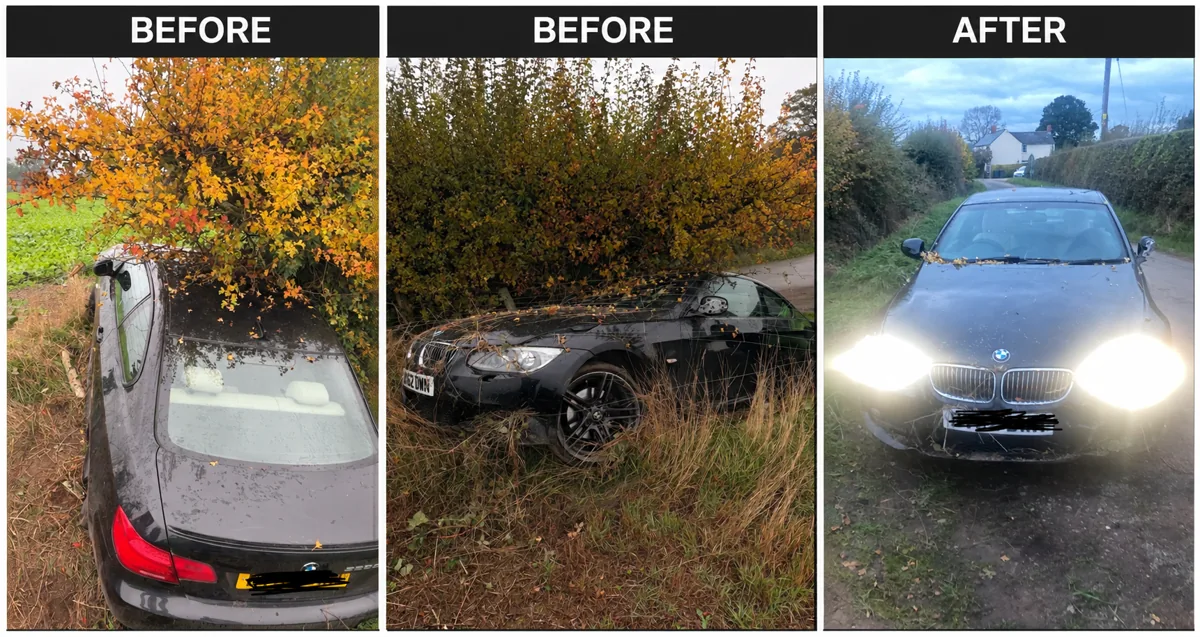
An existing recovery example. Send photos and a short safe video of your own vehicle and access so we can assess your request.
Vehicle suitability
Send the vehicle make and model with the enquiry, together with a registration if available. A car, an SUV and a van can require different recovery arrangements even when they are stuck in the same patch of ground. Vehicle size, weight, clearance and condition matter, as does the space available around it. Acceptance depends on the individual circumstances and the assigned recovery equipment.
For a van, include its type and whether it is loaded. A short panel van carrying a few items creates different questions from a long van or Luton carrying furniture or equipment. Describe the load and give any known weight information. If you do not know the weight, say so rather than guessing. Loaded and Luton vans need a specific weight, load and access check before attendance is agreed.
Tell us whether the vehicle can select neutral, whether the handbrake can be released and whether it can roll. Report a flat tyre, locked wheel, missing key, damaged steering or a wheel pointing in an unusual direction. These details help us assess how it can be handled. Do not alter the vehicle's position or release a brake on a slope simply to test an answer.
Mention an electric or hybrid vehicle, automatic transmission, trailer or any unusual modification when relevant. Follow the manufacturer's guidance and the attending operator's instructions about vehicle preparation. If you are unsure of a setting, describe the uncertainty. Also tell us how many people need onward transport: space for one or two passengers depends on the seats available in the assigned truck and must be confirmed before booking.
Useful first message
A complete first enquiry makes it easier to assess the work and give a meaningful reply. Choose “Ditch pull-out” even when the immediate problem is mud or a grass verge, then describe the surface and vehicle position in your own words. Explain whether you want the vehicle returned to accessible firm ground or transported onwards to a garage, home or another agreed address.
We request safe photographs and a short scene and access video. Still images help show the vehicle's position; video gives useful context about the entrance, turns and working area. Use footage you can obtain from somewhere safe. If recording is unsafe, impossible or unavailable, state that clearly. Do not delay emergency assistance, step into traffic or approach an unstable vehicle to complete the form.
For roadside locations, include the direction of travel and nearest signed junction or recognisable landmark. For a property, distinguish the postal address from the entrance a truck should use. A second map pin can be helpful when the vehicle is behind buildings or reached through a separate gate. Describe temporary access restrictions that you know about without trying to manage traffic yourself.
From enquiry to attendance
The response aim is around five minutes for complete enquiries, although busy periods can take longer. That is a reply target rather than a promise of immediate dispatch. Availability depends on a truck that is suitable for this vehicle and position, not simply the closest vehicle on a map. Keep your phone available for the booking discussion and let us know if the situation changes.
Arrival within around thirty minutes is an aim only when a suitable truck is nearby. The estimated arrival time is confirmed during booking and depends on the actual approach and current workload. An access route to a property outside Derby may add time even when the vehicle looks close to a major road. Give the entrance details early so the ETA can reflect the journey the truck must make.
You receive a no-obligation quote before committing. If you accept the proposed service, a deposit is required before dispatch, with the balance payable on completion. Confirm the scope, location, onward destination and any passenger arrangement at that stage. If a locked gate or absent key could delay access, arrange that before the truck sets off. Tell us promptly if the vehicle moves or someone else resolves the problem.
Clear scope
Pull-out pricing depends on the work needed at the particular scene. The vehicle's weight and condition, how deeply it is stuck, its angle and the recovery truck's access can all affect the assessment. A level car beside a firm driveway cannot be priced on the same assumptions as a loaded van leaning into a ditch. Send the details that describe your situation rather than relying on an advertised generic example.
The truck's working position also matters. A nearby road may have nowhere suitable to stop, while a property entrance may involve a restricted turn or ground that cannot support the equipment. Explain these features in the short access video and accompanying notes. A useful quote accounts for reaching the vehicle and carrying out the agreed work, as well as the distance travelled to get there.
Be clear about what should happen afterwards. A pull-out to an agreed accessible location and recovery to a garage are different scopes of work. If the vehicle has wheel damage or will not roll, say that when requesting the quote. Include the onward postcode or address so transport requirements can be assessed alongside the extraction, rather than becoming an unresolved question once the vehicle is out.
While help is arranged
Your safety takes priority over the quote form or pictures. Call 999 if anyone is injured or there is immediate danger. A vehicle partly exposed to fast traffic, resting unstably or involved in a serious collision needs that risk addressed first. Give emergency services the best location information you have and follow their directions. A recovery enquiry does not replace an emergency response.
On a fast road, if it is unsafe to leave the vehicle, remain inside with seat belts fastened, keep hazard lights on and call 999. Where it is safe to get out, leave on the side away from moving traffic and reach a place of relative safety. Do not stand between the vehicle and approaching traffic, and do not return to it for photographs or belongings when doing so would expose you to danger.
Away from live traffic, stay clear of the ditch edge, soft banks and the potential path of the vehicle. Keep children and other bystanders away from the working area. Do not push the vehicle, climb onto it or attempt to connect towing equipment. If you are on private land, tell the property contact where the vehicle is and arrange access without putting someone in the roadway to direct approaching drivers.
Tell us if it is dark, visibility is poor or you cannot safely see the route to the vehicle. Existing photos and a written description may be the only safe information available; explain the limitation. If conditions worsen or the vehicle changes position while you wait, update the enquiry and seek emergency help when appropriate. The attending operator needs an accurate picture of the scene they will find.
Read the National Highways breakdown guidance and Highway Code breakdown rules for official advice about reaching a safe place and getting help.
The next destination
Getting a vehicle onto firm ground does not establish that it is safe to drive. A ditch incident can affect tyres, wheels, steering, suspension or the underside, and some damage may not be obvious from where you are standing. Tell the operator about any impact or warning you noticed. If there is doubt about roadworthiness, discuss onward transport and an appropriate inspection before continuing the journey.
Plan the destination while requesting the quote where possible. If you want the vehicle taken to a Derby garage, provide its exact address and check that it can receive the vehicle at the expected time. A locked forecourt or unavailable reception can leave the final handover unclear. For a home or storage address, explain parking restrictions, access arrangements and where the vehicle can lawfully be left.
Confirm passenger space before dispatch if you need to travel with the vehicle. One or two people may be accommodated subject to the assigned truck's available seats; larger groups need another arrangement. Keep essential destination and handover details available, then confirm completion of the agreed service and the remaining payment. For future visits to the property, ask the occupier about a firm parking or turning area before driving onto grass again.
Derby pull-out FAQs
These are areas you can name in a Derby enquiry, but suitability depends on the precise location. Send the vehicle pin, the entrance and safe photos plus a short scene and access video. Explain whether the wheels have sunk, the underside is grounded or a paved edge is blocking movement. A no-obligation quote can then be considered against the vehicle and available truck access.
Identify the road and direction of travel, then add the nearest signed junction or landmark and an exact pin if available. Say whether the vehicle is beside the carriageway or reached through a separate property entrance. These routes can require different approaches. Safety comes first: do not walk along a live road to improve the location information or record a video.
You can request an assessment for a location in the wider area. The M1 is outside Derby, so provide the actual road location rather than only a city postcode. Include the direction of travel and nearest signed junction. Attendance, equipment suitability and ETA are confirmed for that location. If you are exposed to fast traffic or cannot safely leave the vehicle, follow emergency guidance first.
Loaded and Luton vans require an individual weight, load and access check. Include the make, model, body type, load description and any known weight. Also explain whether it rolls and whether any wheels or steering are damaged. We assess whether suitable recovery equipment can reach and handle the vehicle; submitting a van enquiry does not guarantee that every load or position can be accepted.
Please provide both safe photos and a short scene and access video where possible. They show different parts of the assessment, particularly the vehicle position and route for a truck. If filming would be unsafe or you cannot supply video, explain that clearly. Do not approach an unstable vehicle, enter a ditch or expose yourself to traffic to obtain footage; additional clarification may be needed instead.
Include that information before booking, together with any missing key, flat tyre or damaged wheel. It can affect the equipment and handling needed during extraction and onward transport. Do not release a brake on a slope or attempt an unfamiliar override to test the vehicle. Describe what you already know, and leave preparation and movement decisions to the attending operator and the relevant manufacturer guidance.
We aim to respond in around five minutes to complete enquiries, with longer waits possible during busy periods. An arrival within around thirty minutes is an aim only when a suitable truck is nearby. The ETA is confirmed during booking after the exact location, access and vehicle requirements are assessed. Neither target is a guarantee, and a restricted entrance may affect the practical arrival plan.
Choose “Ditch pull-out” and explain whether the vehicle is stuck in mud, on a grass verge or in a ditch. Send the requested location, vehicle and access details for a no-obligation quote. If you accept and book, a deposit is required before dispatch. The remaining balance is payable on completion of the agreed service. Clarify any onward transport requirement before accepting the quote.
Include the garage address in your initial request so onward transport can be assessed and quoted with the pull-out. Check that the destination can receive the vehicle and explain any restricted access. A vehicle returned to firm ground may still need inspection following an impact or wheel damage. Discuss its condition with the operator rather than assuming that it is ready to drive away.
Space for one or two passengers may be available, subject to the seats in the assigned truck. Tell us the number of people needing transport before dispatch and have the arrangement confirmed as part of booking. Do not assume that every truck can accommodate the same number. If your group is larger or seats are unavailable, arrange separate travel to the agreed destination.
A clear next step
Send your exact location, vehicle details and safe photos or video. We will check suitable availability and confirm the recovery plan, price and estimated arrival before you decide.
Request my Derby recovery quoteChoose the answers and enter only the details we need.
Guaranteed response within 5 minutes after you submit your quote form. Easily send your vehicle details and share your current location using the form.