Mud and soft ground
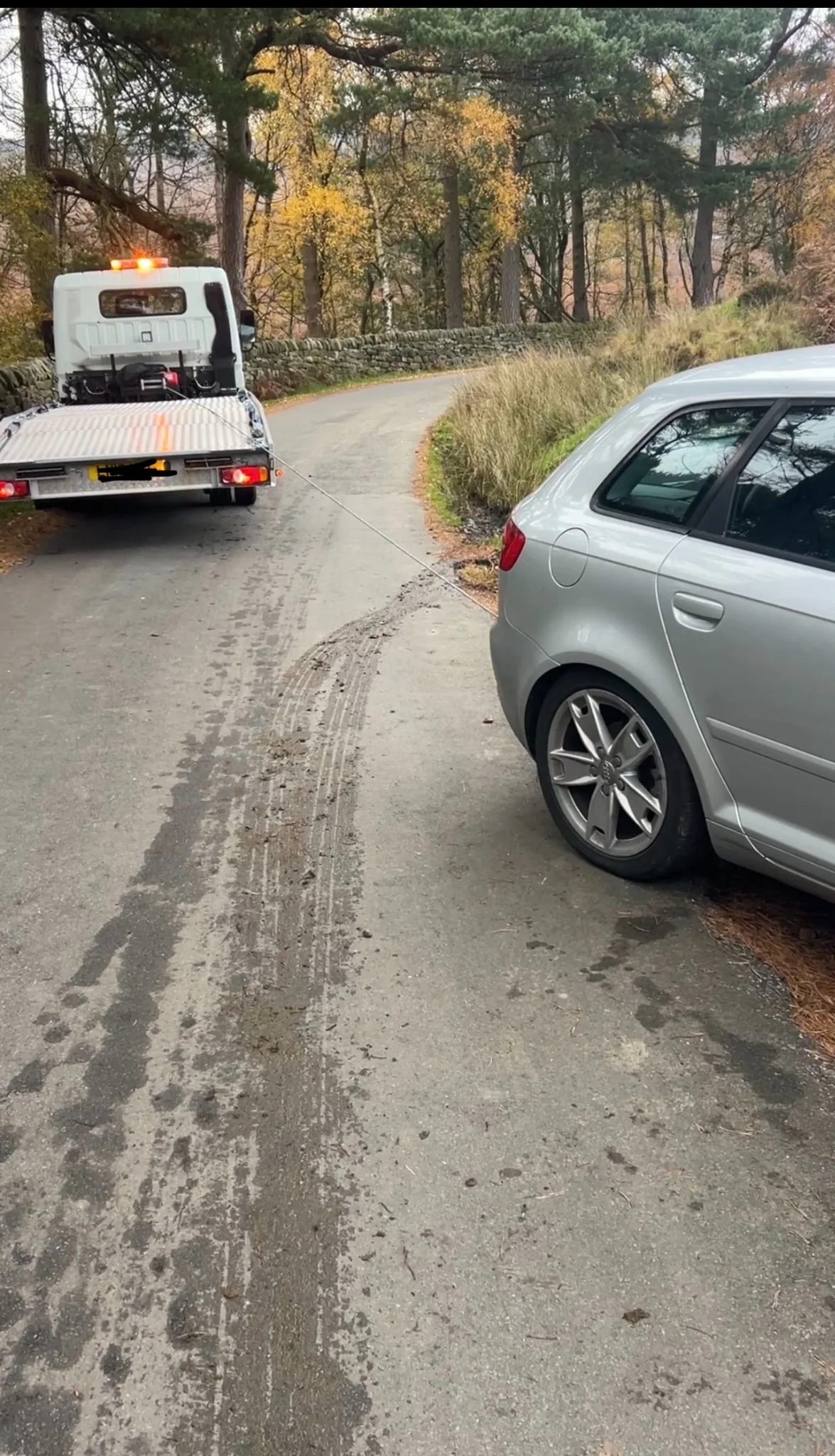
Send photos of the wheels and the route from firm ground so a suitable pull-out can be assessed.
Baloch Recovery Services · Ipswich
A soft verge, muddy entrance or roadside ditch can leave you unable to move. Send Baloch Recovery Services your exact Ipswich location and safe photographs so we can assess your vehicle, the ground and recovery access before arranging a suitable response.
Help when the ground gives way
A vehicle does not have to be far from the road to become stuck. One wheel can sink into a waterlogged shoulder while the other wheels remain on tarmac. A delivery van can lose traction at a muddy entrance, or a car can slide towards a drainage ditch when turning on a narrow lane. The useful first step is to establish where the vehicle is, whether anyone is at risk and what access a recovery truck would have.
Baloch Recovery Services accepts enquiries for mud, ditch and grass-verge recovery around Ipswich. Cars, SUVs and suitable vans can be considered following an assessment. A straightforward traction problem and a vehicle resting at an angle need different planning. Photographs help us understand the situation, but the operator must also assess the ground and vehicle on arrival before deciding how to proceed.
Enquiries are welcome 24/7. We aim to respond within five minutes when an enquiry includes the information needed for an assessment; busy periods can take longer. Sending a map pin, vehicle details and a clear description together helps reduce questions while you are waiting. If the vehicle is in immediate danger or anyone is injured, call 999 first.
Tell us whether you need the vehicle moved back onto firm ground or transported afterwards. If you are unsure whether it will be safe to drive, say so at the start. We can then discuss the pull-out and any onward recovery as part of the same enquiry rather than leaving the next stage undecided.
Send photos of the wheels and the route from firm ground so a suitable pull-out can be assessed.
Show the vehicle position and surrounding access. The recovery plan depends on stability, damage and the space available.
Tell us how close the vehicle is to traffic and which wheels are stuck, locked or damaged.
Locations and approaches
Ipswich enquiries can involve an urban roadside, a village approach or private land beyond the town. Nearby place names help establish the area, but they do not confirm that a particular job can be accepted. The exact position, ground conditions, truck access and suitable vehicle availability determine what can be arranged.
For an enquiry around Bramford, Claydon or Great Blakenham, include the village name and the actual road or property entrance. A postcode may cover a stretch of lane or several premises. If the vehicle is behind a gate, on a track or beyond a yard, identify the entrance the truck should use and describe the route between that entrance and the vehicle. Do not assume that the nearest point on a main road provides access.
The A1214 includes Main Road in Kesgrave. Suffolk County Council identifies the A12 corridor from Seven Hills, at A14 junction 58, towards Woods Lane Roundabout in Woodbridge. If your vehicle is on an Ipswich approach towards Kesgrave or Martlesham, distinguish the main carriageway from a side road, driveway or field entrance. Include your direction of travel and the last junction you passed, particularly when your map pin appears close to more than one road.
The A14 links Ipswich with Felixstowe; National Highways identifies Seven Hills as junction 58 and Trimley as junction 59. For a nearby local-road location, check whether you are actually on the A1156 Felixstowe Road rather than the A14. On the Shotley peninsula, the B1456 runs from Ipswich beneath the Orwell Bridge towards Shotley Gate. A vehicle on a peninsula lane needs its own access details: being near the bridge does not mean a truck can reach it directly from the A14.
Soft surfaces
Grass can conceal ground that will not support a vehicle. The surface may look level from the driving seat while a wheel has dropped into a rut or the underside has come to rest on the ground. Tell us whether the vehicle stopped because its wheels lost traction, because it sank, or because it struck something before becoming stuck. Those descriptions help explain what needs checking.
Once repeated attempts are producing wheelspin without useful movement, stop trying to force the vehicle out. Continuing can deepen the ruts or change the vehicle’s position. Do not get underneath it to inspect the underside, and do not put yourself between the vehicle and a bank, wall or another vehicle. An assessment can begin with the description and photographs you can provide from a safe place.
The view around the vehicle matters as much as a close-up of a tyre. If safe, show the vehicle’s overall position, the edge of the firm surface and the route a recovery truck would need to take. Mention recent movement, visible standing water or ground that is breaking away. You do not need to walk into mud or approach a ditch edge to provide evidence.
A private driveway or worksite may introduce further access restrictions. Tell us about narrow gates, overhead branches, low structures, parked vehicles and any limits set by the landowner. A truck needs a suitable place to work, not just enough room to reach the entrance. The operator will decide whether the proposed recovery is appropriate once the site has been assessed.
Position and stability
When a vehicle enters a ditch, the important questions extend beyond whether its engine still runs. It may be supported by a bank, resting on its underside or leaning with some wheels carrying little weight. Tell us whether it is upright, tilted or on its side, and whether its position has changed since it stopped. Any uncertainty about stability should be made clear before dispatch.
From somewhere safe, describe which part of the vehicle is in the ditch and whether you can see water, a steep bank, damaged fencing or an obstruction near it. Photographs taken from a distance can be more useful than a close-up that hides the slope. Never climb into the ditch, enter water or stand below an unstable vehicle to improve the photographs.
Let us know if this followed a collision. Mention deployed airbags, damaged wheels, leaking fluid, smoke or an unusual smell without approaching to investigate. A recovery booking does not replace emergency assistance or the instructions of police and traffic officers. If anyone is injured or there is immediate danger, call 999 and explain the location and circumstances.
The recovery method cannot be promised from the word “ditch” alone. The vehicle’s weight, angle, damage and the available working space all affect the assessment. Some situations need additional equipment or a different recovery arrangement. We will explain what can be offered for the information supplied, and the operator will check the situation on site before attempting the pull-out. Tell us early if the vehicle must also be taken to a garage or another address.
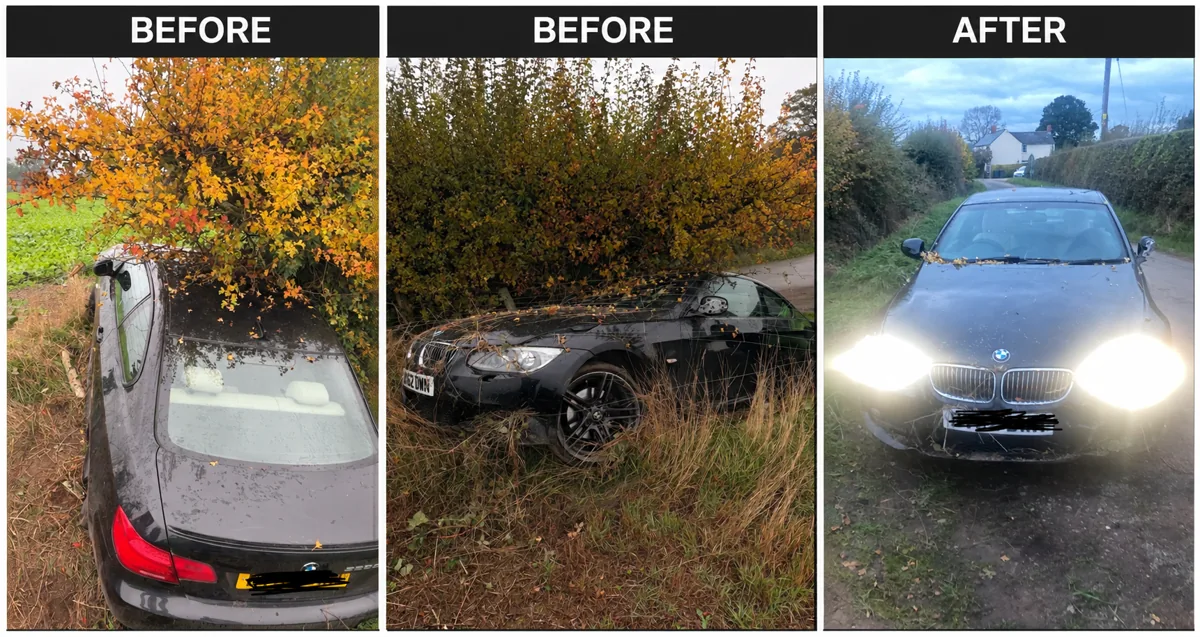
An existing recovery example. Send photos of your own vehicle and location so we can assess the Ipswich request.
Vehicle suitability
Give the make, model and registration when you enquire, along with any detail that affects the vehicle’s weight or how it can be moved. A familiar-looking vehicle may have a different drivetrain, restricted ground clearance or damage that is not visible in a general photograph. We use the information you provide to assess whether a suitable recovery arrangement is available.
For cars and SUVs, tell us whether the vehicle can roll, whether neutral can be selected and whether the handbrake releases. Report flat tyres, a wheel pointing at an unusual angle or contact between the bodywork and the ground. If you do not know an answer, say “unknown”; do not attempt to move an unstable vehicle to find out. Four-wheel drive does not remove the need to assess soft ground and recovery access.
Suitable vans can be considered, but the body type and load matter. Say whether it is a standard panel van, a long-wheelbase vehicle or a Luton, and describe what it is carrying. Provide the plated weight or other reliable weight information if available. Loaded and Luton vans require a weight and access check before acceptance. Include height restrictions, a tail lift, rear overhang and any equipment extending beyond the body.
Mention electric or hybrid power, an automatic gearbox and any warning messages. Recovery needs to follow the requirements of the particular vehicle, so do not assume that it can be towed with its wheels on the road. Tell us about suspected battery or underbody impact, but do not inspect underneath it yourself. If damage prevents safe movement after extraction, onward transport may need to be included.
Send a complete enquiry
A short, complete message is useful when you are stranded. Start with your location and whether you are somewhere safe, then add the vehicle and access details. If you have already spoken to us, send new photographs or a changed position as an update to the same enquiry so the assessment reflects the latest situation.
From enquiry to attendance
Use the enquiry form and select “Ditch pull-out”, including when the immediate problem is mud or a grass verge. Add the location, vehicle information and safe photographs. Describe the situation plainly: for example, that the front wheels are in soft ground while the rear wheels remain on a surfaced entrance. A useful description helps us ask the right follow-up questions.
We review the information and discuss the proposed recovery with you. This includes suitability, access, what the quote covers and whether onward transport is required. If a necessary detail is missing, we may need to clarify it before accepting the booking. Make sure the phone number you provide reaches someone who can explain the location and remain available for contact.
Once you accept the arrangement, a deposit is required before dispatch. We aim for arrival within 30 minutes only when a suitable nearby truck is available. The estimate for your booking depends on the truck’s location, traffic, route and the recovery requirements. An enquiry or submitted form alone does not mean a truck has been dispatched.
At the location, the operator assesses the ground, vehicle position and working space before starting. If the situation differs from the information supplied, the plan may need to change and any revised scope or cost should be agreed before additional work proceeds. Tell us in advance if one or two people need to travel with the vehicle; passenger transport depends on the truck’s available seats and must be confirmed for the booking.
Understand the quote
We offer a no-obligation quote based on the situation you describe. A vehicle close to firm, accessible ground may require a different arrangement from one down a bank or beyond a restricted entrance. The vehicle’s size, weight and condition, the depth or extent of the soft ground and the space for the recovery truck all help determine the work involved.
Access can affect a quote even when the vehicle is only a short distance from the road. A narrow entrance, a long unsurfaced approach or limited room to position a truck may change what equipment is suitable. Photographs of the access route and details about a van’s load help establish this before anyone travels to the location. Tell us about restrictions rather than assuming they can be overcome.
Onward transport is another part of the decision. If you need the vehicle taken to a garage, home or another agreed address after extraction, provide that destination when requesting the quote. Ask what is included and whether the quoted work ends once the vehicle is safely on firm ground or includes transport and unloading at the destination.
A deposit is paid before dispatch, with the balance due on completion. Ask for any payment or booking terms you need explained before accepting. If new information changes the recovery requirements, discuss the revised arrangement before authorising additional work. The aim is to agree a clear scope for your actual situation, so a price for another driver’s pull-out should not be treated as a reliable guide to yours.
While help is arranged
Your immediate surroundings decide where it is safest to wait. A vehicle on a quiet private entrance presents different risks from one beside a fast road. If anyone is injured or there is immediate danger, call 999. Explain your exact location and whether the vehicle or people are exposed to traffic, rather than waiting for a recovery quote to resolve an emergency.
On a fast road, if you cannot get to a place of relative safety and cannot safely leave the vehicle well away from traffic, keep your seat belt and hazard warning lights on and call 999 immediately, asking for the police. If it is safe to get out, leave on the side furthest from traffic and move to a safe place away from the vehicle and carriageway. Follow police or traffic officer instructions.
Where there is a safety barrier, the Highway Code advises waiting behind it, while watching for unseen drops, uneven ground and debris. Around a ditch or soft verge, that warning matters: do not step over a barrier without considering the ground beyond it. Do not stand in a position where you could be trapped between the vehicle and another object if the vehicle moves.
Keep children supervised and tell us about passengers who cannot move easily or need particular assistance. Keep your phone accessible and preserve enough battery for calls and location updates. If you are on private premises, contact the owner or site manager about access when it is safe to do so. Do not walk into the road to guide the truck, attempt repairs beside moving traffic or put yourself at risk to collect belongings or photographs.
Read the National Highways breakdown guidance and Highway Code breakdown rules for official advice about reaching a safe place and getting help.
Plan the next journey
Once the vehicle has been brought to a suitable position, the next question is whether it can safely continue its journey. Being free of the mud does not establish that a wheel, tyre, steering component or underside escaped damage. Tell the operator about anything that happened before the vehicle became stuck, including an impact, a sudden warning light or a change in how it handled.
Visible damage, a leak or unusual behaviour may mean transport is more appropriate than driving away. A roadside recovery assessment is not a complete mechanical inspection. If there is uncertainty about roadworthiness, arrange appropriate inspection or onward recovery rather than treating extraction as confirmation that the vehicle is ready for normal use. Mention any concerns while the truck is still at the location.
If onward transport has been agreed, confirm the destination and the arrangements for arrival. A garage may need to know that the vehicle cannot roll or that a wheel is damaged. For a home, yard or private address, give details of the unloading space, gates and who will be present. The destination needs workable access as well as the original collection point.
Keep the booking details and any photographs you took safely if you need a record for the vehicle owner, employer or insurer. Let us know who is authorised to agree the work if the vehicle is borrowed, hired or operated by a business. When the agreed recovery is complete, the remaining balance is due. Before everyone leaves, make sure you understand where the vehicle is being left and what further arrangements, if any, you still need to make.
Ipswich pull-out FAQs
A single wheel in soft ground can be enough to stop a vehicle. Send its exact position and a photograph showing the whole vehicle and the edge of the firm surface, if safe. We assess the ground, vehicle and truck access before confirming an arrangement. Avoid repeated attempts to drive out if they are only producing wheelspin or making the vehicle sink further.
Share a map pin and the nearest postcode or recognisable entrance. Add the direction you were travelling and the last junction, village or signed destination you remember. A photograph of a nearby sign can help only if you can take it safely. Tell us whether you are on the main road, a slip road, a parallel local road or private land behind an entrance.
You can enquire about a location around villages such as Bramford, Claydon and Great Blakenham, or towards Kesgrave, Martlesham and the Shotley peninsula. Acceptance depends on the exact job, suitable truck availability and access. Send the location first so we can assess it. A nearby place name alone cannot establish that a truck can reach or safely recover the vehicle.
Loaded and Luton vans need a weight and access check before we can confirm suitability. Provide the make, model, body type, load description and reliable weight information if you have it. Mention a tail lift and height restrictions along the approach. The load and the available working position can materially change the recovery requirements, even when the van is close to the road.
Tell us before dispatch, along with any warning messages and whether a wheel is damaged or appears locked. These details affect how the vehicle can be moved and transported. Do not force controls or try to shift a vehicle that is unstable. If you cannot safely establish whether it rolls or releases its handbrake, report that as unknown so the assessment reflects the uncertainty.
Electric and hybrid vehicles can be considered following an assessment of the particular vehicle and circumstances. Identify the model and mention any underbody impact, warning message or suspected damage. The appropriate movement and transport arrangements depend on the vehicle’s requirements. Do not assume it can be towed conventionally, and do not get underneath it to inspect a battery or other component.
Tell us who owns or controls the land and whether access has been agreed. A site manager or landowner may need to unlock a gate, identify a suitable route or explain restrictions. Give us those details before dispatch where possible. The fact that your vehicle reached a field, yard or driveway does not establish that a recovery truck can use the same approach.
If you need onward transport, tell us how many people are with the vehicle and ask about passenger arrangements when booking. One or two passengers may be accommodated subject to the recovery truck’s available seats and confirmation for that job. Mention children or accessibility needs in advance. You may need a separate travel arrangement if suitable passenger space is unavailable.
That depends on the scope agreed for your booking. Tell us the destination postcode and that you need transport when requesting the quote. Confirm whether it includes extraction, onward travel and unloading. If damage only becomes apparent after the vehicle is free, discuss the next step with the operator before deciding to drive or agreeing any additional recovery work.
Deal with the immediate traffic risk first. If you cannot safely exit to somewhere well away from traffic, remain belted, keep hazard lights on and call 999, asking for police. If a safe exit is possible, leave on the side furthest from traffic and move away from the carriageway. Follow the emergency services’ instructions and send recovery information only when you can do so safely.
A clear next step
Send your exact location, vehicle details and safe photos. We will check suitable availability and confirm the recovery plan, price and estimated arrival before you decide.
Get my Ipswich pull-out quoteChoose the answers and enter only the details we need.
Guaranteed response within 5 minutes after you submit your quote form. Easily send your vehicle details and share your current location using the form.