Mud and soft ground
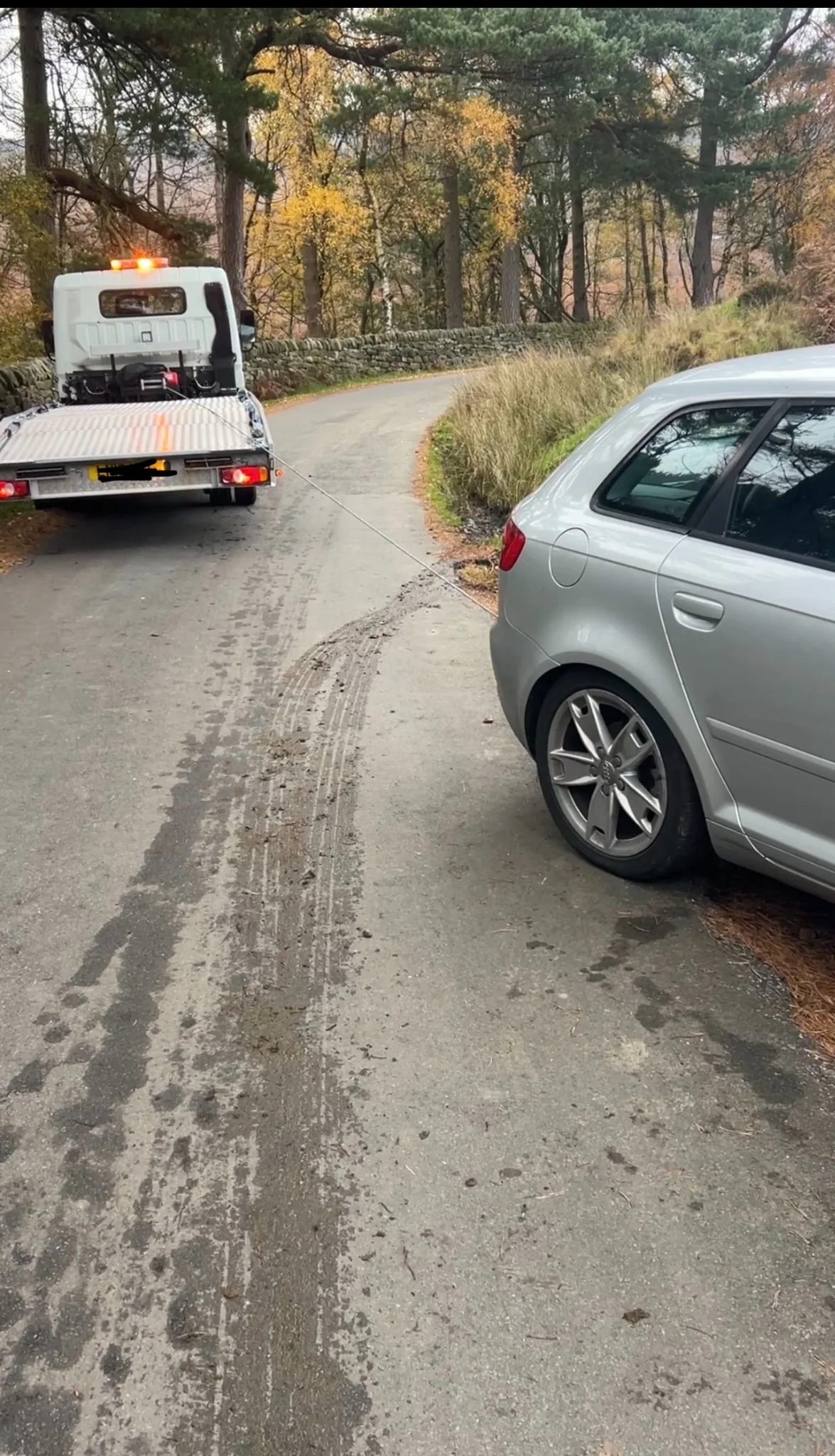
Send photos and a short safe video of the wheels and the route from firm ground so a suitable pull-out can be assessed.
Baloch Recovery Services · Grantham
A soft gateway, wet parking field or roadside verge can leave your vehicle without a firm way back. Baloch Recovery Services handles Grantham pull-out enquiries, assessing the ground, vehicle position and truck access before confirming a recovery plan and quote.
Getting help
Being close to a road does not always make a stranded vehicle easy to reach. Around Grantham, a car can be only a few metres from a firm entrance yet have its driven wheels resting in saturated soil. A van may have reversed into a gateway and discovered that the apparent turning area is softer than the lane beside it. The first useful step is to stop making the position worse and describe what has happened.
We take enquiries for vehicles stuck in mud, on grass verges and at ditch edges. Each job is assessed individually, including whether a suitable recovery vehicle can reach a stable working position. Tell us whether all four wheels are supported, whether the vehicle has settled onto its underside and whether it has moved further since you stopped. These details help distinguish a straightforward loss of traction from a situation needing a different approach.
You can send an enquiry at any time, day or night. Use the quote form and select “Ditch pull-out”, even when the vehicle is on a muddy field entrance or grass rather than in a ditch. Provide your location and vehicle details together with safe photographs and a short scene and access video. If a photograph or video cannot be taken safely, explain that in the form; your safety comes first.
Send photos and a short safe video of the wheels and the route from firm ground so a suitable pull-out can be assessed.
Show the vehicle position and surrounding access. The recovery plan depends on stability, damage and the space available.
Tell us how close the vehicle is to traffic and which wheels are stuck, locked or damaged.
Local access
Grantham enquiries may involve the A1, A52 and A607 approaches as well as residential streets, visitor parking and rural lanes. The road name is useful, but the last part of the approach often determines whether recovery is practical. A postcode covering a property or stretch of countryside may lead to the wrong gate. Send the exact pin for the stranded vehicle and explain which entrance reaches it.
For Great Gonerby or Barrowby, distinguish a village address from a location beside the A1 or A52. Tell us the direction you were travelling and the nearest signed junction or recognisable entrance, if you already know it. Do not walk along a fast road to find a sign. An accurate description from a safe position is more helpful than putting yourself at risk to gather another detail.
For enquiries around Manthorpe or Belton, mention whether the vehicle is on a public lane, private drive, parking area or land reached through a gate. The A607 at Belton is a useful reference, but it cannot identify every access track or parking entrance. If someone responsible for the land can confirm the permitted access route, include that information with the enquiry.
Within Grantham, tell us about narrow entrances, parked vehicles, low branches, tight bends and any restricted turning space. Recovery equipment needs working room as well as an approach route. We assess nearby village enquiries on the same basis: the vehicle, ground and available truck access determine the plan. A location appearing in this coverage description is an invitation to enquire, rather than a promise that every site or vehicle can be reached.
If your vehicle needs onward transport after a pull-out, or has broken down on a firm surface, these local recovery pages explain the available services. Include any onward destination when requesting your quote.
Soft surfaces
A grassy area can look firm until a wheel breaks through its surface. Waterlogged ground may also support the front of a vehicle while letting the rear sink, particularly when a van carries a load. Continued acceleration can deepen the wheel ruts and leave less clearance beneath the vehicle. Stop trying to drive out once the wheels are spinning without useful movement and let us assess the position.
Describe which wheels are affected and how far they have sunk, using visible features rather than stepping into the mud to measure. Tell us whether the underside is touching the ground, whether the vehicle is on a slope and whether there is standing water nearby. A photo showing the whole vehicle and surrounding firm surface gives more context than a close-up of one wheel alone.
If you can record safely, make a short video from a stable position showing the vehicle, the route back to hard ground and the entrance a recovery truck would use. A slow view of the scene is sufficient; there is no need to climb a bank or walk into traffic. Mention any part of the route that is out of view, including a soft track between the road and the vehicle.
Farm gateways, field parking and garden edges may need permission from a landowner or occupier before equipment enters. We will discuss access and the likely working area before confirming a job. Ground disturbance depends on the conditions, and we cannot promise an untouched surface. If the site has buried drainage, protected landscaping or another known constraint, tell us so that it can be considered in the assessment.
Ditch edges
A vehicle resting beside a ditch can be unstable even when the visible drop looks small. One wheel may have slipped beyond the supported ground, or the vehicle may be leaning towards a bank. Tell us whether it is upright, tilted, resting against anything or partly in water. If its position appears to be changing, keep people clear and describe the movement in your enquiry once you are safe.
The assessment needs to consider the direction of recovery, the support available beneath the vehicle and any damage that might affect movement. A vehicle sitting nose down is a different problem from one with a rear wheel over an edge. Explain which end faces the road and whether the road is higher or lower than the vehicle. Existing photographs can help, provided they show the current position.
Do not attach ropes, chains or a tow strap yourself, and do not ask another vehicle to pull while someone steers from a precarious position. We cannot choose safe recovery points or a method from a generic description. The assigned operator must be satisfied with the vehicle and scene before work begins. Keep bystanders away from the area that may be used for equipment and movement.
Please identify nearby fences, walls, gates, trees, drains or overhead restrictions without entering the danger area to inspect them. Tell us if a landowner, police officer or road authority has already given instructions about the site. We can then discuss what assistance is appropriate, whether access is possible and whether further coordination is needed before dispatch. A clear quote follows an assessment of those practical requirements.
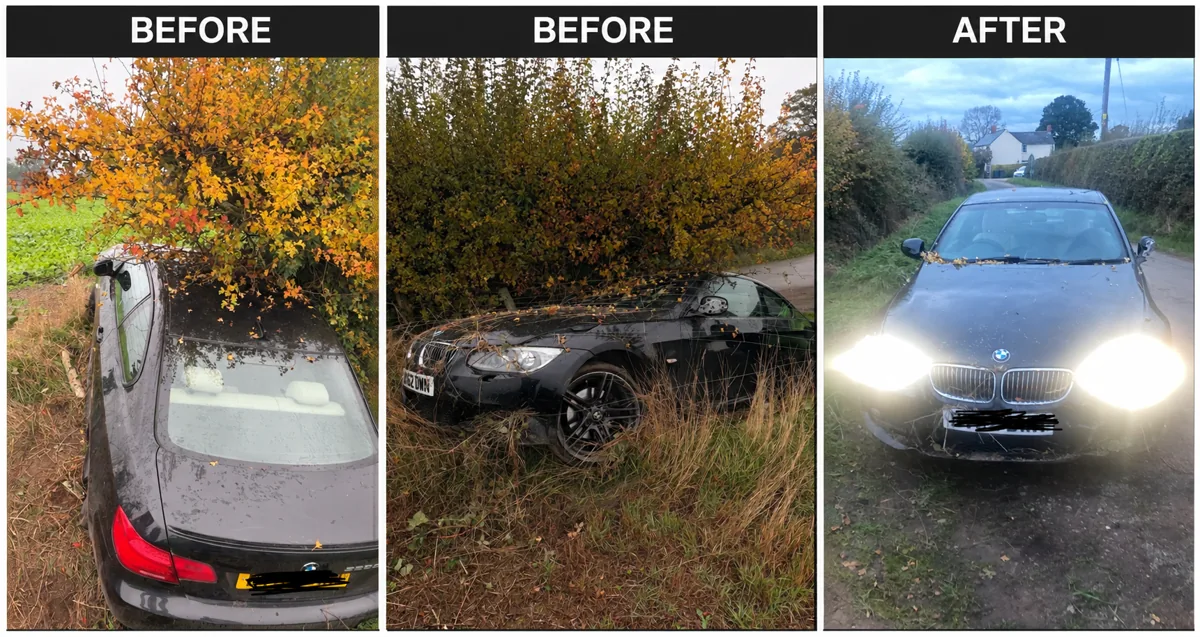
An existing recovery example. Send photos and a short safe video of your own vehicle and access so we can assess your request.
Vehicle suitability
A vehicle's size is only part of the recovery decision. Its weight, clearance, wheel position and condition all matter, along with the space in which equipment would have to work. Include the make and model, registration if available, and whether it is a car, SUV or van. Tell us about unusually low clearance, modifications or damage that could change how it can be moved.
For a car or SUV, say whether it still starts, whether the wheels can roll and whether neutral can be selected. Explain whether the handbrake releases normally. You do not need to test any of these things if doing so would risk movement or require getting back into an unsafe vehicle. If you are unsure, write “unknown” and describe what you last observed.
A suitable van may be recoverable, but the load must be included in the assessment. Give the van model, any known weight information and a brief description of what it is carrying. A loaded vehicle can sink differently and require different equipment from the same van when empty. Luton vans and other larger bodies need particular checks on weight, height, overhang and the room available at the access point.
Mention locked or damaged wheels, a displaced tyre, broken steering, suspension damage or fluid beneath the vehicle. These can affect both the pull-out and the need for onward transport. For electric or automatic vehicles, supply the model and known movement restrictions rather than attempting an unfamiliar procedure. We will confirm whether the available equipment and operator are suitable before accepting the recovery arrangement.
Useful details
The most useful enquiry allows us to understand both where the vehicle is and how a truck could get close enough to help. Start with the exact map pin and postcode, then describe the entrance from the public road. If a navigation app points to a different entrance, say so explicitly. Include a contact name and a way to reach you through the enquiry process.
Safe images help resolve questions that are difficult to describe in writing. Please include photographs showing the vehicle's overall position, affected wheels and nearby hard standing. A short video should show the scene and the access route where safely visible. Do not film while driving, stand in the carriageway, enter floodwater or move towards an unstable ditch edge. If images are unavailable, explain the reason and provide the clearest written description you can.
Tell us what happened immediately before the vehicle became stuck, whether you have stopped further attempts and whether anything has changed since the images were taken. If you need transport after the pull-out, include the intended destination now. That allows us to consider the whole request before quoting.
Arranging recovery
Submit the form with “Ditch pull-out” selected and attach the information you can gather safely. We review the location, vehicle and access details, then ask about anything that could affect suitability or the scope of work. Please remain reachable after submitting an enquiry, because a missing entrance detail or uncertainty about a van's load may need resolving before we can confirm assistance.
You will receive a no-obligation quote based on the assessed request. Check that it covers the situation you have described and any onward transport you require. If you are waiting at a different safe location from the vehicle, tell us how the operator will find both you and the access point. Any arrangements for keys, land access or gates should be agreed before the truck sets off.
A deposit is required before dispatch, with the balance due on completion. We confirm the booking and estimated arrival time as part of the dispatch arrangement. A thirty-minute arrival is an aim only when a suitable truck is nearby and the journey and access allow it. The confirmed ETA for your booking is the relevant estimate; weather, traffic and earlier jobs can affect timing.
Keep us informed if the vehicle moves, the ground worsens, access becomes blocked or another service attends. A change at the scene may change the equipment required or make the original plan unsuitable. When the operator arrives, they reassess the actual position before beginning. The purpose of the earlier information is to prepare a workable arrangement, while the final method depends on the conditions found on site.
Understanding the quote
There is no single price that can fairly describe every mud or ditch recovery. A car with one wheel on soft grass beside a clear driveway presents different requirements from a loaded van below a lane with limited working space. The quote considers the vehicle, position, ground and access, together with the equipment and time likely to be needed.
Distance matters, but it does not tell the whole story. A vehicle close to Grantham can still require a complicated approach through a narrow gate or across unsuitable ground. Conversely, a clearly described location further out may have straightforward access to firm standing. Send the access information with the initial request so the quote reflects the circumstances rather than an assumption based only on the postcode.
Onward transport is another part of the scope. Tell us whether you want the vehicle placed on a safe firm surface at the site or taken to a destination after recovery. If damage means it may not be driveable, include that possibility at the start. Passenger requirements should also be stated early, because the assigned truck must have suitable seating available.
Ask for clarification before accepting if anything about the scope or payment stages is unclear. The deposit comes before dispatch and the remaining balance is paid on completion. If the scene differs materially from the description, the operator will need to reassess what can be done and discuss any changed requirements. Giving current photographs, a safe short video and an accurate load description helps reduce avoidable uncertainty about the work.
While you wait
If anyone is injured or there is immediate danger, call 999. A recovery enquiry is not a substitute for an emergency response. This is especially relevant if the vehicle is exposed to fast traffic, at risk of further movement or in a position where people cannot get to relative safety. Follow instructions from the emergency services or anyone managing the road.
On a fast road, if it is unsafe to leave the vehicle, remain inside with seatbelts fastened, put the hazard lights on and call 999. Otherwise, leave on the side away from traffic and move to a place of relative safety. Keep other occupants with you where it is safe to do so. Do not stand between the vehicle and approaching traffic or return to collect a photograph for the quote.
At a quieter rural site, keep clear of the ditch edge, soft ground and the likely recovery working area. Children and pets need a safe place away from vehicle movements. Do not crawl beneath the vehicle, place yourself downhill from it or stand beside wheels that may move unexpectedly. If there is a nearby building or other safe waiting place, explain your location in the enquiry.
You can provide a written account when safe images are impossible. A missing video should be explained, not replaced with a risky filming attempt. Keep your phone available and preserve enough battery for updates. Tell us if darkness, weather or a blocked access point changes what the operator will find. The recovery plan can be discussed once people are safe and the scene can be assessed appropriately.
Read the National Highways breakdown guidance and Highway Code breakdown rules for official advice about reaching a safe place and getting help.
The next step
Once the vehicle is on a stable surface, the operator can consider its visible condition and discuss the next movement. Being free from mud does not establish that it is safe to drive. A tyre may have lost pressure, a wheel may be damaged or the underside may have contacted the ground. Explain any new noise, warning light or steering concern before deciding what happens next.
If the vehicle appears unsuitable to continue, onward recovery may be needed. Give a proposed destination in the first enquiry wherever possible, then confirm the details when the condition is clearer. The destination needs an accessible receiving point, especially if the vehicle cannot roll or steer normally. Check that someone can receive it and that any required keys or access arrangements are available.
If you need to travel with the vehicle, request passenger space when booking. One or two passengers may be accommodated, subject to the seats available in the assigned truck. Do not assume that every occupant can travel or that a particular seating arrangement will be available. Confirm the requirement before dispatch so alternative travel arrangements can be made if necessary.
Grantham pull-out FAQs
Send an enquiry with the exact pin and the correct entrance. State whether you are in the village, on private land or beside the A1 or A52, because those situations involve different access and safety considerations. We assess the vehicle and available working space before confirming suitability. Nearby coverage does not mean a truck can enter every track, field or restricted driveway.
Share your location pin from a safe position and the direction you were travelling. Add the nearest junction or sign only if you already know it; do not walk along the road to investigate. If fast traffic makes it unsafe to exit, remain belted inside with hazards on and call 999. Recovery arrangements can follow once immediate danger has been addressed.
Choose “Ditch pull-out” and explain that the vehicle is stuck in a parking field or on grass. Describe the surface between the road and the vehicle, any gate and where a truck could stand on firm ground. Include safe photographs and a short scene and access video. Explain if filming is unavailable or unsafe so we can work from your written account.
It is useful, but please add an exact pin and directions to the specific entrance. A rural postcode can cover several properties or access points. Mention the road name, any identifiable gate and whether navigation routes to the wrong side of the site. If access permission is required, arrange it with the responsible person and tell us about any conditions before booking.
Possibly, subject to an individual assessment of weight, load, position and access. Send the make and model, what it carries and any known weight or height information. The same van can need a different recovery arrangement when loaded. We also need to understand turning space and firm standing for equipment before confirming that the available truck is suitable for the request.
Stop repeated attempts when the wheels spin without useful movement. Further attempts can deepen ruts or leave the vehicle resting on its underside. Tell us what you have already tried and whether the vehicle has moved since the photos were taken. Do not arrange a rope or strap pull yourself. The operator will assess safe movement and equipment requirements at the scene.
Include that information in the enquiry. Locked wheels or an unavailable neutral position can change how the vehicle must be moved and transported. If you do not know, say so rather than testing controls in an unstable position. Provide the make and model and any visible warning or damage, then let the assessment determine what equipment and onward arrangements are appropriate.
We aim to respond to complete enquiries within five minutes, with longer response times possible during busy periods. Arrival within thirty minutes is an aim only where a suitable truck is nearby and conditions allow. An ETA is confirmed with the booking. Your precise location, vehicle details and access information help us assess availability and give a realistic estimate for the particular job.
The quote is no obligation, so you can review it before accepting. Once you agree to book, a deposit is required before dispatch and the balance is due on completion. Confirm what the quotation covers, including any onward journey. If the vehicle position, load or access changes, tell us promptly because the requirements may need to be reassessed before work proceeds.
Request seating when you enquire. One or two passengers may travel subject to the available seats in the assigned truck, so please confirm the number of people before dispatch. Supply the onward destination and receiving access as well. If seating cannot meet the requirement, you will need a separate travel arrangement; do not assume passenger space from the size of the recovery vehicle.
A clear next step
Send your exact location, vehicle details and safe photos or video. We will check suitable availability and confirm the recovery plan, price and estimated arrival before you decide.
Request my Grantham recovery quoteChoose the answers and enter only the details we need.
Guaranteed response within 5 minutes after you submit your quote form. Easily send your vehicle details and share your current location using the form.