
Mud and soft ground
Send photos and a short safe video of the wheels and the route from firm ground so a suitable pull-out can be assessed.
Baloch Recovery Services · Darlington
Professional mud recovery, ditch rescue and grass-verge vehicle winching in Darlington and surrounding villages. Baloch Recovery Services handles enquiries for cars, SUVs and vans stranded on soft ground, with assessed pull-outs and onward vehicle transport when needed. Request a no-obligation recovery quote, day or night.
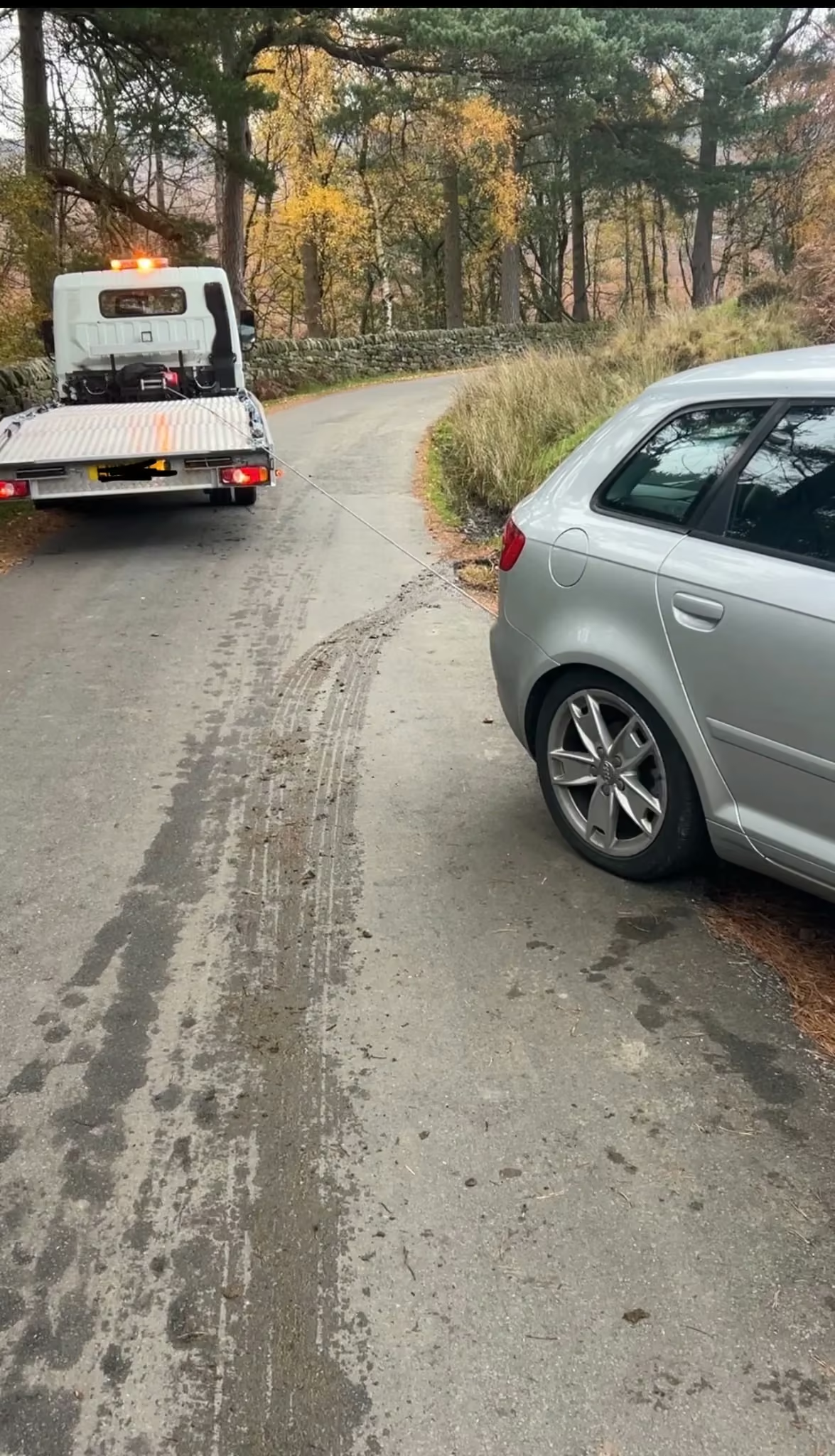
Explain the position
A parking space that looked firm can leave a car sitting low in wet grass. A wheel can drop beyond the edge of a narrow lane, or a delivery van can lose traction while turning at a rural entrance. Before arranging recovery, the useful question is how the vehicle is resting: upright with its wheels supported, leaning towards a ditch, or stopped with part of its underside against the ground. Those differences affect the assessment more than the distance to the nearest main road.
Baloch Recovery Services accepts enquiries for mud, ditch and grass verge pull-outs in Darlington and surrounding areas. Cars, SUVs and suitable vans are considered individually. Describe what happened, whether the vehicle moved after becoming stuck, and any damage you can see from a safe position. A vehicle that still starts may need a controlled recovery before its ability to continue can be considered. An assessment may also identify a need for onward transport.
Enquiries are welcome 24/7 and you can request a no-obligation quote. Use the quote form and choose Ditch pull-out, including for a vehicle stuck in mud or on grass. The proposed help and arrival estimate depend on your actual circumstances.
Send photos and a short safe video of the wheels and the route from firm ground so a suitable pull-out can be assessed.
Show the vehicle position and surrounding access. The recovery plan depends on stability, damage and the space available.
Tell us how close the vehicle is to traffic and which wheels are stuck, locked or damaged.
Darlington and surrounding villages
Request vehicle winching and grass-verge recovery in Darlington, including rural entrances, private tracks, fields and roadside locations around the town. An exact map pin helps distinguish the vehicle’s position from the entrance a recovery truck can use. Mention gates, narrow bends, soft approaches and the nearest firm turning space when requesting your quote.
For a vehicle stuck near the A66, A67, A68 or an A1(M) approach, include the road name, direction of travel and nearest signed junction. Explain whether the vehicle is beside the public road or on adjoining private land. A postcode alone may lead to a property rather than the access needed for a winch recovery.
Where traffic is passing at speed, provide only information visible from a safe position. Do not cross a carriageway or walk along a live lane to take photographs. Recovery access, traffic conditions and the vehicle’s position must be assessed before work is arranged.
We welcome mud, ditch and soft-ground recovery enquiries around Hurworth, Neasham, Middleton St George and Sadberge. Include the village, road and entrance name, with safe photographs showing the wheels and surrounding ground. If a car or van has sunk beside a driveway, slipped off a track or become stuck on a grass verge, avoid repeated acceleration that could dig the wheels deeper.
For Heighington, Piercebridge, High Coniscliffe, Low Coniscliffe and nearby rural locations, describe the route from the public road to the stranded vehicle. Tell us about locked gates, narrow entrances, bridges, overhead restrictions and any load on board a van. Obtain the landowner’s permission where access or winching work involves private land. Each pull-out is assessed for suitable equipment and a firm working position.
If the vehicle needs onward transport after winching, include the destination in your enquiry. These local pages cover vehicle collection and towing from firm ground as well as transport following a recovery.
Traction and support
The surface around a stuck vehicle matters as much as the patch directly beneath its tyres. Firm-looking grass can conceal saturated ground, and an entrance may have a sound centre with softer edges. Explain whether one wheel has sunk, several wheels are affected, or the vehicle is sitting on its underside. Include whether the nearby hardstanding is level with the vehicle or above it. These observations help determine whether a suitable recovery arrangement is possible.
A short video can show the relationship between the vehicle, the surface and the available approach better than a close photograph of a tyre. If safe, record a brief view of the scene and the access from where you are already standing. Useful still images show the whole vehicle, its position relative to the road and any visible sinking or damage. You do not need to crouch underneath the vehicle or climb a bank.
Recovery from grass or mud does not come with a promise that the surface will remain undisturbed. Existing ruts, hidden ground conditions and the vehicle's position may affect what is achievable. Tell us if the location is a managed lawn, campsite, agricultural entrance or other area with access conditions. Any permissions or restrictions need to be understood before the recovery plan is confirmed, particularly where the truck would have to cross privately maintained ground.
Assess the edge
A ditch incident may be a single wheel beyond the road edge, a vehicle partly down a slope or a casualty supported unevenly between a bank and the carriageway. Describe the position in ordinary terms rather than trying to diagnose the recovery method. Say which end is lower, which side faces the road, and whether the vehicle appears to be moving or settling. If someone is injured or the position creates immediate danger, call 999 first.
Drainage features, fences and vegetation can make it hard to see what is supporting a vehicle. A wide photograph from a safe place is often more useful than a close-up taken at the edge. Tell us about water, a steep bank, a nearby wall or any obstruction touching the bodywork. Do not enter water to judge depth, or climb down beside an unstable vehicle to photograph its wheels. Unknown details can be explained as unknown.
The safe position for a truck also needs checking. A narrow local road outside Darlington may have little room beyond the casualty, while a vehicle beside a main route can involve passing traffic and restricted working space. Include the width of the usable approach if known, and whether a gate or parked vehicle limits access. This information helps assess the situation; it does not make a roadside location safe to occupy.
A quote for a pull-out depends on the evidence available. More specialist assistance or onward recovery may be needed if the vehicle's weight, damage or resting position is unsuitable for the equipment available. No winching method should be assumed from a photograph or a description of a similar incident. The assigned operator must be able to assess the actual scene and explain any material difference before work proceeds.
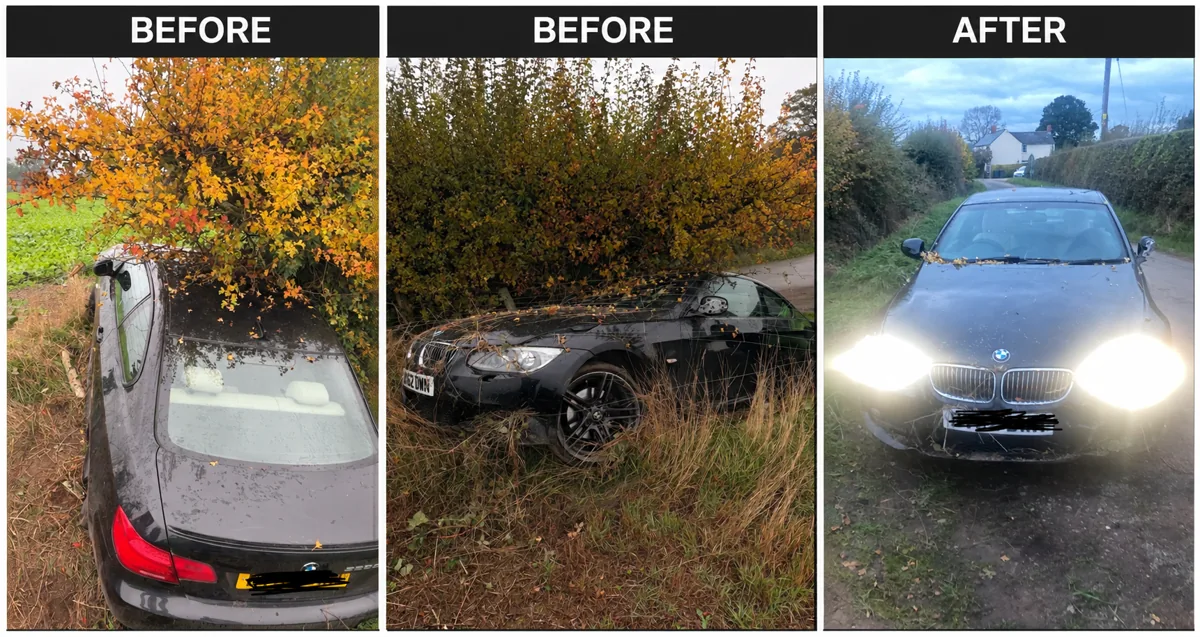
An existing recovery example. Send photos and a short safe video of your own vehicle and access so we can assess your request.
Vehicle details
Send the make and model, registration if available, and anything relevant to the vehicle's size or weight. Include trailers, roof loads or modifications that affect access. Whether the vehicle starts is only one detail: its ability to roll, select neutral and release the handbrake can also affect recovery and loading. Tell us if any of these functions cannot be checked safely.
A larger SUV is not automatically easier to recover because it has four-wheel drive. Its weight and ground clearance still matter, as does the support beneath the wheels. For electric and hybrid vehicles, identify the model and any warnings displayed. Report visible underside damage or an impact against the road edge without attempting to inspect beneath the vehicle. A low battery or electronic parking brake issue should be included in the enquiry.
If a wheel is sitting at an unusual angle, a tyre has come away from the rim or steering no longer behaves normally, explain that before a pull-out is booked. Recovering the vehicle to firm ground may be only the first stage. Transport to a garage or another suitable destination can be discussed where continued driving would be inappropriate.
Van enquiries need the body type, approximate load and known gross weight information, especially for loaded or Luton vehicles. State whether the load can shift, whether a tail lift is fitted and whether the vehicle is attached to a trailer. Describe delivery-yard restrictions and the space available at the entrance. Suitability depends on the combination of weight, position and truck access; a van body style alone cannot confirm that a particular pull-out is possible.
Prepare the enquiry
Choose Ditch pull-out in the quote form and provide the scene information together where possible. A complete enquiry reduces the need for follow-up questions, particularly when a village postcode covers several entrances or the vehicle is some distance from the road. There is a five-minute response aim for complete enquiries, although busy periods can take longer. This is a response aim, not a dispatch or arrival guarantee.
Safe photographs and a short scene and access video are requested for pull-outs. If you cannot provide a video because of traffic, darkness, poor signal or your own mobility, say so and give the clearest written description available. Do not move into danger or return to an unsafe vehicle to collect evidence. Describe any changes since the images were taken.
From enquiry to arrival
We review the vehicle, its position and suitable truck access before confirming an arrangement. You may be asked to clarify the entrance or provide another safe view. Use information you already have if approaching the vehicle would be risky.
The proposed service should state whether it covers bringing the vehicle back to firm ground, onward transport, or both. Confirm the destination before dispatch where possible. A recovery to a Darlington garage, home address or another location involves different travel from a pull-out completed at the scene. If the destination changes, explain that promptly so its effect on the arrangement can be discussed.
A deposit is required before dispatch, with the balance payable on completion. Review the quoted work, payment arrangement and expected arrival time before accepting. A 30-minute arrival is an aim only when a suitable truck is nearby. The actual ETA is confirmed for the job and can depend on traffic, access, equipment requirements and other commitments. A short road distance does not establish immediate availability.
Keep your contact device available and update the team if the pin, access or vehicle position changes. Let a gateholder or site contact know when access will be needed. One or two passengers may be accommodated subject to the assigned truck's available seats; confirm the numbers and requirements in advance. Do not assume everyone can travel with the vehicle, particularly when a group has arrived in the same car.
Understand the quote
There is no useful single price for every Darlington mud or ditch recovery. A car with one wheel on a soft margin presents a different job from a loaded van farther inside a field entrance. The vehicle's position, weight, damage, available firm ground and working space all influence the assessment. Share those details before comparing quotes, so the proposed services can be considered on the same basis.
Access can add complexity even when the casualty is close to a main road. A narrow entrance, restricted turning space or a long soft approach may prevent an otherwise straightforward attendance. Tell us about site rules, locked gates and limits on where a truck may stand. Where a landowner or occupier must agree access, arrange that discussion before treating an estimated arrival as a confirmed working arrangement.
Ask what is included in the quoted scope and whether onward transport is part of it. If further transport becomes necessary after the vehicle reaches firm ground, the destination and additional work need to be agreed. A quote based on incomplete images may require reassessment where the operator finds material differences at the scene. Changes should be explained rather than assumed to be included.
People first
If there is an injury or immediate danger, call 999. A commercial recovery enquiry is not a substitute for emergency help. On a motorway or other high-speed road, if you cannot safely leave the vehicle, remain inside with seat belts on, switch on hazard lights and call 999. If it is safe to leave, use the side away from traffic and move to a place of relative safety. Follow police or road-operator instructions.
Where a safety barrier offers a suitable place to wait, keep away from the vehicle and moving traffic. Do not cross a live carriageway to reach a better vantage point or to guide a truck. A roadside verge may itself be steep, wet or unstable, so look at the route to safety before stepping out. Keep children and other passengers together and away from the road edge, ditch and recovery working area.
On quieter village roads and private land, the absence of fast traffic does not remove the hazards of an unstable vehicle. Stay clear of its downhill side and avoid leaning on it, opening doors that could affect its balance or standing in water beside it. Keep pets under control. Do not place people around the vehicle to push or hold it while waiting for an assessment.
The request for photographs and video is always conditional on safety. Existing pictures and a written account are sufficient to start a conversation if more evidence would be dangerous to obtain. Tell us if visibility is poor, the ground has changed or access is now blocked. Once the operator arrives, allow them to identify the working area and explain where passengers should remain before recovery activity begins.
Read the National Highways breakdown guidance and Highway Code breakdown rules for official advice about reaching a safe place and getting help.
The next journey
A successful pull-out restores the vehicle's position; it does not prove that the vehicle is ready to drive. A dropped wheel, impact with a bank or prolonged underside contact can leave damage that was hidden while it was stuck. Tell the operator about warning lights, unusual steering, damaged tyres, scraping sounds or any fluid seen around the vehicle. Explain these concerns before deciding on the onward journey.
If the vehicle cannot safely continue, discuss transport to an appropriate garage, home or another agreed destination. Give the receiving address and any opening or access restrictions. For a garage, check that someone can accept the vehicle and explain where it should be placed. A destination described only as Darlington may leave the final access and distance unresolved.
Passenger arrangements should remain separate from assumptions about the vehicle's condition. One or two people can travel only if the assigned truck has suitable available seats. If further passengers need their own transport, arrange it from a safe place. Collect personal essentials only when the operator says it is safe to approach the casualty vehicle.
Darlington pull-out FAQs
Yes, enquiries can be assessed for Darlington and surrounding village locations, including Hurworth, Neasham, Heighington and Middleton St George. Send the exact pin, postcode and final access route. The ability to attend depends on the vehicle's position, suitable equipment and truck access. A nearby village name helps identify the area but does not confirm access or availability.
Choose Ditch pull-out for grass verge, mud and ditch recovery enquiries. Explain whether the vehicle is upright, how many wheels are affected and whether it has sunk onto its underside. Include safe photographs and a short scene and access video where possible. If filming is unsafe, say so and provide a written description.
Please add your direction of travel, nearest signed junction or roundabout and exact location pin. State whether you are actually beside that road or on another road or private entrance nearby. Do not cross traffic to read a sign or take an image. Use only location information visible from where you can safely remain.
Send a second pin for the entrance the truck should use and describe the route between that entrance and the vehicle. Include any gateholder's access arrangements, narrow bends or soft sections. This is particularly helpful for rural properties and shared yards. Do not direct a larger vehicle along an unverified shortcut simply because a car used it.
Yes. Drive layout does not establish that the ground can support the vehicle or that it can leave safely. Stop if repeated attempts are digging the wheels deeper. Provide the SUV's make and model, resting position and visible damage. The assessment considers weight, support and access together before a suitable service can be confirmed.
These require individual confirmation of vehicle weight, load, resting position and access. Include the body type, known weight information and whether a trailer or tail lift is fitted. A photograph alone may not provide enough detail. Suitability for a particular truck or equipment must be established before dispatch is agreed.
Thirty minutes is an arrival aim only when a suitable truck is nearby. Your actual ETA is confirmed after the job and access have been assessed. Traffic, equipment requirements and existing commitments can change the timing. A complete enquiry has a five-minute response aim, although busy periods may take longer to receive a response.
Explain why it is unavailable and send any existing safe photographs with a written account. A short video is requested because it helps show the scene and truck access, but you should never enter a ditch, water or moving traffic to obtain one. The team can discuss what further information is practical before confirming the service.
One or two passengers may be accommodated, subject to available seats in the assigned truck. Give passenger numbers and any relevant access needs when enquiring. Seating is confirmed for that attendance and should not be assumed from the size of your own vehicle. Larger groups may need to arrange additional transport from a safe location.
A deposit is required before dispatch and the balance is payable on completion. Onward transport can be discussed as part of the assessed quote, so include your intended destination. Confirm whether the agreed service covers the pull-out alone or also a journey afterwards. Any change to the work or destination should be agreed clearly.
A clear next step
Send your exact location, vehicle details and safe photos or video. We will check suitable availability and confirm the recovery plan, price and estimated arrival before you decide.
Request my Darlington recovery quoteChoose the answers and enter only the details we need.
Guaranteed response within 5 minutes after you submit your quote form. Easily send your vehicle details and share your current location using the form.